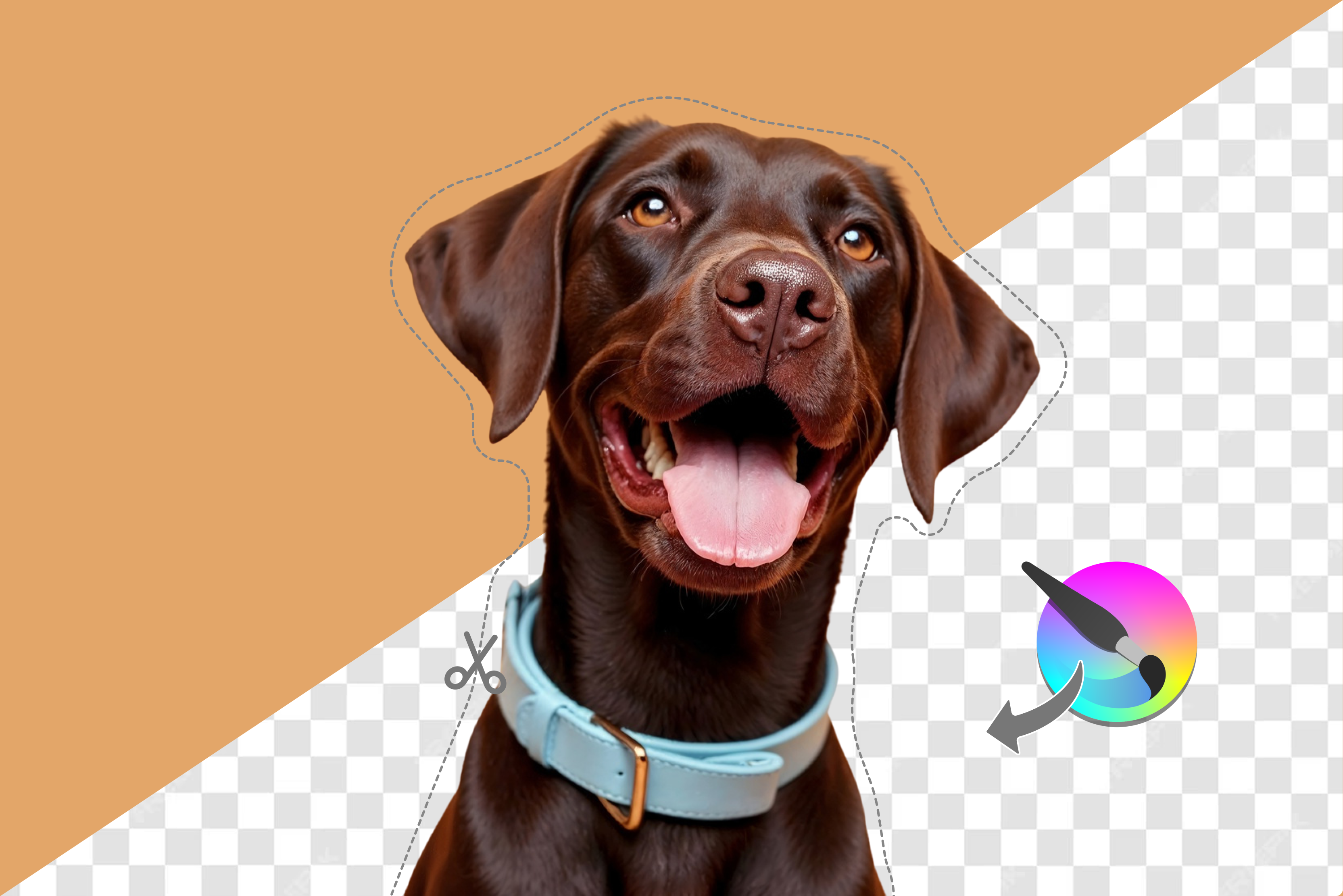


When it comes to digital painting, Krita has earned its place as a go-to tool for artists. It’s not just free—it’s designed from the ground up for drawing, painting, and illustration, which gives it a very different feel compared to photo-editing programs like Photoshop.
Even though Photoshop is often mentioned for background removal, Krita has its own set of tools that blend naturally into an artist’s workflow. Whether you’re illustrating characters, laying out comic panels, or mixing traditional and digital techniques, removing a background in Krita can be simple once you know which tools to lean on.
Krita lets you stay flexible throughout the process, meaning you can refine edges, make adjustments, and preserve detail without having to redo your work.
In this guide, we’ll look at three reliable methods for removing backgrounds in Krita, cover a few common questions, and share tips that can speed up your workflow—all so you can spend more time creating and less time dealing with technical steps.
Understanding canvas, layers, and transparency in Krita
Before getting into background removal, it helps to get a feel for how Krita thinks about your workspace. The canvas itself is basically an open, endless area to draw on. When you zoom out far enough, you’ll notice a gray checker pattern.
That isn’t a “Background” at all—it’s simply Krita’s way of showing transparency. Anywhere you see those squares, the pixels are fully see-through. On the right, the Layers docker holds your layer stack.
Each paint layer contains actual pixels, and each of them can have its own transparency mask. Masks are where Krita really shines: instead of erasing pixels, you hide them. White shows what’s visible; black hides it. Because the original pixels stay untouched, you can adjust or undo things without damaging your artwork.
Krita handles transparency through an alpha channel. Opaque pixels have full alpha; transparent areas have none. If you delete something directly from a layer, you’re punching holes into it. That works, but most artists prefer masks so they can change their minds later.
Krita can start with transparency, but the default templates typically include a white background layer. But once the imported images—especially PNGs—might come with a solid background baked in.
If you need to see the true transparency, toggle View > Show Canvas Only, which hides the interface — useful for focusing —, but it doesn’t change transparency visibility. And remember: if you want transparency when saving, export as PNG. JPEG will always flatten everything onto a white background.
How does Krita’s selection system work?
- Selections in Krita are your way of telling the program exactly what you want to keep, adjust, or remove. If you’ve ever used a magnetic lasso in other software, think of Krita’s tools as a more flexible, painter-friendly version of that.
- On the left, you’ll find the main selection tools: Freehand for drawing your own outline (press T), the Rectangular and Polygonal tools for clean geometric shapes, and the Similar Color tool, which works like a magic wand and grabs areas based on tone.
- Each tool has its own options. You can soften edges with Feather, and the “Grow/Shrink” sliders help you push the boundary in or out by a few pixels—handy for cleaning up halos or rough edges. Just as important are the selection modes. By default, Krita replaces the previous selection, but holding Shift adds to it, Alt subtracts from it, and Shift+Ctrl keeps only the overlapping parts. If you’d rather capture everything except what you selected, use Select > Invert Selection (Ctrl+Shift+I).
- Turn on “Antialiasing” for smoother edges. And note the difference between pixel and vector selections: vector selections give you cleaner, adjustable curves, while pixel-based ones work better for photos or textured artwork. The dotted “marching ants” outline shows what’s active, and you can hide it with View > Show Selection Outline if it’s distracting.
- A selection will stay active even if you switch tools, so remember to clear it with Select > Deselect (Ctrl+Shift+A) when you’re done. Pairing selections with layer masks is where the real power is—you hide or reveal areas without altering your artwork permanently.
Methods to Remove Background in Krita
Method 1 – Basic background removal with selections
When the artwork has clean edges—like a sketch then the simplest way to clear the background is with Krita’s selection tools. The Similar Color tool is perfect for grabbing big areas of white, while the freehand or polygon lasso works well for more defined shapes.
Once you’ve selected what you don’t want, invert the selection so the background is the active area, then press Delete. Those pixels drop straight to transparency, which shows up as the familiar checker pattern. Because this method permanently removes pixels, it’s smart to duplicate your layer before you start.
A little feathering in the Tool Options helps soften the edges, and nudging the boundary in or out with Grow or Shrink can clean up halos. It’s a fast, no-frills approach—great for rough drawings or as a first pass before switching to masks for finer control.
Steps to know:
- Duplicate layer (Ctrl+J) for safety.
- Toolbox: Similar Color (magic wand) or Freehand Selection (lasso).
- Click/drag on background; tweak Threshold/Fade in options.
- Select > Invert (Ctrl+Shift+I) to grab the subject if needed.
- Press Delete—background goes transparent.
- Tool Options > Feather 2-5px, or Select > Grow/Shrink 1px.
- Ctrl+Shift+A to deselect; check with the solid layer below.
Method 2 – Non-destructive background removal with transparency masks
If you want to clear a background without actually deleting anything, transparency masks are the way to go. They act like a veil over your layer—paint black on the mask to hide parts of the image, and white to bring them back. Nothing on the original layer gets touched.
To set one up, right-click your layer and choose Add → Transparency Mask. Make sure the mask is selected (it’ll show with a colored outline), then use any brush or fill tool to shape what stays visible. This approach is great for tricky areas like loose strands of hair, soft edges, or messy paint strokes because you can adjust and repaint the mask whenever you want.
If things get crowded, use Isolate Layer to dim everything except the layer you’re working on. And if you already have a selection, you can fill the mask instantly to block out big areas in one go. Most artists stick with masks because they’re safe, flexible, and easy to tweak as the artwork evolves.
Steps to know:
- Right-click layer > Add > Transparency Mask (fills white).
- Click mask thumbnail to activate (blue border).
- Use the default for resetting FG/BG to black/white = D.
- Bucket Fill (Shift+B) black outside the subject on the mask.
- Brush (B) white to reveal leaks, black to hide fringes.
- Right-click > Isolate Layer for a clean view.
- Right-click > Discard Mask if changing mind.
Method 3 – Clearing white or solid backgrounds with Color to Alpha
When your artwork sits on a perfectly solid color—white, gray, or anything flat—the Color to Alpha filter is the quickest way to pull that background out. Go to Filter → Colors → Color to Alpha, grab the eyedropper, and click the color you want removed. Adjust the Threshold slider until the background fades cleanly while your lines stay intact.
This method works especially well for scanned drawings, crisp line art, or logos sitting on a single-color backdrop. And if you apply it as a filter mask, you can adjust the effect later without damaging the original layer.
Color to Alpha usually handles color bleed and soft artifacts better than simply selecting and deleting. After applying it, you can still add a regular transparency mask on top for any final touch-ups. It’s a fast option when you’re processing lots of sketches or imports at once.
Steps to know:
- Duplicate layer (Ctrl+J).
- Right-click > Add > Filter Mask > Colors > Color to Alpha.
- Eyedropper on white/solid color; slide Threshold (10-30 typical).
- Preview, OK—color vanishes to checkers.
- Mask or Eraser (E) for edge fringes.
- Right-click filter > Remove if overdone.
- Export PNG to test.
How to remove background in Krita (Most searched queries)
1. How to remove an image background in Krita
When you’re working with photos or more detailed images in Krita, the background and subject often blend with each other, so the first step is usually a rough selection. Start by using the Similar Color tool to grab broad areas that share the same tones, then switch to the lasso to clean up spots the automatic selection misses.
Once the rough shape is in place, it’s better to hide the background with a transparency mask rather than deleting anything. Painting black on the mask lets you trim around tricky areas—hair, soft edges, or anything with uneven outlines—without risking permanent damage.
If the photo sits on a clean, solid, or black background, the Color to Alpha filter can knock out most of it in one move, giving you a cleaner base to refine. Always duplicate your layer before you start, and use Isolate Mode to dim everything except the layer you’re shaping. This approach gives you much more control than relying on the eraser alone, and it keeps the entire process reversible while you dial in the final edges.
Steps to know:
- Import image (File > Import).
- Similar Color tool on background tones, adjust Threshold.
- Add to selection (Shift) or Freehand refine.
- Right-click layer > Add Transparency Mask.
- Mask active: Bucket black (Shift+B) outside the subject.
- Brush white/black edge fixes; Isolate Layer view.
- Export PNG.
2. How to remove a transparent background in Krita
If you’re seeing the checker pattern in Krita, that means the background is already transparent—there’s nothing left to erase. But sometimes a PNG brings in a fake “Transparent” background that’s actually just a solid color baked into the image.
In that case, drop a temporary solid-color layer underneath your artwork. With that in place, it’s much easier to see any leftovers or halos. Clean the edges using a mask or selection tools, then delete the temporary layer when you’re done.
For faint outlines or spill colors around your subject, Color to Alpha can strip those out cleanly. And if you want to double-check that you’re really looking at transparency, toggle View → Canvas Only to hide the interface and see the artwork as it actually is.
Steps to know:
- If PNG has a solid spill: duplicate layer.
- New layer below, Bucket solid color (temp background).
- Select/mask as an opaque method above.
- Delete temp layer—checkers return.
- Or Filter > Color to Alpha on spill hue.
- Mask refine; View > Show Canvas Only preview.
- Export PNG.
3. How to remove the checkered background in Krita
That checkered background isn’t an actual background at all—it’s just Krita’s way of showing you where the image is transparent. If you simply want to hide the grid, switch to View → Show Canvas Only, or adjust the transparency display under View → Configure Grid so it’s less distracting, as it does not allow changing the transparency checkerboard from the View menu.
On the rare chance that the checkers are part of the image—for example, a screenshot or an exported file that accidentally saved the pattern—you’ll need to treat it like any other background. Use Color to Alpha to knock out the gray tones, or paint over a transparency mask to clean the edges by hand.
If your goal is to paint on top of transparency, drop a solid-color layer underneath your artwork so you’re not fighting that checkerboard. And when you export the image, the checkers never show up—they’re only a preview inside Krita.
Steps to know:
- View > Show Canvas Only (hides UI instantly).
- Or View > Configure Grid > uncheck Show Grid.
- Baked checkers? Similar Color on grays, Delete/mask.
- Need solid? New layer below > Bucket color.
- Ctrl+click layer thumbnail for alpha selection.
- Mask or fill as needed.
- PNG export ignores preview.
4. How to remove the PNG background in Krita
Most PNGs already come in with transparency, but sometimes you’re left with a solid background or a thin halo around the subject. When that happens, the quickest fix is Color to Alpha.
Pick the background color with the eyedropper so you’re targeting the exact shade, then adjust the Threshold to keep the background fading out while your artwork stays intact.
Before you start, duplicate the layer so you can backtrack if needed. For any stubborn edges the filter doesn’t clean up, switch to a transparency mask and tidy things with a brush. Once everything looks right, export it again as a PNG to keep the transparency.
Steps to know:
- File > Open PNG.
- Duplicate layer (Ctrl+J).
- Right-click > Filter Mask > Colors > Color to Alpha.
- Eyedropper background color, Threshold 15-25.
- Apply; add Transparency Mask for fringes.
- Brush black/white cleanup.
- Export > PNG (no flatten).
5. How to Remove Background Color in Krita
If your subject's background is of solid color, the best option to use is Color to Alpha. Use the eyedropper to pick the background hue, then adjust the settings so it fades cleanly to transparency.
For areas with different tones, try the Similar Color selection option and then select the background range, invert the selection if needed, and then apply a transparency mask to hide it. This keeps your original layer intact and gives you the control to tweak edges later.
For any stubborn spots, you can touch them up with the eraser or a brush on the mask. This combination works well on whites, blacks, or any uniform background without damaging your subject.
Steps to know:
- Duplicate layer.
- Filter > Colors > Color to Alpha (or Filter Mask).
- Eyedropper picks color; adjust Threshold preview.
- Apply—color gone.
- Or: Similar Color tool, Threshold grab range.
- Invert (Ctrl+Shift+I), add mask, Bucket black.
- Edge brush fixes.
Bonus Tips for Fast Background Work in Krita
- Keep the Layers, Tool Options, and Advanced Color Selector panels open so you can see your masks, adjust selections, and grab the right colors quickly.
- Make a small custom toolbar with the tools you use the most — Freehand Selection, Similar Color Selection, Move, Brush, Eraser — to cut down on hunting through the toolbox.
- Once your layout feels right, save it as a “Background Cleanup” workspace (Window > Workspace > Save Workspace) so you can load it instantly.
- If the marching-ants outline gets distracting, toggle it off under View > Show Selection Outline.
- Use View > Show Canvas Only for a clean preview of how the transparent background will look before you export.
Best Krita AI alternative for removing background from an image—Pixelbin’s AI image background remover
If you just want to remove a background quickly without going through complicated steps in Krita, Pixelbin is an easy option. It works online and handles both images and videos with almost no setup. What really helps is how simple it is to use.
You can remove backgrounds in batches using premium plans, which is a lifesaver when you’ve got hundreds of photos to process. It runs automatically, but the quality doesn’t drop. Whether you’re a business owner, a designer, or just someone trying to save time, Pixelbin gets the job done without the hassle.
How to use Pixelbin for background removal
Step 1: Go to pixelbin.io and open the background remover tool.

Step 2: Upload your image by dragging and dropping it into the upload area or browsing your device to select the file. Supported formats include PNG, JPG, JPEG, WEBP, and HEIC.
Step 3: The AI automatically detects the subject and removes the background instantly using advanced algorithms, preserving details such as fine edges, lighting, and shadows with high precision.
Step 4: Once satisfied, download the high-resolution image with a transparent background, ready for eCommerce, marketing, social media, or creative projects.
Final thoughts
Krita gives you a bunch of ways to clear out a background, and once you know which one fits what you’re doing, it’s pretty straightforward. For quick stuff, the basic selection tools work fine.
When you need cleaner edges or more control, masks or Color to Alpha do the job without much fuss. After you get the hang of those, prepping art for stickers, composites, or whatever else becomes routine.
If you don’t feel like doing it manually, you can toss the image into something like Pixelbin to yank the background out fast, but that’s just optional. Krita can handle it on its own once you’ve practiced a bit.
FAQs
Use the Similar Color Selection tool or the Freehand Selection tool. Select the background, hit Delete, then zoom in and clean up the edges if needed. For flat, solid backgrounds, this takes only a few seconds.
Most likely, the layer has no alpha channel. Right-click the layer → Add Alpha Channel → then try deleting again. Without an alpha channel, Krita replaces deleted areas with the canvas color instead of transparency.
Try Filter → Color → Color to Alpha, and set the color to white. This removes the white background while leaving the darker lines alone. If it pulls out too much, use a transparency mask and paint back the areas you want to keep.
Use a transparency mask, not the eraser directly. Add a mask → paint black on the mask to hide the background → paint white to reveal areas. This protects the original drawing and makes it easy to fix mistakes.
Export as PNG and make sure:
- Store alpha channel (transparency) is enabled (default)
- There’s no solid background or color layer underneath
- You’re exporting the right layer/group
PNG is the best option for crisp edges and transparency.
Not a single-click version. Krita focuses on manual tools like selections, masks, and Color to Alpha. If you want true one-click removal, you’d need an outside service or AI tool—then bring the cleaned image back into Krita for final touches.