
Summary
Hailuo AI is usually better if you want realistic short clips, reference-led product motion, fast social variations, and practical multimodal editing through MiniMax H3. Kling AI is usually better if you want cinematic camera movement, multi-shot storytelling, native audio/dialogue, stronger director-style control, and longer narrative beats through Kling VIDEO 3.0 Omni. The best choice depends on the job: use Hailuo for clean, realistic, creator-friendly clips; use Kling for polished scenes that need camera cuts, character consistency, and a more film-like structure.
Introduction
Hailuo AI vs Kling is one of those comparisons where a single winner can be misleading. Both tools sit in the modern AI video category, but they do not feel identical in real workflows. One creator may need a quick product clip from an image. Another may need a short cinematic scene with dialogue, camera movement, and a consistent character. Those are not the same problem.
A good comparison should answer the practical question first: which one should you use for the video you are trying to make today? That means looking at realism, image-to-video quality, text prompt control, audio, camera movement, editing flexibility, pricing, export quality, and how easy it is to get from idea to publishable asset.
This guide compares Hailuo AI and Kling AI from a creator and marketer point of view. It also gives test prompts, use-case recommendations, and a simple decision workflow so you can choose the right model without burning credits on random experiments.
Quick verdict
Artificial intelligence video generation has evolved from experimental artifact-heavy clips into a core engine for commercial advertising, film pre-production, and social media production. Where early platforms struggled with consistent character keyframing, morphing limbs, and unnatural liquid physics, the latest 2026 flagship models Hailuo AI (powered by MiniMax) and Kling AI (developed by Kuaishou) deliver production-ready video at frame rates and resolutions suitable for broadcast and digital campaigns.
Despite sharing similar end goals, Hailuo AI and Kling AI operate on distinctly different architectural philosophies:
- Hailuo AI (MiniMax 2.3 / Hailuo video): Built around a physics-first spatial model, prioritizing photorealism, weight simulation, surface tension, and strict prompt adherence.
- Kling AI (Kling 3.0 Omni / 3.5): Built around a cinematic directorial architecture, prioritizing dynamic camera paths, character continuity, extended multi-shot sequencing, and native multi-modal audio synthesis.
This comprehensive guide analyzes both platforms across architecture, visual fidelity, camera mechanics, audio-visual synthesis, pricing tiers, and production workflows to help creators choose the right engine for their specific pipeline.
What is Hailuo AI?
Hailuo AI is a creative AI platform from MiniMax for generating videos and images from prompts and references. Its current positioning is built around MiniMax H3, a multimodal AI video model that can work with text, images, video, and audio in the same creative context.
The big idea behind Hailuo is simple: give the model enough context and it can create or edit a short video with realistic motion, sound, camera style, lighting, and scene changes. Hailuo's H3 page mentions 5 to 15 second videos, native stereo sound, common aspect ratios, 24 FPS output, and the ability to use multiple files as references, including images, video clips, and audio clips.
For creators who mainly want to test Hailuo-style image-to-video or prompt-to-video workflows in a browser, Pixelbin's Hailuo AI video generator is a useful place to start without turning the comparison into a technical setup project.
Key features
What is Kling AI?
Kling AI is an AI video and image generation platform known for cinematic motion, image-to-video generation, text-to-video generation, and increasingly advanced multimodal video features. Its public pages position Kling AI as a next-generation AI video and image generator that can turn text, images, and references into creative content.
The 2026 Kling VIDEO 3.0 Omni guide is especially important for this comparison. It describes a unified multimodal workflow that combines text, image, and audio, supports 15-second high-resolution clips, and includes synchronized dialogue. It also highlights AI Director for camera cuts, Character Identity 3.0 for subject consistency, and precision text rendering.
If your workflow needs Kling-style motion from images or directed prompts, a Kling AI video generator fits naturally after this comparison because it lets readers move from research to testing quickly.
Key features
Hailuo AI vs Kling AI comparison table
Camera movement, scene control, and directorial tools: who’s better?
For video producers, motion control determines whether a shot looks like an AI gimmick or a professional film asset.
Kling AI’s directorial suite
Kling AI offers some of the most granular cinematic controls available in browser-based AI video generators:
- Motion brush: Users can paint up to six independent regions on a static image and assign specific direction, speed, and trajectory vectors to each element (e.g., forcing clouds to move left while water moves down and a person walks forward).
- Advanced camera controls: Native inputs for pan, tilt, zoom, pedestal, truck, and roll, allowing precise camera movement parameters down to specific percentage values.
- Multi-shot storyboarding: The ability to generate a continuous sequence where the camera automatically switches angles moving from a wide establish shot to a medium character shot within a single render pass.
- Subject binding (elements 3.0): Upload up to three reference photos of a character or product to maintain consistent faces, wardrobe, or product packaging across multiple disparate prompts.
Hailuo AI’s motion capabilities
Hailuo AI prioritizes stable framing over complex camera movement.
- Camera motion: Supports fundamental movements including slow zooms, horizontal tracking, and fixed tripod angles.
- Stability trade-off: By keeping camera paths predictable, Hailuo avoids the spatial warping and background stretch often caused by aggressive virtual camera moves.
Which is better for realistic AI videos?
Hailuo AI (MiniMax) wins on raw visual realism and physical accuracy. If the goal is to produce footage that tricks the eye into believing it was shot on a real camera in the real world, Hailuo AI takes the victory for three specific reasons:
1. Physics engine superiority
Hailuo consistently ranks at the top of AI physics benchmarks (like WorldModelBench) for simulating the physical laws of nature.
- Liquids & viscosity: Water splashes follow real parabolic arcs, coffee pours display accurate surface tension, and fluids don't randomly morph into digital artifacts mid-frame.
- Weight & inertia: Fabrics, hair, and clothing react to wind and movement with believable weight and drag rather than looking weightless.
2. Zero morphing & structural artifacts
AI realism fails the moment a hand gains a sixth finger or a background wall melts during a camera turn. Hailuo maintains frame-to-frame structural integrity. It favors grounded, steady framing to prevent the spatial distortion common in other AI models.
3. Textures & micro-expressions
From skin pore rendering and natural lighting fall-off to subtle facial micro-expressions (like a slight twitch of the eye or natural breathing), Hailuo avoids the shiny "plastic AI skin" look far better than its competitors.
Where Kling AI drops to second place
Kling AI is an incredible tool for cinematic scope like it wins for 4K resolution, long 15-second takes, complex camera tracks, and native sound effects. However, when pushed hard on dynamic motion, Kling's physics can warp, limbs can briefly stiffen, and high-speed splashes occasionally tear along the edges.
Which is better for image-to-video? Hailuo AI vs. Kling AI
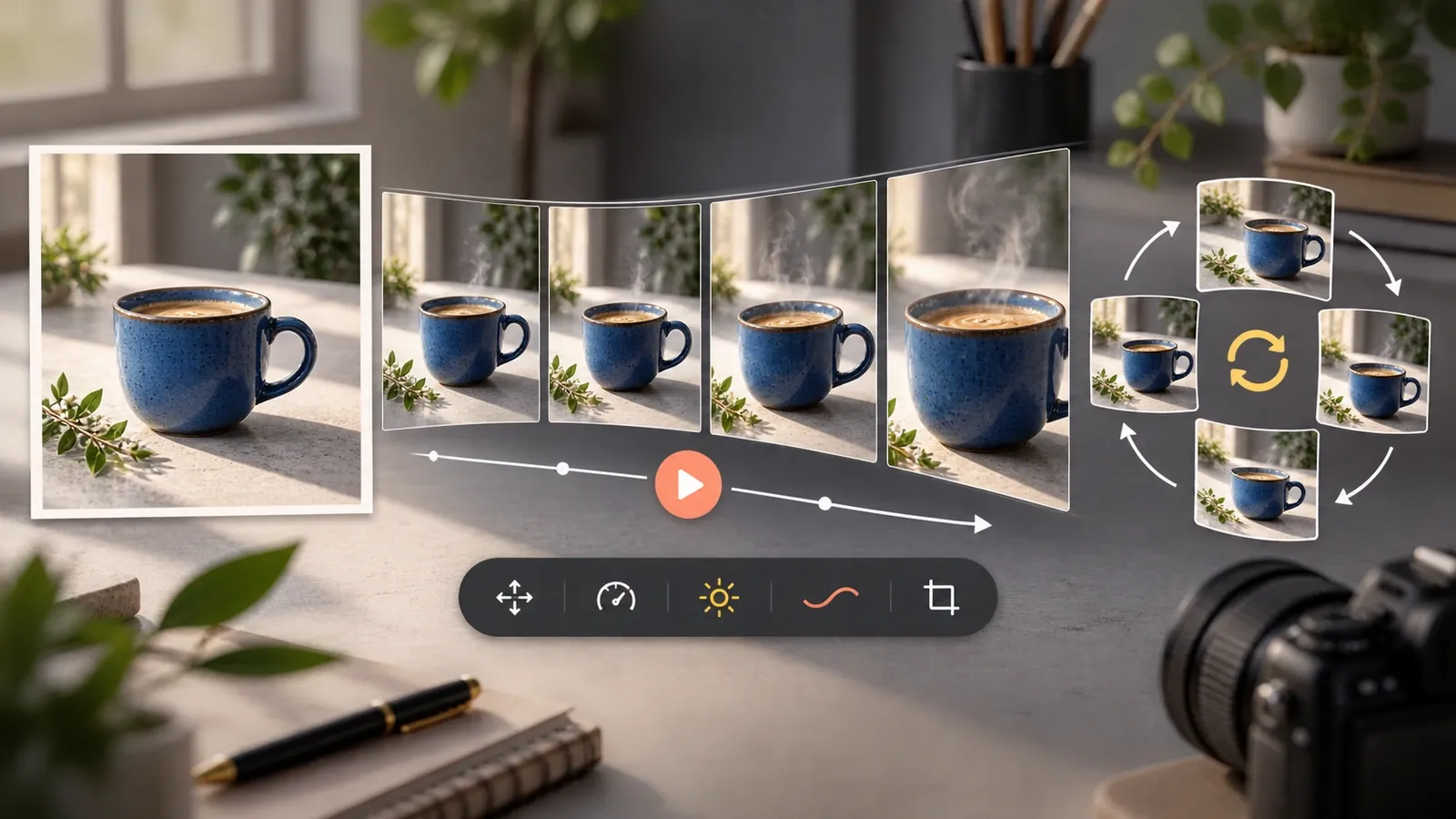
Image-to-video has become an indispensable workflow for content creators, e-commerce brands, and digital sellers who already own high-quality visual assets. Whether you are animating a product hero photo, bringing a catalog mockup to life, or turning a static social media graphic into a short-form video ad, the ideal AI model must preserve your original subject while applying natural, controlled motion.
Both Hailuo AI and Kling AI rank among the top generative models for converting stills into video, but they serve completely different creative objectives.
For teams starting with an existing product image, thumbnail, poster, or campaign visual, an image-to-video AI generator is often the cleanest workflow because the creative direction begins with the asset you already trust.
Which is better for text-to-video prompts?
Text-to-video is harder than image-to-video because the model must invent the full scene. This is where prompt quality matters. A short prompt such as 'make a cool car ad' will not fairly test either tool. A useful prompt should describe subject, setting, action, camera movement, lighting, mood, duration, ratio, and what should not change.
Hailuo is good for text prompts that describe a compact scene with a clear subject and action. It can be useful for campaign ideas, creator concepts, stylized product moments, and quick scene testing.
If the idea starts as a script, ad hook, product description, or scene description, a text-to-video AI generator keeps the process simple because the user can move from words to a usable clip without first creating a reference image.
Kling becomes stronger when the prompt is structured like a mini shot list. If you describe camera cuts, perspectives, scene timing, dialogue, and character behavior, Kling's 3.0 Omni positioning is more aligned with that kind of request.
Verdict: Hailuo is easier for simple text-to-video scenes. Kling is better for detailed prompts with camera and story direction.
Native audio, voice synthesis, and sound design: Hailuo AI vs. Kling AI
The gap between visual generation and audio-visual sync is a major factor in workflow efficiency.
Kling AI (Omni audio architecture)
Kling AI eliminates the need for separate audio tools in standard production workflows:
- Environmental audio: Automatically generates ambient sound effects based on visual prompts (e.g., ocean waves crashing, footsteps on gravel, ambient coffee shop hum).
- Native lip-sync: Users can upload a voice recording or input text scripts, and Kling syncs facial muscles, lip positions, and jaw movements directly to the generated dialogue.
Hailuo AI (visual-only focus)
Hailuo AI remains focused entirely on visual frame generation:
- No native audio output: Videos render silent. Creators must export the visual file into a digital audio workstation (DAW) or secondary AI tool (such as ElevenLabs or Suno) to add sound effects, music, and dialogue in post-production.
Which is better for character consistency?
Character consistency is one of the hardest parts of AI video. A face can shift. Clothing can change. A hand can look wrong. A character can drift away from the reference after a camera move. For creators, this is not a small detail because one broken frame can make the whole clip unusable.
Kling AI is built for complex, multi-shot storytelling. Its Elements 3.0 and Subject Library allow you to upload multi-angle references to lock physical facial traits, wardrobe, and even voice characteristics into a 3D anchor. This prevents identity drift across different camera cuts, dramatic tracking shots, and long-form narrative series.
Hailuo AI focuses on rapid, high-fidelity single-shot scenes. It relies on a single image reference to animate a character while preserving micro-expressions, skin textures, and physics stability. However, it lacks Kling's dedicated 3D subject-binding system for cross-scene continuity.
Verdict: Choose Kling AI when managing a recurring character, avatar, or actor across a planned narrative. Choose Hailuo AI when you need fast, physics-accurate realism for a single standalone clip built from one reference photo.
Which is better for product videos and ecommerce?
For ecommerce, the best AI video generator is not the one that creates the flashiest scene. It is the one that preserves the product. Color, shape, logo placement, fabric texture, package details, and size perception all matter. If AI changes those details, the clip may look exciting but become unusable for a real product page.
Hailuo is the better first test for many product workflows because it is well suited to reference-led clips and short realistic motion. A bag can turn slightly, a bottle can catch light, a shoe can sit in a cleaner scene, or a product image can become a subtle social video.
Kling is better when the product video needs a higher-production feel: a planned hero shot, a camera orbit, a start/end frame transition, a multi-shot mini ad, or a spoken product moment.
Verdict: Hailuo is better for quick product b-roll. Kling is better for cinematic product ads.
Which is better for social media content?
For social content, speed matters. A creator often needs multiple versions, not one perfect render. Hooks change, captions change, formats change, and the same idea may need a 9:16 Reel, a square post, and a YouTube Short.
Hailuo is often better for quick social tests because it is friendly for short clips and fast prompt iteration. Kling is better when the social post is more like a miniature film: a strong opening shot, a character action, a second angle, and audio that supports the story.
Verdict: use Hailuo for fast ideation and social variations. Use Kling when the final post needs a more polished cinematic sequence.
Which is better for editing after generation?
This is where many AI video comparisons become weak. The generated clip is not the final content. It still needs review. It may need trimming, captions, cropping, resizing, color cleanup, background correction, audio adjustment, or another generation pass.
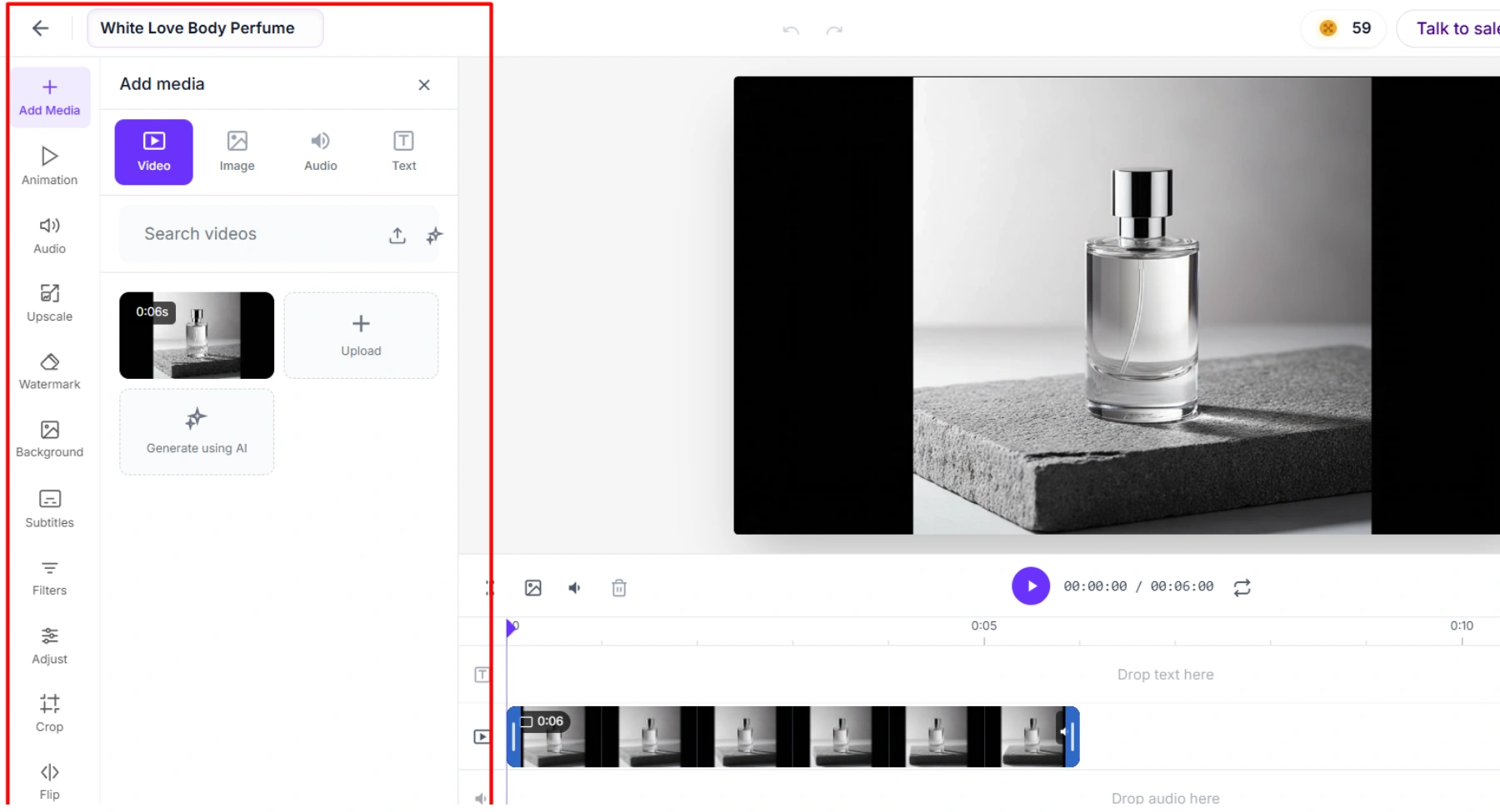
After choosing Hailuo or Kling, an AI video editor can help turn the output into something publishable by handling the practical finishing steps around format, pacing, cleanup, and export.
- Check the first two seconds. If the hook is weak, regenerate or trim.
- Check hands, faces, product edges, text, logos, and reflections frame by frame.
- Check whether the clip works without sound, because many viewers start muted.
- Export for the platform, not just the highest possible resolution.
Pricing, credits, and access
Operating costs depend heavily on your production volume and output quality targets.
Hailuo AI cost structure
- Subscription model: Tiered plans start at approximately $9.99/month for standard usage, offering roughly 1,000 generation credits.
- Average cost per render: Flat-rate pricing averaging $0.18 to $0.25 per 6-second render at 1080p.
- API accessibility: Offers straightforward REST API integration for web developers and automated content platforms needing affordable bulk video generation.
Kling AI cost structure
- Free tier: Offers 66 daily credits, making it accessible for casual testing and quick conceptual drafts.
- Paid tiers: Range from $6.99/month to $25.99+/month, with higher tiers providing priority queue access and advanced features.
- Variable render costs: Renders cost between ~$0.20 (standard 720p/1080p without audio) up to ~$1.40+ per clip when activating 4K output, 60fps frame rates, native audio generation, and Subject Binding features simultaneously.
Prompt tests to compare Hailuo and Kling fairly
To compare Hailuo AI vs Kling properly, use the same prompt, the same ratio, the same duration, and the same reference image where possible. Do not compare a weak Hailuo prompt against a detailed Kling prompt or the other way around.
Test prompt 1: product b-roll
A premium black ceramic coffee mug on a warm kitchen counter, slow push-in camera movement, morning window light, soft steam rising naturally, shallow depth of field, realistic reflections, no text, no extra objects, 6 seconds, 9:16.
What to check: product shape, steam realism, camera smoothness, reflections, and whether unwanted objects appear.
Test prompt 2: creator UGC clip
A young creator holding a skincare bottle near a bathroom mirror, casual UGC style, natural smile, soft daylight, subtle handheld movement, clean background, product label remains sharp, 6 seconds, vertical 9:16.
What to check: face consistency, hand quality, product label, lighting, and whether the scene feels like real phone footage.
Test prompt 3: cinematic scene
A detective walks through a rainy neon alley at night, low-angle tracking shot, wet pavement reflections, slow camera push, blue and red lights, coat moving in the wind, cinematic realism, 8 seconds, 16:9.
What to check: walking motion, camera direction, rain physics, scene continuity, and cinematic lighting.
Test prompt 4: dialogue scene
Two friends sit inside a parked car at night, one says 'we have one more chance' in a calm voice, soft dashboard light, realistic facial motion, shot reverse shot, subtle street reflections, 12 seconds, 16:9.
What to check: lip sync, audio timing, character continuity, camera cuts, and whether the dialogue feels attached to the scene.
How to choose between Hailuo and Kling?
- Write one clear prompt for your real use case, not a generic demo scene.
- Run it in Hailuo and Kling with the same ratio and duration.
- Score each output from 1 to 5 for realism, prompt following, motion, subject consistency, audio, and editability.
- Ask which clip needs fewer fixes before publishing.
- Choose the model that gives the most usable result, not the one that looks most impressive in a demo.
Common mistakes to avoid
- Do not use vague prompts. More specific prompts create fairer comparisons.
- Do not ignore the final editing step. A good AI clip can still fail if it is cropped badly or lacks captions.
- Do not trust one generation. Run at least two or three variations before judging a model.
- Do not use copyrighted characters, private people, celebrity likenesses, client logos, or protected assets unless you have the rights.
- Do not assume pricing, watermark rules, or commercial rights are the same across plans. Recheck them before publishing or client work.
Why creators and professionals choose Pixelbin instead of separate Kling or Hailuo web apps
- Unified workspace: Access both Kling (known for physics-driven long sequences, start/end frames, and multi-shot storytelling) and Hailuo (known for organic human expressions, subtle lighting, and hyper-realistic motion) within a single dashboard.
- Multi-model flexibility: Switch between generation models seamlessly based on project requirements without managing separate subscriptions, tokens, or disparate platform accounts.
- Integrated image pre-processing: Clean up backgrounds, upscale resolution (via Upscale.media), and erase unwanted watermarks directly within the Pixelbin suite before feeding images into video pipelines.
- No-watermark commercial exports: Export clean, high-definition (up to 4K/1080p) marketing-ready outputs optimized for social platforms like Instagram Reels, YouTube Shorts, and TikTok.
Final verdict
Hailuo AI and Kling AI are both strong AI video tools, but they are strongest in different jobs. Hailuo is the better pick for quick realistic clips, product visuals, image-to-video, UGC concepts, and fast creative testing. Kling is the better pick for cinematic scenes, multi-shot control, native dialogue, character consistency, and director-style prompts.
If you only need one rule, use this: start with Hailuo when you want a believable short clip from a prompt or image; start with Kling when your video needs camera direction, dialogue, or scene structure. For serious work, test both with the same prompt and judge the result by how close it is to publish-ready.
FAQs
Hailuo AI is better for fast realistic clips, reference-led image-to-video, product b-roll, and short social content. Kling AI is better for cinematic motion, multi-shot scenes, dialogue, and stronger director-style control.
Kling AI can be better when the project needs planned camera movement, character consistency, shot changes, and synchronized audio. For quick image-based videos, Hailuo may be easier and faster.
Hailuo is usually the better first choice for simple image-to-video realism. Kling is stronger when the image needs more controlled motion, a start/end frame style, or a cinematic sequence.
Hailuo is easier for direct text prompts and short scenes. Kling is better when the prompt is written like a shot list with camera movement, dialogue, timing, and multiple beats.
Kling has the clearer advantage for dialogue-led scenes because its 3.0 Omni guide emphasizes native audio and synchronized dialogue. Hailuo's H3 page also mentions native stereo sound, so it remains useful for sound-supported clips.
Marketers should choose by asset type. Use Hailuo for fast product b-roll, UGC-style visuals, and social variations. Use Kling for cinematic campaigns, dialogue scenes, and multi-shot product ads.
Commercial use depends on the tool's current terms, plan, region, source materials, and rights. Always check the latest usage terms before using AI-generated clips in ads, ecommerce pages, or client work.
Use the same prompt, same reference image, same aspect ratio, and same duration. Score each output for realism, prompt following, motion quality, subject consistency, audio, and how much editing it needs before publishing.