PixelBin logo
🚀 Pixelbin Video Generator is live - Top models and video editing features   Click for Free Trial
Image to Video
Motion Control
Text to Video
Turn your images into videos
Generation Model
Select Model
Prompt

Add prompt and image to continue

Image to video AI generator

Turn your static images into cinematic videos in seconds for reels, ads, and stories

A surreal, cinematic sky scene where a young woman sits calmly atop a transparent glass bottle filled with floating lemon slices, suspended high among soft, voluminous clouds. The bottle drifts forward slowly through the sky, rotating just enough to catch shifting sunlight. As it moves, the lemon slices inside gently swirl and bump against the glass, creating subtle ripples of motion. Loose lemons float past the camera at varying depths, some drifting close to the lens while others pass behind her, enhancing parallax. The woman reacts naturally: her dress flows and flutters in the wind, she adjusts her balance slightly with one hand, and her legs swing gently as if enjoying the weightless ride. Sunlight breaks through the clouds, producing soft lens flares and warm highlights that slide across the glass surface. The camera begins with a wide, dreamy establishing angle, then slowly arcs around her in a graceful orbit, lowering slightly to emphasize depth and scale before easing back into a serene, looping composition. Add cinematic motion and move the camera.

An extreme close-up of the model’s eyes. They blink once, then the camera rapidly pulls back to reveal a full fashion look, strong stance, and architectural setting. Fabric settles dramatically as the shot widens.

A wide cinematic shot of a single penguin walking alone across an endless Antarctic ice field at dawn. The penguin takes slow, determined steps, its body gently swaying with each movement as its feet crunch into textured snow, leaving clear footprints behind. Fine snow particles drift sideways in the cold wind, catching soft blue and pale gold light from the low horizon.Distant blue glaciers fade into atmospheric haze, and thin clouds move slowly across the sky. The camera begins far behind the penguin, tracking forward at ground level, then gradually lifts into a slightly higher angle, revealing the vast empty landscape ahead. Subtle motion blur emphasizes movement while the scene maintains a calm, contemplative rhythm. Cinematic color grading, deep depth of field, quiet and emotional tone, film-quality realism. Add cinematic motion and move the camera.

The young woman sits on the bench, staring forward. Behind her, the tall surreal creature slowly leans in, its long tentacle-like arms gently reaching around her shoulders. One tentacle carefully lifts and adjusts the bow at her collar, reacting to her presence. The woman responds with a subtle shift—her fingers tighten briefly, then relax, and she turns her head slightly as if sensing the creature behind her. Around them, mushrooms bend and straighten in response to the creature’s movement, and small golden particles swirl faster for a moment before settling. Soft light pulses once as their interaction completes, then the motion eases back into a calm loop. Add cinematic motion and move the camera.

A futuristic humanoid robot stands on a high-rise terrace overlooking a dense modern city skyline. The robot grips a sleek energy rifle across its body. As the scene begins, the robot slowly shifts its stance, armor plates subtly adjusting with mechanical precision. The red visor line glows brighter as it scans the horizon, emitting a faint pulse.The robot raises the weapon slightly and rotates its upper body, tracking movement somewhere off-screen. Small mechanical components in the arms and torso flex and lock into place with deliberate motion. Wind moves lightly across the terrace, reflections sliding across the robot's smooth white armor.The camera starts at a low-angle hero shot, emphasizing scale and authority, then performs a slow cinematic push-in toward the robot's upper body. Midway, the camera arcs slightly to the side, revealing more of the sprawling city below and enhancing depth through parallax. The scene holds on the robot as it steadies its aim, city lights flickering subtly in the background. Add cinematic motion and move the camera.

A forward-facing FPV drone flying smoothly through the scene, fast forward motion, stable horizon, realistic parallax, no drone visible, no distortion. quick cinematic motion till the end add cinematic motion to 2 dragons and move them out of the frame

A matte-black smartwatch floating in a dark studio environment. The camera performs a slow, controlled orbit as soft rim lights sweep across the surface, revealing fine textures, buttons, and glass reflections. The screen gently powers on with a subtle glow. Minimal, high-end, commercial-grade lighting.

ultra-realistic top-down cinematic shot of a massive multi-layer urban highway intersection inside a dense futuristic city. Four elevated highways intersect in a flawless X-shaped formation, passing over circular tunnel openings and mirrored glass buildings below. The geometry is mathematically precise, symmetrical, and architecturally clean, creating the feeling of a city designed by algorithms rather than chaos. All vehicles move with absolute precision: Cars maintain exact lane alignment and consistent spacing Speeds are uniform and synchronized across all roads Lane changes are minimal, intentional, and smooth No braking, no acceleration spikes, no collisions Motion feels deterministic, like a perfectly executed simulation Headlights and taillights form clean, razor-sharp light streaks that follow the road geometry exactly. Light trails are subtle, physically accurate, and never smeared or artificial. Camera behavior: Locked-off, perfectly static top-down perspective No rotation, no drift, no vibration Camera feels architectural and omniscient Lighting & realism: Soft overcast daylight with cool tones Physically accurate global illumination Precise reflections in glass façades and tunnel interiors Natural shadow falloff beneath elevated roads Material fidelity: Asphalt with visible texture and lane markings Concrete barriers with realistic wear Vehicles with accurate proportions, paint, glass reflections, and lighting Buildings reflect traffic and sky with clean mirror accuracy Environmental rules: Only vehicles move Buildings, tunnels, and infrastructure remain perfectly still No people visible No atmospheric distortion, no fog, no noise Mood & concept: A megacity functioning as a perfectly synchronized machine — calm, intelligent, optimized beyond human error. Style & Quality Tags Ultra-realistic, cinematic simulation, 4K–8K, perfect symmetry, algorithmic motion, smooth traffic flow, crisp focus, zero jitter, zero artifacts, physically accurate lighting, premium sci-fi realism

A colossal wolf creature sprints across a snowy ridge, camera orbiting it in a wide circular drift while snow blasts off its fur in ultra-detailed slow motion, icy mist rising with each breath, mountains trembling as it leaps over a chasm.

The camera slowly zooms out from a medium shot to a wide aerial view of a man sitting inside the open door of a moving propeller airplane.The plane flies steadily above vast snowy mountains and frozen river valleys, clouds drifting below. His hair and jacket whip aggressively in the wind, fabric fluttering realistically.The airplane propeller spins in the left foreground, partially out of focus, adding depth and motion. Warm sunrise light contrasts against the cold blue landscape. The aircraft subtly vibrates from flight turbulence. Hard cut to a frontal close-up of the man's face, eyes focused, calm and determined. Golden sunrise light illuminates his features, hair blowing wildly across his face. He slowly raises binoculars into frame and looks through them, lens catching the sunlight. Background softly blurred, wind noise implied through motion, cinematic depth of field, realistic skin texture, natural movement.

A high-speed off-road vehicle slams into a sharp drift across open desert terrain. Tires tear through sand, launching massive dust plumes and debris into the air. Sand particles streak past the lens while the vehicle fights for control. Intense sunlight, aggressive motion blur, raw kinetic energy. Add cinematic motion and move the camera.

A forward-facing FPV drone flying smoothly through the scene, fast forward motion, stable horizon, realistic parallax, no drone visible in the frame, no distortion. quick cinematic motion

A cinematic portrait scene set in a dark studio environment with deep amber and golden lighting. A confident subject leans against a vintage car, one headlight glowing brightly beside them, casting warm light and long shadows across their face and jacket. Subtle motion brings the frame to life: light haze drifts slowly through the scene, the headlight glow flickers very slightly, and soft highlights move across the leather jacket as if the light source is shifting. The subject remains mostly still, with minimal natural movement in posture and expression, creating a powerful, composed presence. The background stays dark and atmospheric, emphasizing contrast and depth. Add cinematic motion and move the camera.

The woman wearing over-ear headphones slowly turns her head toward the camera. As she moves, she raises one hand and gently taps the outer earcup, triggering a subtle response: a soft pulse of light travels across the headphone surface, reacting as if touch-sensitive. She tilts her head slightly, as if listening closely, and nods once in rhythm to unheard music. A faint smile forms at the corner of her lips. Her hair shifts naturally with the movement, and reflections glide across her sunglasses and headphones. The background remains minimal and calm, keeping full focus on her interaction with the headphones. Add cinematic motion and move the camera.

A surreal cinematic scene set in a misty meadow surrounded by dense greenery. A human figure stands still, wearing a beige tailored coat, with their head entirely formed from moss, grass, and small blooming flowers. Subtle environmental motion brings the scene to life: fog drifts slowly across the background, wildflowers and tall grass gently sway in the breeze, and tiny pollen particles float in the air. The flowers growing from the figure's head move slightly, responding to the wind, with delicate natural motion. Soft overcast daylight creates a calm, muted color palette and shallow depth of field, enhancing the dreamlike realism. The atmosphere feels quiet, contemplative, and otherworldly. Add cinematic motion and move the camera.

give it some cinematic motion, and move the camera

A hyper-detailed close-up of a cybernetic raven against a deep crimson background. The bird slowly tilts its head toward the camera, mechanical joints in its neck shifting with subtle precision. Its glowing red eye powers up—concentric rings inside the eye rotate and tighten, emitting a faint pulse of light. Feathers along its neck and shoulders ripple slightly as if responding to an unseen electrical current. The raven suddenly snaps its beak open just a fraction, releasing a soft metallic click, then closes it again. Tiny dust particles drift through the red-lit air as the camera pushes in closer, transitioning from a profile angle to a more frontal, confrontational view. Reflections slide across the metallic beak and eye casing, emphasizing texture and menace. The motion eases into a tense loop, holding eye contact with the viewer. Add cinematic motion and move the camera.

The sports car accelerates smoothly along the coastal bridge, headlights cutting through the soft dusk light. As the car picks up speed, the camera starts from a high trailing angle and then dynamically swings lower and closer, shifting into a side-follow tracking shot that emphasizes speed and curvature of the road. The road markings and guardrails streak past with natural motion blur while reflections of the sky and ocean slide across the car's glossy surface. The ocean below shows subtle wave movement, and the distant lighthouse light slowly rotates. As the car approaches the curve, it leans slightly into the turn, tires gripping the asphalt, before the camera pulls back into a wider cinematic angle, revealing the full bridge and coastline. Add cinematic motion and move the camera.

How to use Pixelbin’s image to AI video generator?

Choose a model
1

Choose a model

Pick the AI model that matches your style, speed, and quality needs.
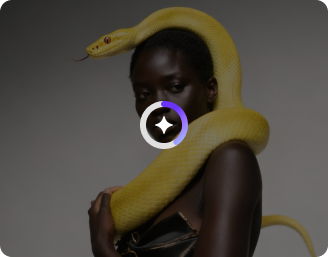
Add images and prompts
2

Add images and prompts

Upload your start image, end image, and a short prompt to describe the video

Generate and save
3

Generate and save

Click generate, preview your video, and save it for social media, ads, or projects.

Why use Pixelbin’s AI image-to-video generator?

Precise motion control

Precise motion control

Add start and end images to dictate precise transitions for professional marketing results

Multi-angle visuals

Multi-angle visuals

Upload a single image to generate multiple perspectives and orbit shots instantly

Custom scene generation

Custom scene generation

Use prompts to place your images in any cinematic background imaginable

Custom video length

Custom video length

Adjust duration settings to generate short loops or extended cinematic clips with ease

Platform-optimized formats

Platform-optimized formats

Create videos from images in any ratio, perfectly sized for Instagram Reels, TikTok, YouTube Shorts, and websites

Watermark-free exports

Watermark-free exports

Download clean videos without any distracting brand logos, overlays, or added texts

Generate cinematic & animated videos from images instantly

Create professional-quality videos from pictures, ready for social media, advertisements, or creative storytelling

No editing skills

Turn your images into videos with motion, effects, and transitions automatically; our AI image-to-video generator does all the heavy lifting

Browser-based

Access our image-to-video AI platform on Safari, Chrome, Edge, or Firefox; no downloads or installations needed

Diverse model range

Choose from cinematic, animation, fast, or high-quality models like Kling 3, MiniMax Hailuo 2.3, or Google Veo 3.1 Fast to match your project style

Full HD outputs

Generate videos in 1080p and 4K with our best image-to-video AI and get professional-quality visuals for social media, ads, or presentations

No editing skills
Browser-based
Diverse model range
Full HD outputs

AI tools by Pixelbin

Key highlights of Pixelbin’s image-to-video AI generator

Benefits of the online image-to-video maker

  • Creative freedom and repurposing: Add life to your existing resources, like product photos, old family photos, or diagrams, turning them into new B-roll, marketing reels, or learning tutorials.


  • Speed and efficiency: Image-to-AI video generators can reduce the time spent on production by automating tasks such as sequencing, transitions, and frame generation. So, now you can generate videos in minutes and can create professional-like clips even without any professional help.


  • Easy to Use: The interface is user-friendly and targets users of any level of skill. So, you do not need prior video editing or animation knowledge.


  • Improved engagement: Videos tend to be more captivating than images, frequently increasing conversion and engagement on social media such as Instagram and TikTok.

Use cases

  • E-commerce scaling: Turn your old or any product photos into video ads that will work, with minimal cost spent on professional photography.


  • Car marketplace listings: Create dynamic videos of your car images that showcase exteriors, interiors, and features. Buyers can view 360° spins or short walkthroughs, and that can help increase inquiries and sales. 


  • Real estate marketing: If you are in the real estate industry, you can use your photos in walkthroughs, which would give your prospective purchasers the sense of space and movement that cannot be achieved with a collection of still images.


  • Marketing A/B testing: You can transform any pictures into different video advertisement versions as the tool offers multiple models. This way, you can easily test and enhance your social media campaigns to boost your ROI.


  • Educational content: Bring to life complicated diagrams and historical photographs to make complex information more accessible and digestible to your learners and help them remember much more during the lessons.


  • B-roll production: Use our AI image-to-video converter to generate missing footage or transitions from still frames, and save yourself time and avoid the need for expensive post-production reshoots.


  • Social media agility: Transform your day-to-day photos into motions to keep your brand in the limelight or to stay ahead of any latest and viral trends.

How to get the best results using Pixelbin’s image-to-video AI generator?

Here are a few suggestions you can try to get realistic videos from your images using our AI tool:


  • Use images with clear subjects and good lighting for the AI to generate smooth motion.
  • Add both a start and an end image if you want the video to show a clear transformation or movement. 
  • Use detailed prompts describing the scene, mood, or action you want, like “sunset over a city skyline with flying birds.”
  • Avoid blurry, low-resolution, or cluttered images, as they can produce inconsistent or distorted video frames.
  • Mix and match images and styles to create unique effects, like combining product shots with animated backgrounds.
  • Experiment with prompts and image combinations gradually until the motion, style, and timing feel natural. 

Image-to-video generation models offered by Pixelbin

1. Model - Google Veo 2


  • Best for: Realistic motion from images
  • Output quality / Notes: Very high
  • When to use: Product demos, lifestyle visuals, natural motion
  • How to use / Steps: Select a starting image or start/end frames, choose 9:16 or 16:9, set 5–8 sec, and generate

2. Model - Google Veo 3


  • Best for: High-end videos with sound
  • Output quality / Notes: 720–1080p
  • When to use: Marketing clips, storytelling, branded content
  • How to use / Steps: Pick a start image, add a short prompt if needed, enable sound, select 4–8 sec, generate

3. Model - Google Veo 3.1 Fast


  • Best for: Faster high-quality output
  • Output quality / Notes: 720–1080p
  • When to use: Social media posts with quick turnaround
  • How to use / Steps: Provide start and end frames, choose 9:16 or 16:9, set duration 4–8 sec, activate audio, generate


4. Model - Google Veo 3 Fast


  • Best for: Speed-focused generation
  • Output quality / Notes: 720–1080p
  • When to use: Bulk content creation or rapid variations
  • How to use / Steps: Add one start image, select format 9:16/16:9, duration 4–8 sec, include audio if needed, and generate


5. Model - MiniMax Hailuo 02


  • Best for: Sharp 1080p short videos
  • Output quality / Notes: 1080p
  • When to use: Product showcases or short ad clips
  • How to use / Steps: Use start and end images, pick a 5 sec duration, select 1080p, then start generation


6. Model - MiniMax Hailuo 2.3


  • Best for: Single-image animation
  • Output quality / Notes: Premium
  • When to use: Brand films, cinematic reels
  • How to use / Steps: Select a start image, pick 9:16, 16:9, or 1:1, add a detailed prompt, set 5–10 sec, then generate


7. Model - Kling 2.6


  • Best for: Cinematic visuals with audio
  • Output quality / Notes: Premium + sound
  • When to use: Music videos, immersive clips
  • How to use / Steps: Provide start and end images or short clip, choose format, set 5–10 sec, enable sound, generate


8. Model - Kling 3


  • Best for: Flexible image & text-to-video
  • Output quality / Notes: High + sound
  • When to use: Reels, ads, or storytelling clips
  • How to use / Steps: Enter text prompt or images, pick aspect ratio 16:9/9:16/1:1, set duration 3–15 sec, activate sound, generate


9. Model - LTX-2


  • Best for: Ultra high-definition video with audio
  • Output quality / Notes: 1080–2160p
  • When to use: Premium campaigns or large screens
  • How to use / Steps: Select start image, pick 16:9, set duration 6–10 sec, turn on audio, generate


10. Model - LTX-2 Fast


  • Best for: Fast high-res output
  • Output quality / Notes: 1080–2160p
  • When to use: Longer clips or fast delivery
  • How to use / Steps: Use start image, choose 16:9, set 6–20 sec, enable sound, generate


11. Model - Seedance 1.5


  • Best for: Balanced video with audio
  • Output quality / Notes: 480–1080p
  • When to use: Social media content, explainers
  • How to use / Steps: Include start and end frames, pick aspect ratio, set 4–12 sec, enable audio, generate


12. Model - Seedance 1.0 Fast


  • Best for: Budget-friendly speed
  • Output quality / Notes: 480–1080p
  • When to use: Testing drafts or bulk generation
  • How to use / Steps: Add start image, pick aspect ratio, choose 2–12 sec duration, then generate quickly

13. Model - Seedance 1.0 Lite


  • Best for: Lightweight generation
  • Output quality / Notes: 480–1080p
  • When to use: Basic visuals, fast experiments
  • How to use / Steps: Use start/end images, select aspect ratio, set 2–12 sec, generate


14. Model - Seedance 1.0 Pro


  • Best for: High-quality Seedance output
  • Output quality / Notes: 480–1080p
  • When to use: Social posts or short ads
  • How to use / Steps: Provide start/end frames, pick aspect ratio, choose 2–12 sec, generate


15. Model - Wan 2.2


  • Best for: Simple image-to-video tasks
  • Output quality / Notes: 480–720p
  • When to use: Quick drafts or basic animations
  • How to use / Steps: Provide start and end images, pick aspect ratio, set 5 sec, generate


16. Model - Wan 2.5


  • Best for: Flexible output
  • Output quality / Notes: 480–1080p
  • When to use: Social media posts, ads, short content
  • How to use / Steps: Select start image, pick format, set 5–10 sec, optionally add audio URL, generate


FAQs

Yes, the image-to-video AI works with old family photos, product shots, diagrams, or illustrations, but clearer images give better motion and output quality.
Yes, the video length and ratio depend on the model you pick. Most models support formats like 9:16, 16:9, and 1:1, with durations from 2 seconds to 20 seconds or more.
Yes, you can do so by adjusting your prompts, adding the start/end images, and choosing the appropriate model. You can also select its speed and visual style to match your vision.
Yes, to add sound to your videos, you can use models like Kling 2.6, Kling 3, LTX-2, Wan 2.5, OpenAI Sora 2, etc.
Yes, you can generate multi-angle outputs or orbit shots from a single image, useful for product showcases or dynamic storytelling.
Start small and test different prompts and use models like Seedance 1.0 Fast for quick drafts before generating high-quality final versions.

Edit images in seconds, not hours

Get pixel-perfect results just with your words

Start editing with AI