

Summary
AI video models in 2026 help create product ads, social clips, cinematic shots, and dialogue videos from prompts, images, audio, or reference clips. This guide compares top models like Veo, Runway, Kling, Seedance, Luma, Pika, and Hailuo by quality, control, use cases, limits, and workflow fit.
Introduction
AI video models have officially crossed the line from fun tech demos to legitimate production tools. Today, they can turn a text prompt, a still image, a reference clip, or an audio track into a fully realized video. But while the concept is simple, navigating the landscape has gotten incredibly complex.
One model might deliver a jaw-dropping cinematic shot but completely warp your product’s logo. Another might excel at viral social media effects but fall flat for a premium brand film. Some now generate native audio and dialogue, while others are built strictly for rapid drafting over final polish.
If you want to try the workflow directly, an AI video generator can help turn prompts, images, or reference clips into short video outputs.
What Are AI Video Models?
AI video models are machine learning systems trained to generate or modify moving images based on user inputs (text, images, audio, or existing clips).
Example Prompt: A close-up product shot of a matte black smartwatch resting on wet volcanic stone. Soft morning light, slow cinematic camera push-in, clean minimalist background.
The engine has to interpret the scene, calculate realistic camera movement, generate consecutive frames, and keep lighting, shadows, and objects consistent.
That last part is the real hurdle. A static image only has to be believable for a single frame. A video has to maintain realism over time. Hands shouldn't sprout extra fingers mid-clip, faces shouldn't morph, and a coffee cup shouldn't spontaneously transform into a vase. Because of this, the best models are judged not just by their beauty, but by their consistency, control, and editing flexibility.
AI Video Model vs AI Video Generator: What Is The Difference?
Best AI Video Models In 2026: At A Glance
1. Google Veo: Best All-Rounder For Realistic AI Video
Google Veo video model dominates as one of the best AI video models for photorealistic production. Moving past standard text-to-video AI models, its architecture translates intricate camera directions, lighting adjustments, and lensing details into cinematic shots. As a leader among image-to-video AI models, it turns static product photography into flawless moving assets, maintaining temporal consistency across clips. This makes it highly dependable for agencies leveraging advanced AI video generation models. For realistic product shots, cinematic scenes, and image-to-video tests, Google Veo video generator is a practical place to start experimenting.
Veo simulates real-world physics accurately, keeping fluid movements, fabric ripples, and shifting shadows completely stable over time. However, like most text-to-video AI models, it still requires manual review. It can stumble on micro-text, exact brand logos, and hyper-fast hand motions. For enterprise campaigns, treat it as an elite assistant to build background plates and raw concepts, reducing physical reshoot costs while standardizing early production pipelines.
Must-Known Features
- Native Audio Pairing: Automatically binds realistic sound effects and clean atmospheric audio with contextual screen actions.
- 4K Production Render: Delivers high-fidelity 4K output maximizing structural clarity, light behavior, and tactile material textures.
- First-Last Frame Pinning: Bridges two independent source images as exact anchor points to control sequence narrative precisely.
- Multi-Image Direction: Ingests up to three distinct image references simultaneously to guide environment composition and layout.
- Advanced Asset Inpainting: Modifies existing clips easily by inserting or removing moving elements through text commands.
- Variable Aspect Output: Generates content natively in standard widescreen 16:9 or vertical 9:16 mobile framing layouts.
Pros & Cons
- Pro: Incredible structural adherence to intricate, long-tail camera movement instructions.
- Pro: Native audio generation eliminates immediate external sound sync steps.
- Pro: Pristine physics modeling keeps light reflections and shadows accurate.
- Pro: Flawless generation scaling via the ultra-fast Veo Lite engine.
- Con: Interface access rules remain fragmented across specific Google Cloud platforms.
- Con: Complex multi-character interactions occasionally generate minor limb glitches.
- Con: Rendering credits disappear quickly when running consecutive high-resolution tests.
- Con: Legible corporate branding and typography require secondary cleanup layers.
2. Runway Gen-4.5: Best For Creative Control And Production Workflows
Runway Gen-4.5 stands out among AI video models by prioritizing deep creative control. It operates like a modular editing workspace rather than a basic prompt box. Recognized as one of the industry's premier AI video generation models, it integrates motion brushes and camera choreography tools, allowing creators using text-to-video AI models to orchestrate multi-object scenes with absolute precision.
In marketing, Runway is a benchmark for image-to-video AI models. Users lock a character design or product shot, applying multi-reference inputs to guide motion without degrading asset fidelity. It handles complex spatial rotations effortlessly. The catch? High-fidelity text-to-video AI models burn through rendering credits quickly, and the short native clip lengths mean editors must assemble the final cuts in traditional software. Still, for repeatable, brand-safe commercial assets, its image-to-video AI models capability remains unmatched.
Must-Known Features
- Advanced Motion Brush: Assigns independent structural motion paths to specific static elements within frames manually.
- Turbo Render Protocol: Accelerated generation variant maximizing prototyping speed during early asset iteration phases.
- Multi-Reference Character Anchor: Chains custom images to preserve character continuity without experiencing typical visual drift.
- Infinite Canvas Engine: Generates and expands structural visual compositions outwards infinitely via an expansive creative dashboard.
- Precision Camera Track: Simulates complex physical camera movements like pans, zooms, tilts, and orbital shots with confidence.
- Integrated Film Workspace: Bundles raw video generation directly into professional editing suites and asset timelines.
Pros & Cons
- Pro: Industry-leading user control over independent elements inside moving frames.
- Pro: High-fidelity character tracking across multiple independent sequential clips.
- Pro: Simplifies tedious pre-visualization phases for commercial production agencies.
- Pro: Seamless integration between text instructions and visual reference files.
- Con: Heavy credit depletion when running complex multi-stage asset tests.
- Con: Native single-pass clips remain brief, necessitating external assembly.
- Con: High-density crowds occasionally introduce background face morphing glitches.
- Con: Visual style alignment requires highly technical, specific prompt language.
3. Kling VIDEO 3.0: Best For Native Audio, Dialogue, And Multi-Shot Scenes
Kling VIDEO 3.0 disrupts traditional AI video generation models by mastering native character performance. Built on a multimodal engine, it ranks among the best AI video models for character-driven narratives. While generic text-to-video AI models fail to sync motion with audio, Kling’s Omni series handles both simultaneously, generating 15-second sequences with matched lip-syncing and local accents directly from text prompts. For dialogue-led clips, native audio, and multi-shot character scenes, Kling AI video generator is worth testing against your actual prompt.
It functions exceptionally well within the landscape of image-to-video AI models through its multi-reference mode. Creators upload a source photo to lock character identity across dramatic scene changes. The limitation lies in complex crowd shots, where facial expressions can warp. For production teams integrating these text-to-video AI models, a frame-by-frame audit is necessary. When managed right, its native audio and 4K output surpass rival image-to-video AI models for localized social clips.
Must-Known Features
- Voice-Driven Identity Binding: Connects explicit voice samples to characters keeping vocal tone identical across shots.
- 15-Second Clip Generation: Breaks standard timeline boundaries by delivering extended continuous multi-shot generation passes.
- All-in-One Multi-Reference: Combines up to four unique perspective angles to construct hyper-stable asset elements.
- Omni Narrative Control: Orchestrates shot scale, lens depth of field, and aperture parameters programmatically.
- Native 4K Upscaling: Processes video signals natively into high-resolution formats highlighting fine skin textures.
- Multi-Language Code Switching: Generates accurate multi-dialect dialogue transitions natively inside single scene assets.
Pros & Cons
- Pro: Industry-best lip-sync accuracy driven by a unified multimodal engine.
- Pro: Continuous 15-second rendering minimizes tedious clip stitching workflows.
- Pro: Excellent identity retention even across volatile dynamic camera rotations.
- Pro: Native 4K outputs provide crisp textures ready for production screens.
- Con: High structural complexity occasionally triggers the standard uncanny valley effect.
- Con: Processing queues lengthen considerably during peak global server hours.
- Con: Interaction with moving objects can exhibit minor tracking separation errors.
- Con: Background environmental detail sometimes drifts during long narrative generations.
4. Seedance 2.0: Best For Reference-Based Storytelling
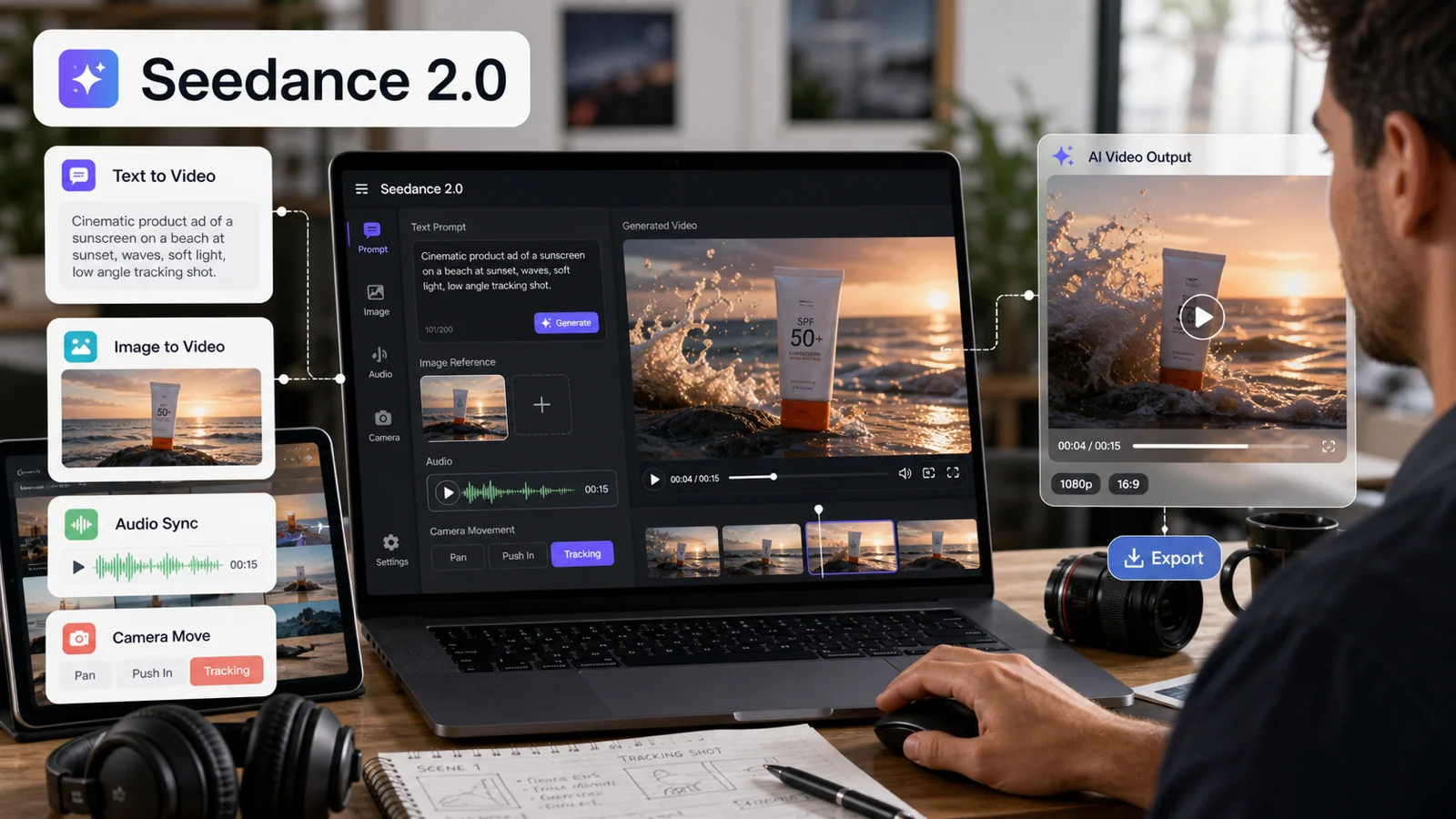
Seedance 2.0 represents a major structural shift for multi-input AI video models. Utilizing a unified audio-video architecture, it challenges standard AI video generation models by accepting nine reference images, three video clips, and multiple audio tracks in a single generation pass, delivering incredible brand continuity.
This makes it a dominant force among image-to-video AI models, specifically for e-commerce workflows. A brand can upload a product shot and generate cohesive sequences showing the item from multiple angles under varying lighting setups. While earlier text-to-video AI models caused objects to morph, Seedance anchors geometry across cuts. It does struggle with multi-subject tracking and minor text rendering, so testing is vital before launch. For serial storytelling, it beats basic image-to-video AI models by preserving composition.
Must-Known Features
- Nine-Image Input Stacking: Accepts massive parallel image arrays to reference complex styles and objects.
- Unified Joint Architecture: Processes video frames and acoustic audio tracks simultaneously inside one pipeline.
- Text-Based Storyboard Mapping: Directs complex multi-shot progressions by parsing continuous written structural outlines.
- Advanced Motion Spline Tracking: Anchors extreme sports choreography smoothly without creating floating ghost frames.
- Audio-Video Continuation Engine: Extends pre-existing film clips seamlessly while preserving background audio continuity.
- Seedance Fast Protocol: Accelerated processing framework optimized specifically for high-volume mobile asset delivery.
Pros & Cons
- Pro: Unmatched structural stability when managing intricate multi-reference inputs.
- Pro: Flawless replication of product geometry across varied cinematic cuts.
- Pro: Drastically reduces asset fragmentation by processing sound simultaneously.
- Pro: Exceptional preservation of specific artistic illumination profiles over time.
- Con: Multi-subject tracking density can cause occasional character focus drift.
- Con: Graphic font textures occasionally blur during high-speed camera motions.
- Con: Native output limits are bounded by fixed 720p base resolutions.
- Con: Enterprise integration models require navigating distinct regional compliance guidelines.
5. Luma Ray3.2: Best For Visual Concepting And Directed Motion
Luma Ray3.2 is built for rapid visual concepting, establishing itself as one of the best AI video models for digital storyboarding. It operates by interpreting cinematic language, enabling directors using text-to-video AI models to establish tone, spatial layout, and camera pacing before booking an expensive physical shoot.
Ray3.2 performs beautifully among image-to-video AI models, transforming concept art into fluid motion while respecting the original art style. It is heavily utilized by creative studios as a foundational tool within their suite of AI video generation models to pitch ideas to clients. The core limitation is that these text-to-video AI models demand precise cinematography terms; vague descriptions lead to unpredictable, abstract results. For filmmakers needing rapid, directed visual exploration, its image-to-video AI models engine provides a reliable, highly cinematic blueprint.
Must-Known Features
- Cinematic Grammar Parsing: Interprets technical film terms like dolly tracks or rack focus natively.
- Style-Locked Extension: Lengthens existing video assets while locking the precise grain and brushwork.
- Spatial Consistency Tracking: Maintains clean room geography and object depth across fluid camera passes.
- Direct Keyframe Interpolation: Animates fluid motion smoothly between two user-provided static composition frames.
- High-Fidelity Material Shader: Simulates accurate light refraction across complex surfaces like glass or chrome.
- Prototyping Render Pipeline: Built to output varied aesthetic concepts with minimal generation latency.
Pros & Cons
- Pro: Translates professional director terminology into accurate camera movements instantly.
- Pro: Perfect tool for assembling high-end artistic mood films quickly.
- Pro: Maintains excellent color grade fidelity across extended camera pans.
- Pro: Intuitive interface minimizes the onboarding curve for non-technical creators.
- Con: Vague or casual phrasing produces completely erratic visual compositions.
- Con: Fails to support integrated native audio or voice track pairing.
- Con: Human anatomy rendering warps during extreme action camera angles.
- Con: Less effective for clean, sterile corporate product advertisement needs.
6. Pika: Best For Social-First AI Video
Pika carves its niche among AI video models by optimizing workflows for speed and social media engagement. Standing apart from dense text-to-video AI models, its platform handles rapid format shifts, making it a favorite for creator ecosystems. As one of the most playful AI video generation models, it integrates instant animation overlays, face modification tools, and custom object swaps.
For quick digital marketing tests, it operates as an effective choice among image-to-video AI models, animating static logos or illustrations in seconds. The primary hurdle is that these text-to-video AI models choose speed over pure realism. If you need grit and cinematic structure, its lighter rendering engine will fall flat. For social-first creators, its slick image-to-video AI models pipeline provides immediate engagement tools.
Must-Known Features
- Instant Object Swapping: Modifies precise clothing or prop elements through basic marquee selection tools.
- Dynamic Sound FX Injector: Generates localized audio tags like explosions or whispers automatically.
- Controlled Area Expansion: Expands compressed video aspect ratios out to vertical or cinematic frames.
- Lip-Sync Character Integration: Drives static avatar illustrations using custom uploaded voice tracks instantly.
- Stylized Filter Presets: Transforms real-world footage into claymation, anime, or 3D cartoon visuals.
- Meme Animation Protocol: Animates internet memes directly using minimal, low-overhead prompt rules.
Pros & Cons
- Pro: Rapid generation cycle speeds up early engagement concept loops.
- Pro: Accessible interface allows immediate creation with zero technical friction.
- Pro: Fantastic tool for applying localized surreal or comedic visual upgrades.
- Pro: Built-in editing features allow quick element swaps without re-rendering.
- Con: Struggles to achieve the high-end photorealism required for premium brands.
- Con: Physics engines can feel floaty compared to heavier cinematic software.
- Con: Short default video lengths limit complex storytelling layout plans.
- Con: Text generation inside outputs often yields scrambled, illegible artifacts.
7. Hailuo / MiniMax: Best For Fast Creative Tests
Hailuo AI, running on MiniMax’s advanced multimodal framework, excels at delivering expressive motion from simple user inputs. It ranks highly among AI video models for teams focused on creative exploration. It breaks the mold of rigid text-to-video AI models by embracing high-energy, abstract motion parameters, turning static imagery into wild conceptual visuals effortlessly. For fast creative testing, social hooks, and expressive motion ideas, Hailuo AI video generator can work well during the ideation stage.
This hyper-expressive foundation positions it as an intriguing entry among image-to-video AI models, especially when attempting to generate organic patterns or surreal dreamscapes. It serves as a vital exploratory sandbox within the broader landscape of AI video generation models. However, because these text-to-video AI models prioritize kinetic energy, exact brand asset consistency can suffer. For ideation phases, its image-to-video AI models architecture provides an incredible launchpad before moving assets to a final editor.
Must-Known Features
- Expressive Motion Engine: Drives extreme kinetic energy and stylized physics paths natively.
- Cross-Modal Music Synthesis: Generates full background audio tracks alongside video outputs simultaneously.
- High-Volume Batch Processing: Submits parallel generation lines to accelerate early concept loops.
- Single-Image Core Ingestion: Extracts high-impact motion cues out of basic portrait photographs.
- Dynamic Text Adherence: Decodes descriptive prompts to render extreme perspective changes reliably.
- Web Creation Workspace: Low-overhead web interface built to run complex multi-input generations.
Pros & Cons
- Pro: Excellent at producing dynamic, fast-paced human actions from photos.
- Pro: Integrated music generation gives a complete audiovisual draft immediately.
- Pro: Highly accessible platform reduces financial barriers for independent creators.
- Pro: Creative flexibility enables unique surreal visual outputs other engines block.
- Con: Precise continuity tracking can degrade across long-duration shots.
- Con: Commercial usage rights require close inspection across specific tiers.
- Con: Default watermarks require account upgrades to remove for brand usage.
- Con: Less suitable for clinical, slow-pan premium product marketing campaigns.
8. OpenAI Sora 2: Strong Model, But Not A Safe Long-Term Workflow
Sora 2 remains an architectural marvel among AI video models, featuring flawless physics and deep multi-shot rendering control. It set the early baseline for text-to-video AI models by maintaining scene geometry and realistic object tracking across extended timelines. Its native audio integration set it apart from rival AI video generation models, creating highly cohesive multimedia clips.
When evaluating image-to-video AI models, Sora 2’s engine delivers stunning, near-perfect fidelity. However, this model is a dead-end for future production pipelines. OpenAI has announced formal discontinuation schedules, ending web access entirely and sunsetting API routes completely by September 24, 2026. While its image-to-video AI models performance remains legendary, creators must pivot to alternative text-to-video AI models to keep workflows secure.
Must-Known Features
- Deep World Physics Engine: Models gravity, liquid surface tension, and momentum with flawless realism.
- Advanced Multi-Shot Continuity: Keeps scenery and characters identical across sudden camera cuts.
- Integrated Multi-Output Sync: Renders clean background sound and synced voices natively.
- High-Fidelity Crowd Simulation: Tracks dozens of independent human actors without visual melting.
- Extended Temporal Tracking: Preserves background elements perfectly even when obscured by foreground motion.
- API Pipeline Infrastructure: Built for deep developer automation before the formal sunset dates.
Pros & Cons
- Pro: Jaw-dropping visual photorealism unmatched by standard generation software.
- Pro: Impeccable simulation of complex environmental interactions and wind physics.
- Pro: Long-duration single-take stability keeps scenes structurally sound.
- Pro: Native multi-shot features reduce manual post-production assembly steps.
- Con: Complete discontinuation scheduled across all access paths by late 2026.
- Con: Extremely restricted deployment access during its remaining active lifespan.
- Con: Heavy computation requirements lead to significant per-clip generation latency.
- Con: Building long-term enterprise software tooling on this engine is impossible.
How To Choose The Right AI Video Model
The easiest way to choose is to match the model to the job. Here is a practical breakdown.
The 5-Prompt Test Before You Pay For A Plan
Before you choose any AI video model, test it with the same five prompts. This gives you a fair comparison.
Prompt 1: Product Detail
Create a close-up video of a matte black wireless earbud case on a wooden desk. Morning light comes from the left. The camera slowly pushes in. Keep the logo area blank and the product shape consistent.
What to check:
Product shape, reflections, logo area, camera movement, flicker.
Prompt 2: Human Motion
A person in a red raincoat walks across a wet city street at night. Reflections show on the pavement. The person turns toward the camera and smiles naturally.
What to check:
Hands, face, walking motion, clothing, reflections.
Prompt 3: Dialogue And Audio
A young founder stands in a small studio and says, "We built this to save teams one hour every day." Natural voice, soft room tone, medium shot.
What to check:
Lip sync, voice quality, mouth movement, facial stability.
Prompt 4: Camera Direction
A slow drone-style shot moves over a quiet mountain village at sunrise, then tilts down toward a small cafe with warm lights turning on.
What to check:
Camera logic, depth, scene stability, lighting.
Prompt 5: Multi-Shot Story
Create a 12-second story with three shots: a chef chops herbs, adds them to a pan, then plates a pasta dish. Keep the same kitchen, same chef, and same lighting.
What to check:
Continuity, food details, hands, shot changes, timing.
Score each model from 1 to 5 on:
- Prompt accuracy.
- Motion quality.
- Character or product consistency.
- Audio quality.
- Editability.
- Cost per usable clip.
- Time needed to get a publishable result.
The winner is not the model with the prettiest first clip. The winner is the model that gives you the most usable clips for your real workflow.
Pitfalls to Avoid in AI Video Production
- Don't Fall for the Demo Reels: Platforms curate their showcase videos from thousands of failed generations. Base your business decisions entirely on your own raw testing data.
- Stop Overloading Your Prompts: Forcing three character actions, four camera movements, and a complex lighting shift into one text prompt will break the model. Generate short, clean, single-action clips and stitch them together later.
- Audit Every Frame: AI video can look incredible on a small screen at first glance. Look closer. Watch for melting fingers, warped text, backward reflections, or floating background objects that will kill your brand’s credibility.
- Mind the Legal Boundaries: Generating recognizable public figures, copyrighted characters, or corporate logos without explicit authorization is a legal minefield. Always review a platform’s enterprise terms to ensure your outputs are cleared for commercial use.
Best AI Video Models By User Type
Best For Marketers
Start with Runway, Veo, and Seedance. These models are useful for product shots, ad hooks, landing page visuals, and campaign tests. Use reference images whenever brand consistency matters.
Best For Filmmakers
Test Veo, Kling, Runway, and Luma. Look at camera movement, light, continuity, and how well the model handles people in motion. Expect to assemble final scenes from several short clips.
Best For Social Creators
Start with Pika, Hailuo, and Kling. The goal is speed, visual surprise, and a format that fits the platform. You do not always need the most realistic model for social content.
Best For E-Commerce
Test Seedance, Runway, and Veo. Use product reference images. Check product shape, color, texture, and any label area carefully. AI video can be useful for lifestyle clips, but product accuracy matters.
Best For Developers
Look at API access, pricing, queue times, allowed use cases, output length, moderation rules, and whether the model supports image, audio, or video references. Do not choose only by quality. Choose by reliability and integration fit.
FAQs
The best AI video model depends on the use case. Google Veo is strong for realistic clips, Runway is strong for creative control, Kling is strong for native audio and multi-shot scenes, Seedance is strong for reference-based storytelling, Luma is strong for concepting, and Pika is strong for social videos.
AI video models are used to create short videos from text, images, video references, or audio. Common uses include ads, product visuals, social posts, storyboards, training visuals, concept films, pitch decks, and creative testing.
No. The model is the engine that creates or edits video. The generator is the app or platform that lets people use the model. The app also controls workflow, pricing, editing tools, export options, and commercial rights.
Runway and Google Veo are strong first choices for marketing because they balance visual quality, control, and repeatability. Seedance is also worth testing when product references and connected shots matter.
Pika is one of the best fits for short social clips because it focuses on fast effects, swaps, scenes, and trend-style videos. Hailuo and Kling are also useful for quick creator content.
OpenAI's help center says the Sora web and app experiences were discontinued on April 26, 2026. It also says the Sora API will be discontinued on September 24, 2026. For new long-term workflows, choose a different primary model.