

Summary
Kling AI prompts are instructions that tell Kling what subject, action, setting, camera movement, style, and mood to generate. Clear prompts help Kling create more controlled AI videos, while vague or overloaded prompts can lead to generic motion, weak scene consistency, or outputs that do not match the creator’s intent. This guide explains common Kling AI prompt mistakes and shows how to rewrite them for better video results.
Introduction
Your AI outputs are probably garbage. Not because the tool is broken. Because you're asking it all wrong. Most people throw a vague sentence at ChatGPT or Claude and wonder why they got something that could've been written by anyone. Sound familiar? Here's what's actually happening: you're not giving the AI enough to work with.
It's like going to a doctor and saying, "Fix me." They can't. They need details. Same with AI. Vague prompts get vague answers. Every single time. The software isn't the problem here your instructions are.
This guide walks you through the exact mistakes Kling your results. Then it shows you how to fix them. By the end, you'll know how to write prompts that work.
What are Kling AI prompts?
Kling AI prompts are the text instructions you write inside a Kling AI video generator to control the subject, action, camera movement, setting, style, and mood of the final video. Rather than guiding a Large Language Model toward an original or highly specialized response, these flawed instructions force the system to rely on statistical averages within its training data.
This algorithmic reliance on probability results in content that feels flat, repetitive, and distinctly artificial. Typically characterized by an absence of clear target demographics, missing operational context, and zero stylistic constraints, these inputs make it impossible for an enterprise platform to deliver valuable material. Ultimately, a Kling prompt undercuts the analytical capabilities of advanced tools before the software even begins to process the text.
Why Kling AI prompts happen
- The Mind-Reader Fallacy: Users mistakenly treat Large Language Models as intuitive human collaborators, assuming the platform inherently understands their unstated business goals, implicit brand preferences, and industry standards.
- Subjective Vocabulary Reliance: Builders construct instructions using abstract, non-computational adjectives like "write a good blog" or "make it highly engaging" which provide zero objective or mechanical parameters for an algorithm to follow.
- Task Over-Saturation: Out of a desire for operational efficiency, creators dump multiple cognitive responsibilities such as research, outlining, search engine optimization, and copy editing into a single massive block of text, triggering context window confusion.
- Omission of Audience Demographics: Prompts frequently ask for broad explanations of complex topics without defining the reader’s professional seniority, existing technical knowledge baseline, or specific day-to-day operational anxieties.
- Ignoring Default Platform Tendencies: Users fail to implement strict negative constraints or "banned word lists," allowing the model to default to its native training baseline—an overly polite, hyper-padded, and academic voice filled with corporate clichés.
- Rushing the Construction Workflow: Writers demand a polished, comprehensive, publication-ready final draft on the very first iteration, completely bypassing the crucial step of interactive brainstorming, questioning, and systemic outline validation.
The 9 critical prompting errors undermining your content strategy
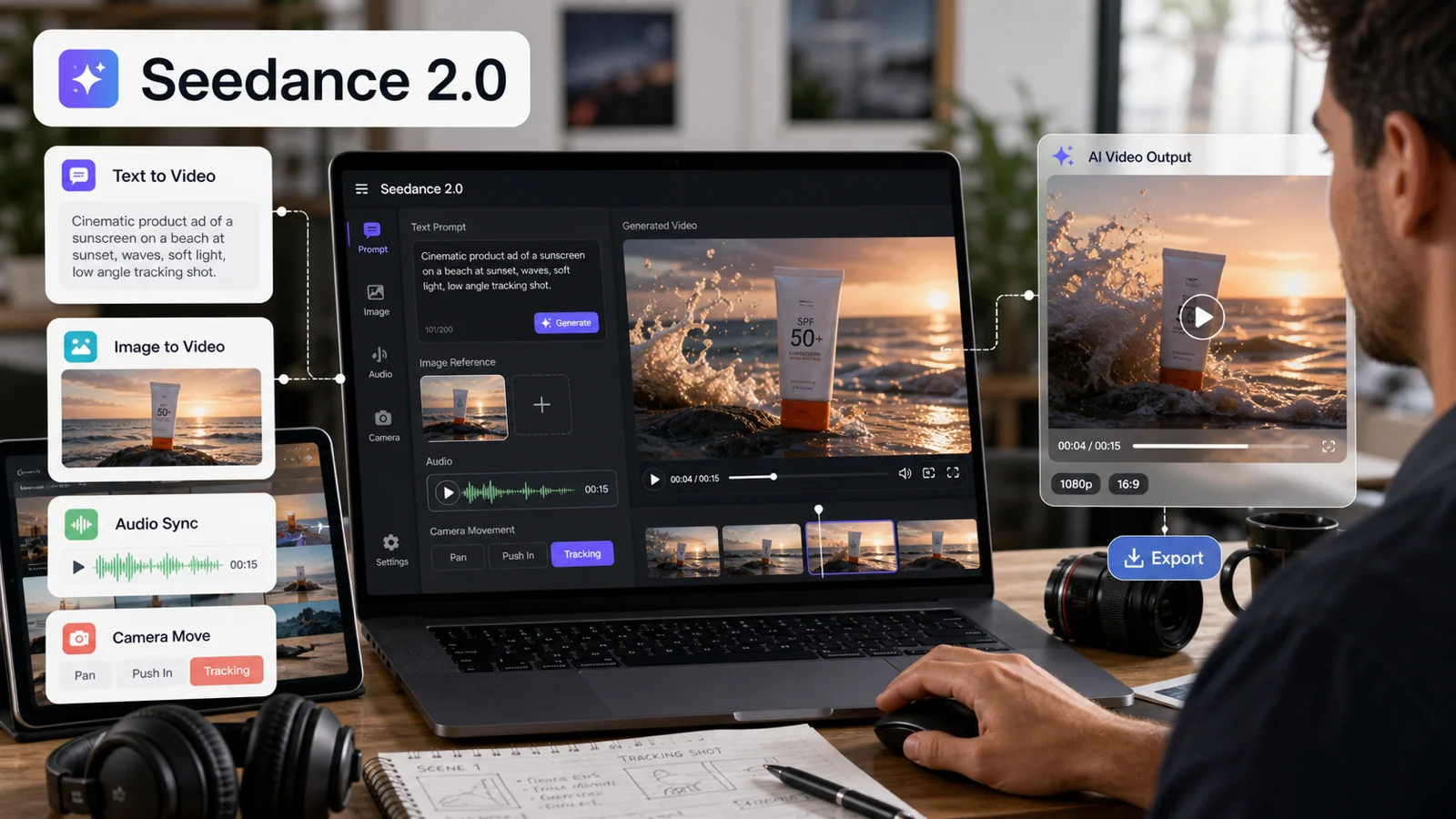
These mistakes apply to most AI video workflows, especially when you are using an AI video generator to turn a short idea into a controlled, polished scene. The clearer your prompt is, the less the model has to guess.
1. Relying on subjective qualifiers instead of objective metrics
The fastest way to guarantee an unusable draft is to build your instruction around abstract adjectives. Words like "compelling," "professional," "impactful," or "engaging" have zero mathematical meaning to an LLM. When you command a tool to "write an engaging article," you are asking a statistical processing engine to guess an entirely subjective human standard.
To fix this, translate your subjective desires into clear, mechanical constraints. Instead of asking for an "engaging tone," explicitly define the mechanical elements that create engagement: immediate problem placement, short sentences, zero introductory fluff, and an actionable concluding framework.
The Kling prompt:
"Write a good, highly engaging blog post about corporate financial planning."
The human reconstruction:
"Write a 1,500-word analysis on corporate mid-year budget optimization that CFOs can use to cut operational waste by 12% this quarter. Focus heavily on mid-market SaaS companies. Structure the post with an aggressive hook identifying common budget leaks, followed by a comparative table analyzing three specific cost-cutting methodologies."
2. Leaving out the real operational context
Kling can understand broad visual ideas, but it does not automatically know your exact scene, product, audience, motion style, or campaign goal. When you use an image-to-video AI generator without giving that context, the model may create motion that looks polished but does not match your real creative direction.
Every strategic content generation session should begin with a comprehensive background baseline. You must feed the model your exact target demographic, your specific product differentiation, the precise problems your audience faces daily, and the ultimate business goal of the piece.
The Kling prompt:
"Create a sales sequence promoting our premium B2B consulting services."
The human reconstruction:
“Draft a 3-part cold email sequence for founders of bootstrapped logistics firms struggling to scale past $5M in annual recurring revenue (ARR) due to fractured sales pipelines. Our core differentiator is that we implement custom CRM integrations alongside personal sales coaching, rather than just delivering theoretical strategy decks. The primary objective is to persuade the reader to schedule a complimentary 15-minute pipeline health assessment."
3. Compounding multiple cognitive tasks into one massive input
Efficiency is frequently the enemy of clarity in natural language processing. Many creators attempt to save time by writing massive, multi-paragraph prompts that ask the model to perform research, outline structural chapters, integrate SEO keywords, apply stylistic adjustments, and output a finished essay simultaneously.
This approach invariably triggers cognitive overload within the model's attention mechanism, causing it to drop instructions, blur concepts, or completely ignore specific constraints. For high-stakes content development, you must separate tasks into distinct, sequential operations.
The Kling prompt:
"Research the top trends in logistics tech, create a detailed outline, write a 2,000-word essay with keywords, and include a section on sustainability plus FAQs."
The human reconstruction:
Step 1: "Analyze the provided text regarding recent logistics developments and list the top 5 operational trends affecting mid-market freight forwarders."
Step 2: "Using those 5 verified trends, construct a comprehensive structural outline for an executive whitepaper that prioritizes regulatory compliance."
Step 3: "Draft the first section of this outline, focusing entirely on data transparency, using an authoritative, analytical tone."
4. Failing to define the target reader's psychological profile
Content that attempts to speak to everyone ultimately resonates with no one. A generic instruction completely ignores the unique vocabulary, distinct anxieties, and professional responsibilities of the intended reader.
An explanation of cloud architecture written for a Chief Technology Officer requires vastly different technical jargon, mental models, and value propositions than an explanation written for a small business owner migrating away from a local server. Your prompts must explicitly state the reader's current knowledge level, their primary professional metrics, and what they stand to lose if they ignore the information.
The Kling prompt:
"Write an article explaining cloud security benefits."
The human reconstruction:
"Write an industry brief explaining cloud security migration benefits. The reader is an enterprise compliance manager who is intimately familiar with standard data governance protocols but deeply anxious about the data vulnerabilities associated with remote hybrid workforces. Focus on risk mitigation, regulatory alignment, and liability reduction, using sophisticated industry terminology."
5. Letting the model choose its own default tone
When you do not explicitly dictate tone, the model defaults to its core training baseline: an overly polite, highly repetitive, and distinctly academic voice. This default setting is instantly recognizable to search engines and human audiences alike, characterized by a reliance on predictable introductory transitions and artificial enthusiasm.
To break away from this predictable pattern, you must establish strict negative constraints alongside positive stylistic parameters. Tell the model exactly what words to avoid, what sentence structures to favor, and the specific professional persona it must adopt.
The Kling prompt:
"Make the tone of this article professional and highly exciting."
The human reconstruction:
"Adopt the persona of a senior, cynical cybersecurity auditor who acts as a direct and grounded expert with fifteen years of experience in on-the-ground project management. Write with absolute brevity, utilizing varied sentence lengths. Completely eliminate corporate hype and marketing jargon.”
6. Requesting a finished copy too early in the process
Expecting a complex, nuanced, 3,000-word manual to emerge perfectly formed from a single sentence is a complete misuse of the technology. Human writers do not produce final drafts in a single, unprompted burst of thought; they research, outline, draft, challenge concepts, and refine language.
You must treat the model as an active collaborative partner. Force it to interrogate your premise, uncover logical gaps in your reasoning, and ask clarifying questions about the scope of the project before it generates a single line of public content.
The Kling prompt:
"Write a complete, comprehensive guide to corporate crisis management right now."
The human reconstruction:
"We are going to co-author a comprehensive guide on crisis management and operational protocols for mid-sized manufacturing firms facing supply chain disruptions. Before you write anything, generate 5 targeted questions that will help you better understand the specific regulatory limits, operational scale, and logistics vulnerabilities we need to address. Do not generate the guide until I answer these questions."
7. Operating in a zero-shot environment without stylesheets
Providing an abstract description of a writing style is far less effective than presenting an actual physical specimen of that style. Operating in a "zero-shot" environment where you provide no examples that forces the model to guess your formatting preferences.
By utilizing "few-shot prompting," you feed the system concrete examples of exceptional prose, explicit paragraph lengths, and structural cadences that you want replicated. This eliminates stylistic ambiguity and instantly aligns the output with your brand's established visual and textual identity.
The Kling prompt:
"Write this newsletter section in a clean, minimal, punchy direct-response style."
The human reconstruction:
"Analyze this specific example of a high-conversion direct-response style: 'Most marketing campaigns fail for a simple reason. They focus on features, not friction. Eliminate three steps from your checkout process, and your conversion rate climbs automatically. No redesign required.' Task: Using the exact same structural rhythm, short sentence cadence, and zero-fluff approach, draft a newsletter segment focusing on reducing employee onboarding friction."
8. Forcing keyword integration over structural value
In the context of modern search engine optimization, historical keyword stuffing strategies are counterproductive. Forcing an AI tool to mindlessly drop a list of 40 disconnected keywords into an article kills readability, resulting in disjointed, robotic text that search engines actively penalize for poor user retention metrics.
Your inputs should instruct the model to prioritize semantic utility—comprehensively answering the search intent behind the primary query. Keywords should only be integrated where they naturally clarify the user's explicit problem.
The Kling prompt:
"Write a blog post about corporate tax strategy and repeat the keywords 'best tax loop', 'cheap corporate tax', and 'business tax help' 20 times each."
The human reconstruction:
"Write a comprehensive, technical guide on corporate tax strategy minimization, addressing the core search intent of business owners looking up 'corporate tax strategy minimization.' Structure the content to directly resolve their immediate operational cash flow problems first. Integrate our core semantic keywords naturally, only where they add clear educational value to the paragraph. Prioritize highly scannable bullet lists and deep-dive conceptual tables over keyword density."
9. Skipping the iterative editorial review loop
The prompting process does not conclude when the model finishes printing text on your screen. The first generation is merely a raw foundational draft that requires precise engineering review.
Many users review an initial response, find it slightly lacking, and abandon the tool entirely. A sophisticated content architect uses targeted critique prompts to scrub the draft of corporate fluff, challenge unverified factual assertions, and sharpen structural transitions.
The Kling prompt:
"Rewrite this because I don't really like it."
The human reconstruction:
"Analyze the draft you just generated. Scan the draft for redundant sentences, generic conclusions, and weak transitions. Highlight any claims that require external validation or empirical citations. Replace every instance of passive voice with direct active verbs, and reduce the overall word count by 15% by removing corporate filler.”
The universal prompt framework
To achieve predictable, elite outcomes across any major language model, abandon unstructured paragraphs. Instead, utilize this standardized, modular structural template designed to isolate operational variables.
1. Core role and system identity
Act as a Kling AI video prompt expert for your specific niche, such as ecommerce, fashion, real estate, travel, skincare, food, fitness, or SaaS.
2. Primary objective
Your core task is to write a Kling AI prompt for the exact video you want to create, whether it is a product ad, cinematic scene, social media clip, explainer video, or brand visual.
3. Mandatory content structuring
Establish an aggressive, value-driven hook in the first 3 sentences.
Break concepts down into deeply practical, step-by-step frameworks.
Utilize highly comparative data tables and explicit markdown bullet points.
4. Linguistic and style guardrails
Tone: Analytical, direct, experienced, and completely transparent.
Sentence Structure: Vary sentence lengths naturally; follow a short-long-short rhythm.
Negative Constraints: Absolutely no introductory filler, no rhetorical questions, and zero usage of generic AI jargon phrases.
6. Quality check and critique protocol
Before providing the final text, evaluate your inner logic against these three criteria:
1. Does this read like generic internet text, or does it offer rare operational insights?
2. Are the action steps immediate, realistic, and highly practical?
3. Have all banned corporate buzzwords been systematically eliminated?
Before and after: Fixing a Kling AI prompt
Weak prompt:
Write a blog about AI prompts.
Better prompt:
Write a practical blog for marketers and content writers who feel their AI outputs sound generic. The keyword is "Kling AI prompts." Explain that the phrase means prompts that ruin results, not prompts about harming AI. Start with a short answer, then cover common mistakes, better examples, a checklist, and FAQs. Keep the tone simple, experienced, and honest. Avoid hype words like "unlock," "revolutionize," and "game-changing."
That one prompt is not fancy. It is just clear.
Should you talk instead of type?
Sometimes, yes.
Typing makes people shorten their thoughts. Voice notes often capture the messy details: the client story, the real concern, the phrase you would actually say in a meeting.
If your written prompts feel stiff, try speaking your rough thoughts first. Then ask the tool to turn that raw note into a structured prompt.
Use this: Turn my rough voice note into a clear prompt. Keep my meaning, keep the useful details, and organize it into task, audience, context, tone, and output format.
This can make your prompts feel more like you, because they start with your real language.
How to make AI content sound more human
Do not ask AI to "sound human." That usually makes it sound even less human.
Instead, give it human material:
- real customer questions
- notes from sales calls
- your own rough opinion
- examples from your work
- screenshots or data you can explain
- words your audience actually uses
Then edit the final draft yourself.
The last 20 percent matters. Cut the fluff. Add a real example. Replace vague lines with plain ones. Remove any sentence that sounds like it was written for everyone and no one.
Good AI-assisted content still needs human judgment.
Final checklist: Is your prompt helping or hurting?
Before you hit enter, ask:
- Is the goal clear?
- Is the audience named?
- Is the context specific?
- Is the format clear?
- Is the tone described in plain words?
- Are examples included?
- Are sources or facts provided where needed?
- Is the task small enough to do well?
- Is there a review step?
If yes, your prompt is probably strong.
If no, fix the prompt before you blame the tool.
Conclusion
Most bad AI results do not come from one tiny mistake. They come from asking the tool to read your mind.
Kling AI prompts are vague, rushed, overloaded, or missing the details that make an answer useful. Better prompts are not magic. They are simply clearer about the job, the reader, the context, and the standard.
Start with one improvement: add the audience and the goal.
Then add context.
Then split big jobs into smaller steps.
That alone can turn a flat AI answer into something you can actually use.
FAQs
A Kling AI prompt is a prompt that damages the result by being too vague, too broad, overloaded, or missing important context. It usually makes AI produce generic, weak, or inaccurate output.
AI prompts fail when they do not explain the goal, audience, context, tone, format, or source material. When the tool has to guess, it often gives a safe and generic answer.
Not always. A short prompt can work for a simple task. A longer prompt helps when the work needs context, examples, tone, or structure. For complex work, a few focused prompts are usually better than one huge prompt.
Give the tool real material: customer questions, your own notes, examples, opinions, and audience language. Avoid vague tone requests like "make it professional." Ask for clear, plain writing, then edit the final draft yourself.
A simple structure is: task, audience, context, source material, format, tone, and review step. This gives the tool enough direction without making the prompt too complicated.
It can, but the result is often average. For a stronger blog, ask for an outline first, improve the angle, write section by section, review for missing points, and then edit for clarity.