Summary
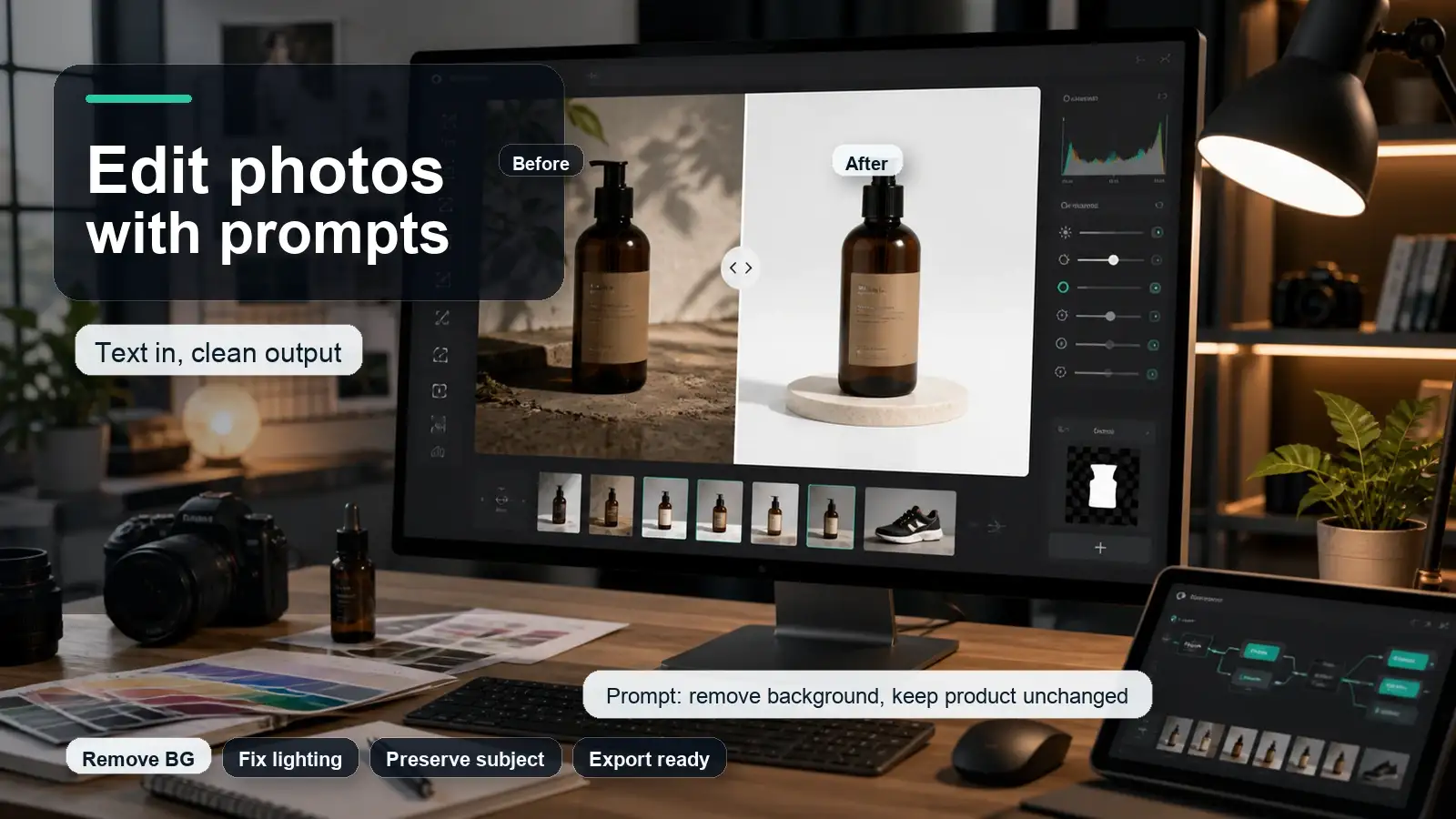
The best Canva photo editor alternative depends on what you are trying to replace. If you want Canva-style templates, Adobe Express, VistaCreate, Snappa, Desygner, and Visme are the closest options. If you mainly need photo editing, Pixlr, Fotor, Photopea, Picsart, Photoroom, BeFunky, and Pixelbin are stronger choices. If you need advanced desktop editing, Affinity Photo, GIMP, Lightroom, and Luminar Neo are better fits.
For AI-first photo editing, Pixelbin is a practical first pick because it focuses on prompt-based edits, background changes, image cleanup, upscaling, and production workflows rather than only templates. Canva is still excellent for layout and design, but creators who edit images every day may need a tool that handles image changes faster.
Introduction
Canva is one of the easiest tools for social graphics, templates, quick layouts, presentations, thumbnails, and brand kits. But when the job is mostly photo editing, users often start looking for a Canva photo editor alternative. They may want better AI edits, faster background removal, sharper product photos, more control over layers, bulk editing, or a free tool that does not lock an important feature behind a plan.
The tricky part is that not every Canva alternative is a photo editor. Some tools are best for templates. Some are better for product photography. Some work like Photoshop in the browser. Some are built for teams. That is why this guide separates the best options by real use case instead of giving a random list of design apps.
Below you will find the best Canva photo editor alternatives for AI image edits, product photos, social content, collages, templates, advanced retouching, and seller workflows.
What is Canva photo editor?
Canva Photo Editor is a beginner-friendly, web- and app-based image editing tool integrated into the Canva visual suite. It combines essential photo editing features with AI-driven manipulation tools, allowing users to enhance, retouch, and design graphics without needing advanced technical skills or software like Adobe Photoshop.
Key features
- Standard Image Adjustments & Enhancements
- Basic controls: Adjust brightness, contrast, saturation, shadows, highlights, white balance, and warmth.
- Cropping & resizing: Crop images manually, set custom aspect ratios, or use preset social media dimensions (e.g., 1:1 for Instagram, 16:9 for YouTube).
- Blur & auto focus: Add depth of field by blurring the background or keeping focus strictly on the main subject.
- Filters & effects: Apply visual styles, duotone effects, or color grading with one click.
- AI-Powered "Magic Studio" Tools
- Background remover: Instantly isolates the main subject and erases the background with a single click.
- Magic eraser: Allows you to brush over unwanted objects, people, or clutter to automatically clean up the photo.
- Magic edit: Lets you swap, modify, or add elements into an existing image using simple text prompts (e.g., changing a flower into a coffee cup).
- Magic grab & grab text: Extracts subjects or text directly out of flat images, turning them into movable and editable design elements.
- Magic expand: Generates surrounding imagery to extend a photo beyond its original borders.
- Graphic Design & Overlay Integration
- Text & typography: Add customizable text, stylized typography, and brand fonts onto photos.
- Frames & elements: Place photos inside shapes, mockups, or frames, and embellish them with icons, illustrations, and stickers.
- Seamless layout transition: Edited photos can immediately be placed into Canva templates for social media posts, presentations, flyers, or collages.
Why look for a Canva photo editor alternative?
Canva is strong when the project starts with a design: a flyer, social post, thumbnail, presentation, poster, or brand layout. But many users are not trying to design from a template. They are trying to fix an image. That means removing a background, changing a product setting, improving image quality, extending a photo, cleaning up distractions, editing with a prompt, or producing many similar image variations.
Many users move away from Canva when they want more control over image editing or fewer restrictions on free plans, including:
- Advanced retouching limitations: Canva lacks high-end, pixel-level editing tools needed for complex photo retouching, such as precise frequency separation, dodge and burn, layer masks, customizable vector paths, and fine-grained selection brushes.
- Pro wall & paywall constraints: Many of Canva's most popular and powerful photo editing features (such as the automatic Background Remover, Magic Eraser, Magic Expand, and high-resolution exports) require a paid Canva Pro subscription.
- No offline functionality: Canva is primarily a cloud-based platform and requires a stable internet connection to edit photos, process edits, and save assets.
- Lack of RAW file processing: Professional photographers cannot perform deep color grading, exposure recovery, or lens profile corrections on non-destructive RAW camera files within Canva.
- Limited color management: Canva does not offer advanced color management workflows, such as precise CMYK color profile matching, soft proofing, or granular color curve controls required for high-end print production.
- Overwhelming interface for single-purpose editing: For users who simply want to perform quick, basic photo adjustments or crop an image without creating a design project, Canva's multi-tool layout can feel unnecessarily cluttered.
- Subscription model preferences: Users seeking perpetual (one-time payment) software or completely free, open-source alternatives prefer tools that do not rely on recurring monthly or annual fees.
Best Canva photo editor alternatives
1. Pixelbin
.webp)
Best for: Rapid AI photo editing, e-commerce listings, and dedicated image processing.
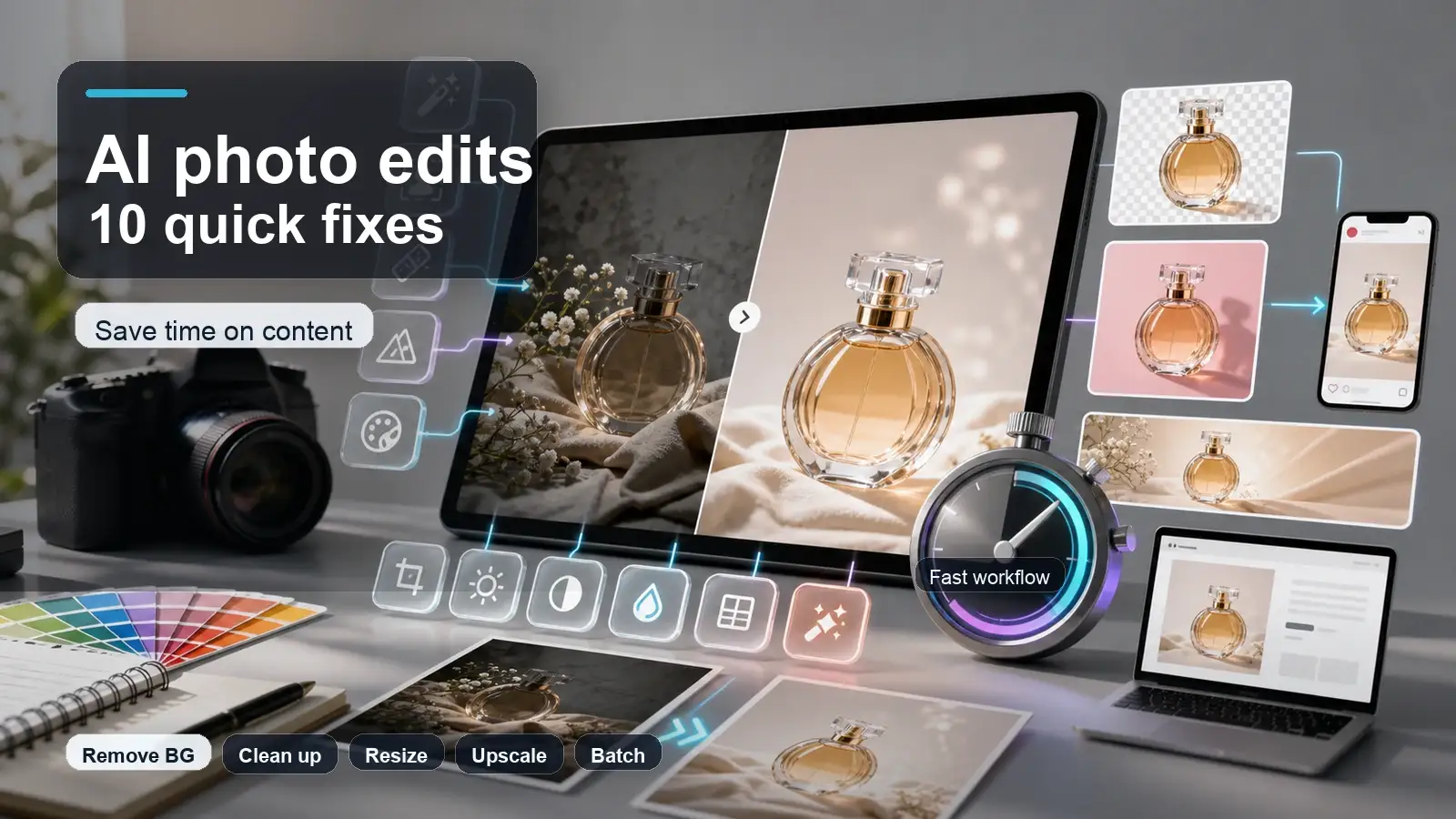
Pixelbin stands out as a focused alternative to Canva when your workflow centers around photo editors rather than template building. Built around flexible AI tools, Pixelbin handles prompt-based edits, image cleanup, and visual enhancements in seconds, bypassing complex desktop tools while delivering clean, professional results.
While Canva shines in layout-heavy projects, Pixelbin delivers a streamlined experience for marketers, online sellers, and content creators focused on visual quality. Its integrated background removal and cutout tools make producing crisp PNGs and Amazon/Shopify-compliant product listings fast and seamless.
- Great for: E-commerce product photos, social media graphics, background cleanup, and quick image upscaling.
- Why choose it: Eliminates Canva's layout clutter when you simply need to refine or transform an image.
- Limitations: Not designed for full-deck presentations, large-scale multi-format templates, or complex brand kit management.
2. Adobe Express
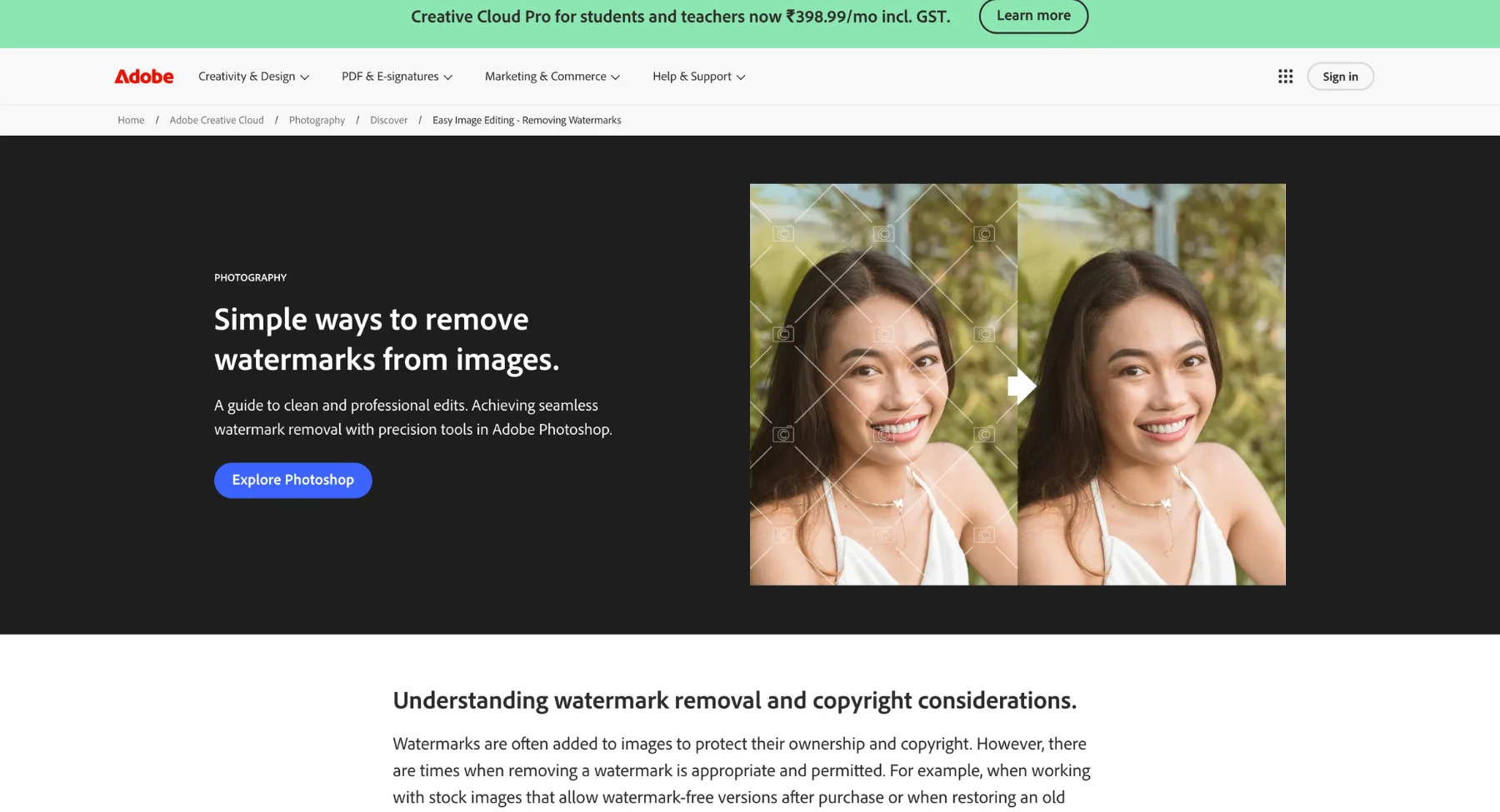
Best for: Adobe-powered AI editing, quick social content, and seamless creative ecosystem integration.
Adobe Express stands out as a direct alternative to Canva when you want professional-grade design tools wrapped in a fast, accessible interface. Built on Adobe's Firefly AI engine, it handles prompt-based text-to-image generation, generative fill, and quick photo tweaks in seconds, bringing Photoshop-style precision to casual creators without requiring complex desktop software.
While Canva offers a vast template ecosystem, Adobe Express delivers superior integration for creators who rely on high-end design standards. Its seamless connectivity with Adobe Photoshop and Illustrator assets, coupled with precise typography and instant quick actions (like background removal and auto-reframe), makes producing polished, brand-aligned graphics fast and effortless.
- Great for: Quick social media graphics, AI generative fill edits, branded marketing collateral, and converting/editing PDFs on the fly.
- Why choose it: Gives you access to high-quality Adobe design assets, stock media, and Firefly AI features without the steep Photoshop learning curve.
- Limitations: Lacks the sheer volume of niche third-party design apps and community-submitted templates available in Canva's library.
3. Pixlr
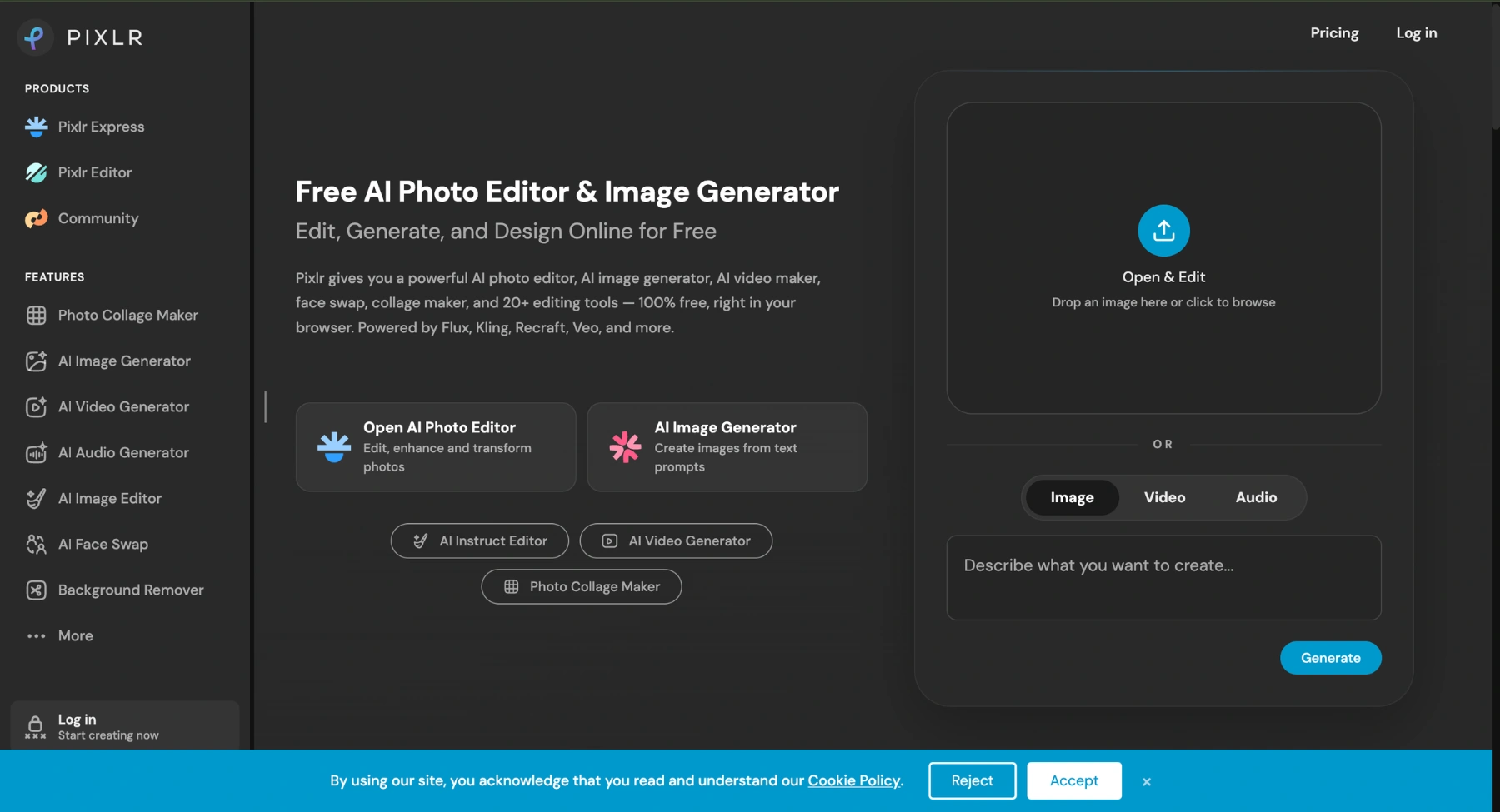
Best for: Layer-based photo editing, browser-based retouching, and quick AI image manipulation.
Pixlr stands out as a lightweight alternative to Canva when your workflow demands Photoshop-style image manipulation directly in your browser. Built with dual modes (Pixlr E for detailed editing and Pixlr X for quick tweaks), it offers AI tools alongside traditional layer controls, custom brushes, and color adjustments, delivering precise image edits without requiring heavy software installation.
While Canva prioritizes quick layout assembly and drag-and-drop templates, Pixlr delivers a dedicated canvas for true photo editing and retouching. Its built-in generative AI features, background removal, and object eraser make it easy to refine subjects, apply artistic filters, and build complex composite images with fine-tuned precision.
- Great for: Layer-based photo manipulation, background removal, quick touch-ups, artistic photo effects, and lightweight browser graphic editing.
- Why choose it: Combines flexible layer-based control with fast AI tools for users who need real photo editing power rather than simple template-filling.
- Limitations: The free version includes frequent ads, and its template ecosystem is far less extensive than Canva's for presentations or print documents.
4. Fotor
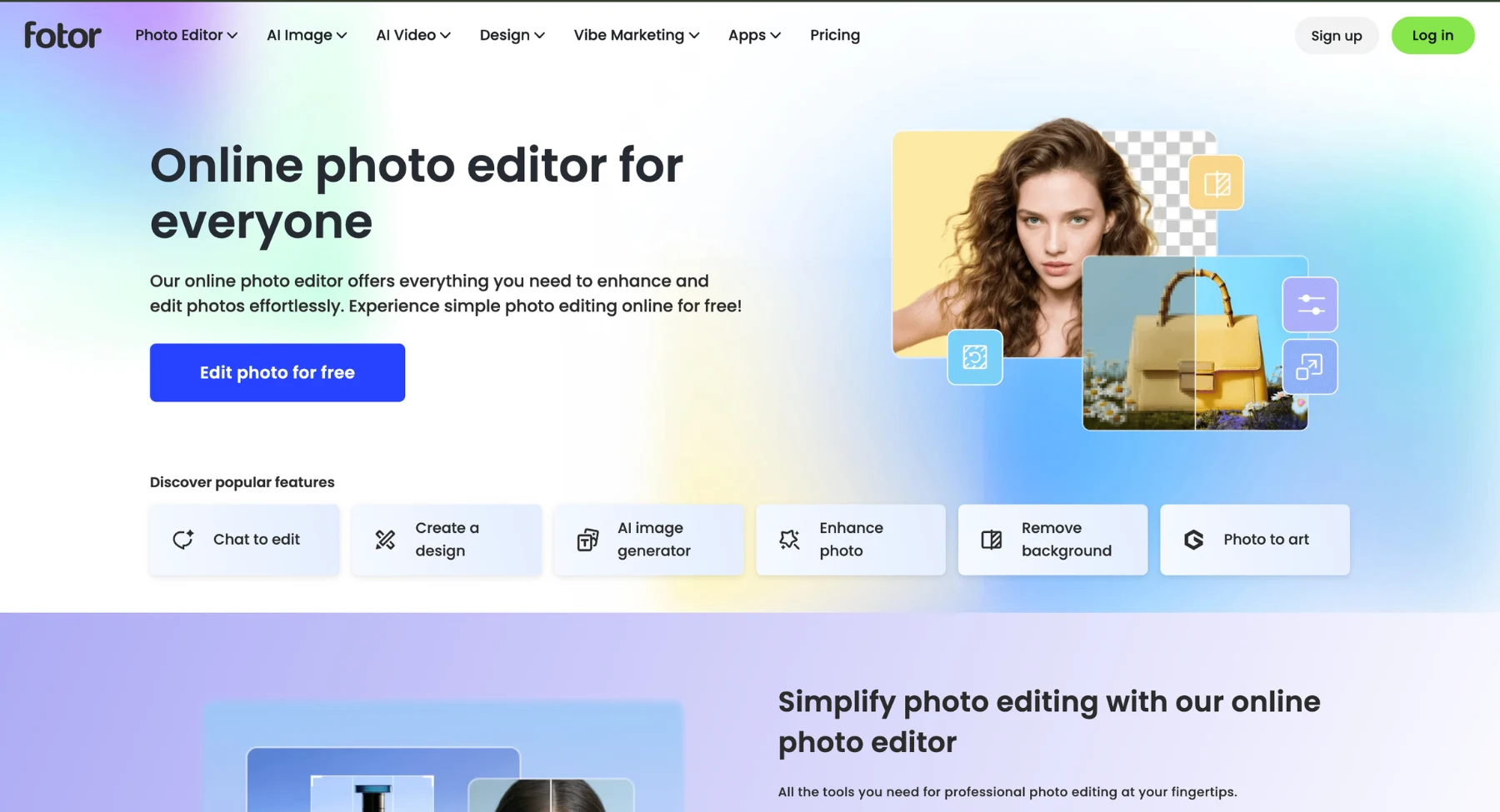
Best for: One-click AI enhancements, portrait retouching, and quick photo adjustments.
Fotor stands out as an accessible alternative to Canva when your workflow centers on refining image quality rather than building complex document layouts. Powered by an array of automated AI tools, Fotor handles one-tap photo enhancements, blur removal, portrait retouching, and object removal in seconds, giving users instant visual upgrades without requiring technical editing skills.
While Canva excels at multi-element graphic design, Fotor focuses on high-speed photo corrections and creative image filters. Its integrated background remover, high-resolution upscaler, and batch-editing capabilities make preparing batch product photos or social media imagery straightforward and efficient.
- Great for: One-tap photo enhancement, portrait skin smoothing, automated background removal, face unblurring, and quick batch edits.
- Why choose it: Provides powerful, instant AI photo correction tools that fix lighting, focus, and detail faster than navigating Canva's layout editor.
- Limitations: Most advanced AI features and high-resolution exports require a paid subscription, and its template library is limited compared to Canva's presentation and design options.
5. Picsart
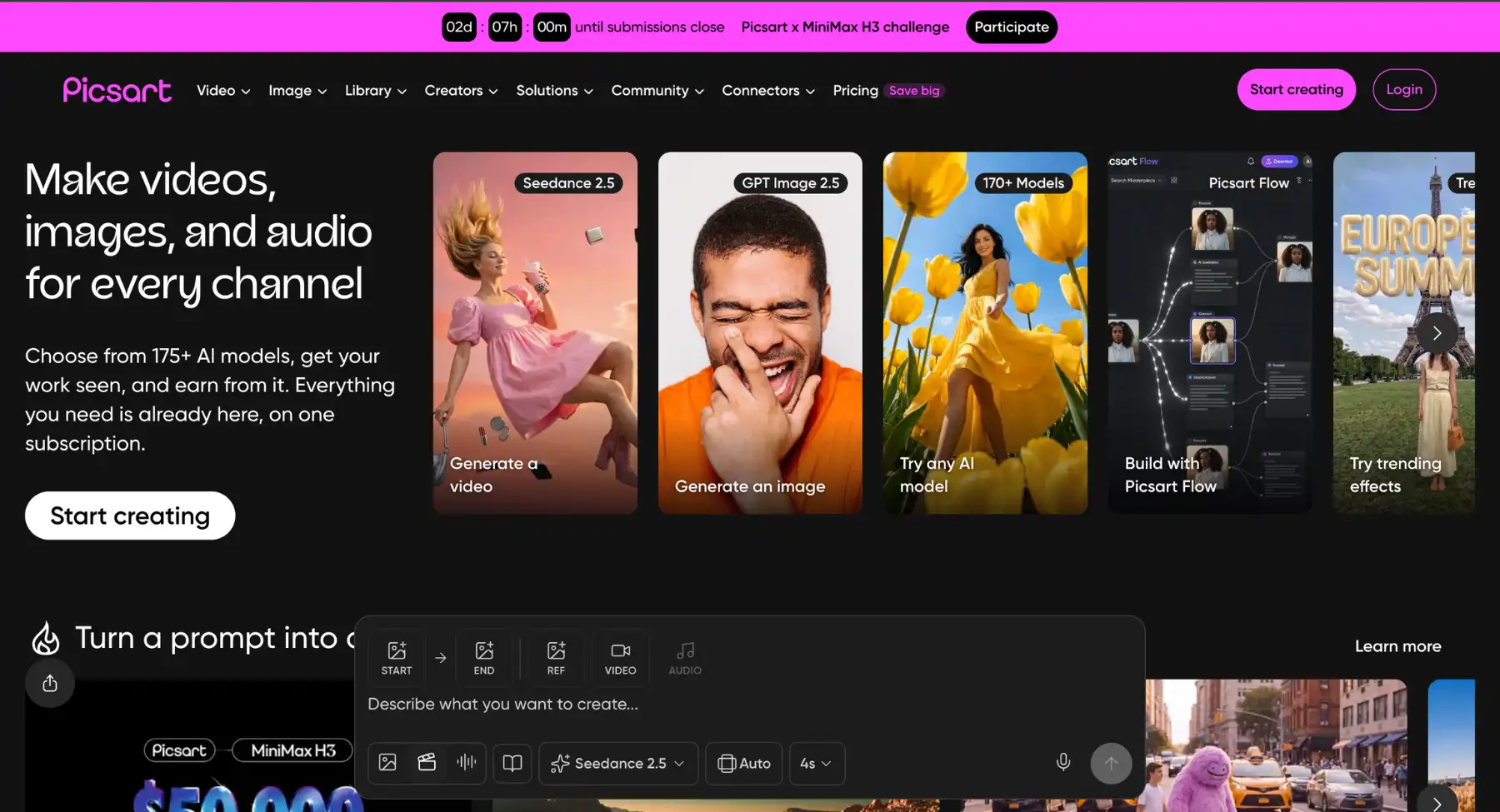
Best for: Creative social media edits, mobile-first design, and expressive AI image transformation.
Picsart stands out as a vibrant alternative to Canva when your creative workflow demands bold visual customization, trend-driven edits, and flexible AI image manipulation. Packed with smart cutout engines, AI style transfer, object replace, and a massive library of community stickers, Picsart gives creators the freedom to turn standard photos into eye-catching digital graphics with minimal effort.
While Canva focuses on clean, structured layouts for business and marketing, Picsart thrives in casual, social-first photo editing. Its intuitive mobile and web platforms allow creators and small business owners to quickly remove backgrounds, swap elements, apply artistic overlays, and craft viral-ready social posts on the go.
- Great for: Mobile photo editing, creative stickers and cutouts, AI style filters, Instagram/TikTok graphics, and quick background swaps.
- Why choose it: Offers far more playful, artistic, and flexible photo manipulation tools than Canva's traditional layout-centric editor.
- Limitations: The desktop interface can feel cluttered with ads on the free tier, and it isn't ideal for formal business presentations, multi-page PDFs, or complex corporate branding projects.
6. Photopea
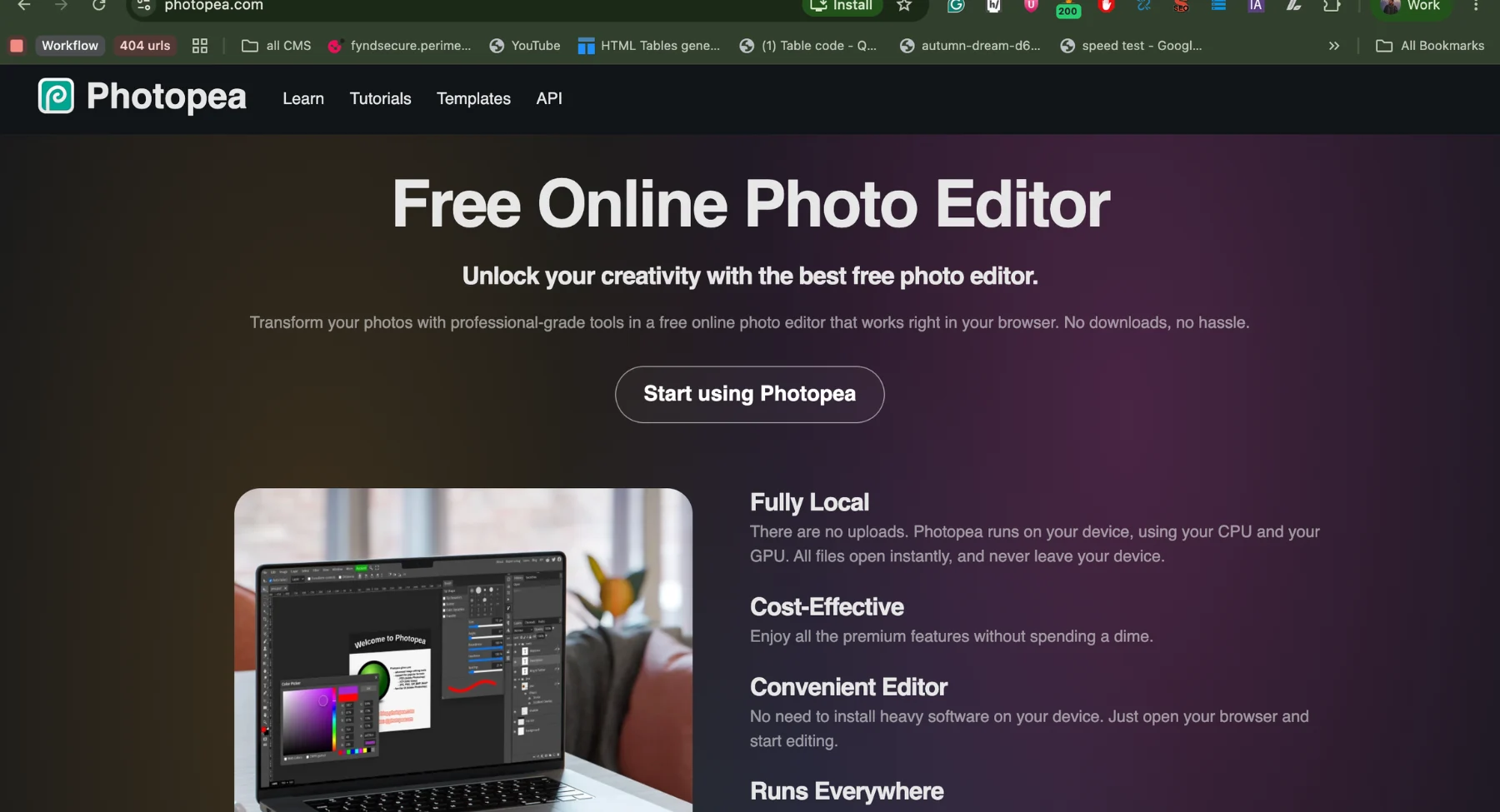
Best for: Free browser-based Photoshop alternative, advanced layer editing, and PSD file compatibility.
Photopea stands out as a powerful alternative to Canva when you need full-featured raster and vector photo editing without leaving your web browser. Modeled directly after Adobe Photoshop, Photopea offers layer masks, blend modes, pen tools, smart objects, and precise selection controls, delivering professional editing capabilities completely free of charge.
While Canva relies on simplified drag-and-drop elements and structured templates, Photopea gives experienced designers complete pixel-level control. Its seamless support for native formats like PSD, AI, Sketch, and XD files makes it ideal for editing complex graphics, performing detailed photo retouching, or modifying existing design files without purchasing expensive desktop software.
- Great for: Advanced layer-based photo editing, PSD and vector file manipulation, precise object selection, photo retouching, and RAW image processing in the browser.
- Why choose it: Provides professional Photoshop-style control and file compatibility for free, bypassing Canva's simplified editing restrictions.
- Limitations: Has a steeper learning curve for non-designers, lacks automated drag-and-drop marketing templates, and supported by sidebar ads on the free version.
7. Photoroom
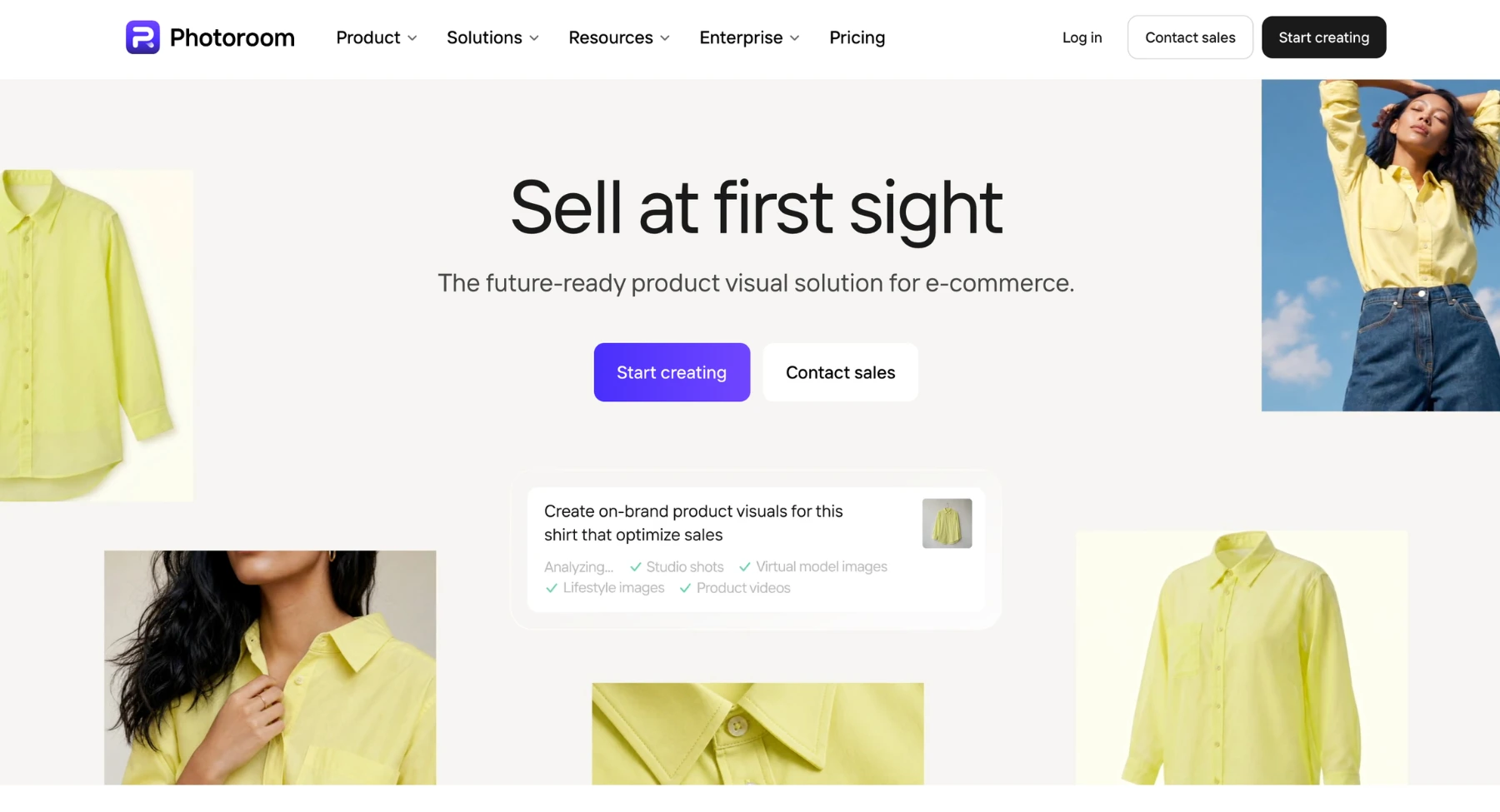
Best for: Automated background removal, AI studio product photography, and high-volume e-commerce imaging.
Photoroom stands out as a specialized alternative to Canva when your workflow centers on creating clean, professional product photography at scale. Built around instant AI background removal and scene generation, Photoroom automatically isolates subjects and places them into realistic studio backgrounds, shadows, and environments in seconds-completely skipping manual layout setup.
While Canva focuses on broader graphic design templates and multi-page documents, Photoroom delivers a hyper-streamlined experience for online sellers, resellers, and product marketers. Its batch-editing capabilities, instant shadow creation, and marketplace-ready canvas presets make producing high-converting product listings for platforms like Shopify, Amazon, and eBay fast and effortless.
- Great for: E-commerce product photography, instant background removal, AI-generated studio backdrops, realistic object shadows, and bulk image processing.
- Why choose it: Automates product photoshoot creation and background swaps significantly faster and with better lighting integration than Canva's general photo editor.
- Limitations: Lacks broad graphic design tools, multi-page presentation templates, and advanced text layout features needed for full brand campaigns.
8. BeFunky
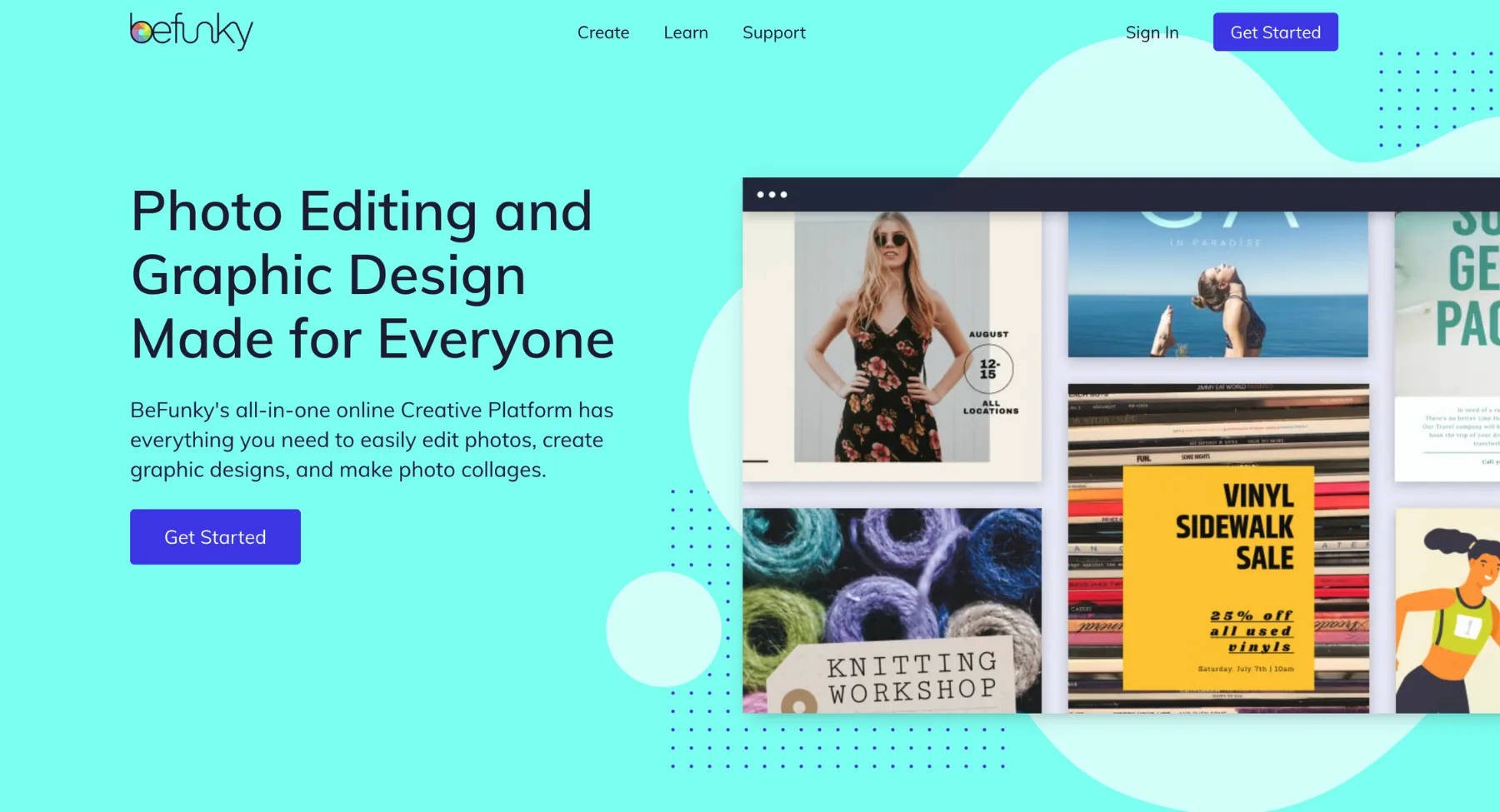
Best for: All-in-one photo editing, creative collage making, and simple graphic design.
BeFunky stands out as an easy-to-use alternative to Canva when your primary focus is balancing quick photo enhancements with creative visual effects. Built with a modular interface that separates photo editing, collage making, and graphic design, BeFunky lets users apply AI-powered adjustments, artistic filters (like Cartoonizer and Digital Art), and precision cropping without navigating heavy design clutter.
While Canva prioritizes structured corporate documents and multi-page layouts, BeFunky delivers a flexible experience tailored for photo-first editing. Its automated background remover, batch photo editor, and intuitive retouching tools make upgrading image quality and creating multi-photo collages fast, fun, and hassle-free.
- Great for: One-click AI image enhancements, artistic photo filters, custom photo collages, quick background removal, and basic social graphics.
- Why choose it: Offers a dedicated, distraction-free photo editing workspace with fun artistic tools and a simpler interface than Canva.
- Limitations: High-end AI features and full design asset libraries require a paid Plus subscription, and it lacks robust multi-page document features or advanced brand team management.
9. PicMonkey
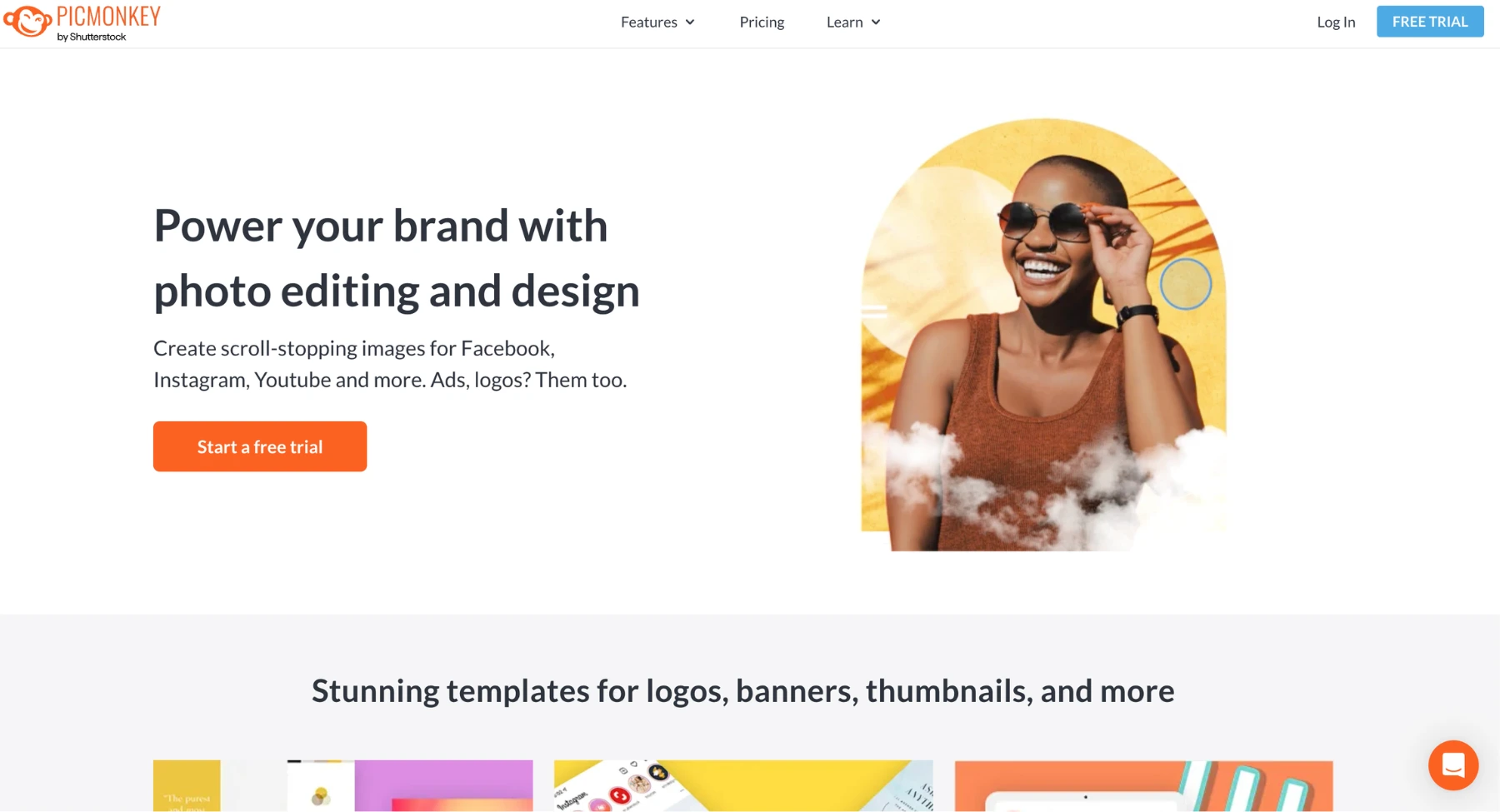
Best for: Photo retouching, brand-focused social graphics, and integrated image editing with basic layout design.
PicMonkey (powered by Shutterstock) stands out as a balanced alternative to Canva when your workflow requires a close blend of dedicated photo retouching and graphic design. Built with flexible touch-up tools, background removal, and customizable effects, PicMonkey lets users smooth skin, modify facial features, apply color overlays, and edit photos with more granular control than a standard drag-and-drop editor.
While Canva excels at broad multi-page templates and presentations, PicMonkey delivers a refined experience for creators and small business owners focused on visual aesthetics. Its seamless connection to Shutterstock's extensive stock library, paired with customizable design templates, makes crafting polished social media graphics, product thumbnails, and branded collateral straightforward and cohesive.
- Great for: Portrait touch-ups and facial retouching, social media graphics, background removal, photo filters/effects, and stock-asset-driven designs.
- Why choose it: Offers stronger portrait retouching and photo manipulation controls than Canva, while still providing accessible templates for quick graphics.
- Limitations: Requires a paid subscription to export or download finished designs, and its template library is less comprehensive for corporate documents and multi-page decks.
10. VistaCreate
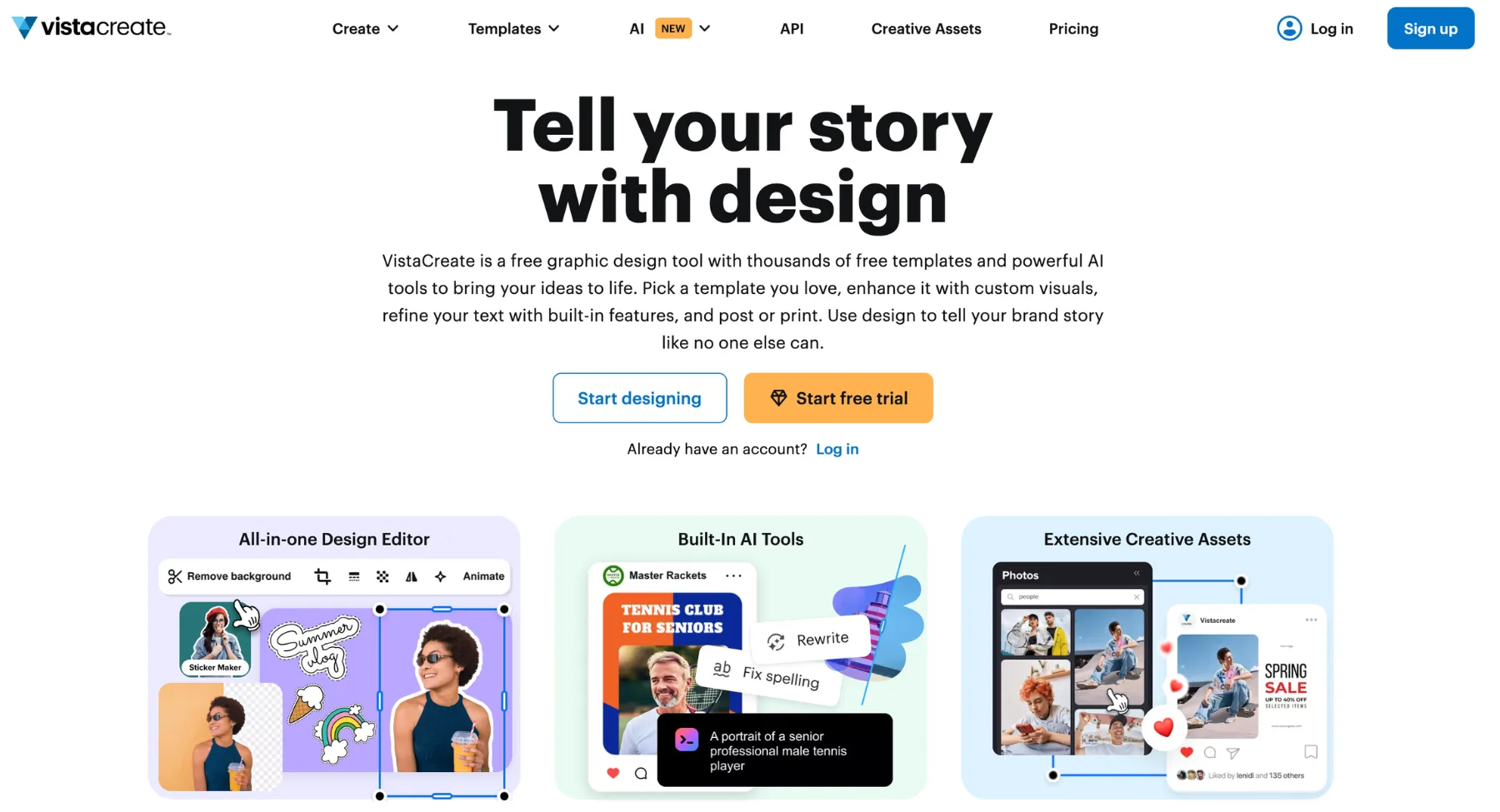
Best for: Template-driven marketing designs, social media content, and seamless digital-to-print production.
VistaCreate stands out as a direct alternative to Canva when your primary goal is quickly designing eye-catching marketing collateral and social media visuals. Backed by VistaPrint, it offers a massive library of pre-made templates, animated design elements, and quick background removal tools, allowing small businesses and content creators to produce clean, studio-quality visuals in minutes.
While Canva provides a broader toolset for multi-page documents and complex team workflows, VistaCreate delivers a highly focused interface tailored for everyday marketing graphics. Its seamless integration with professional print services makes it effortless to transition digital designs-such as posters, flyers, and business cards-into tangible, high-quality physical products.
- Great for: Social media posts, animated marketing graphics, promotional flyers, business card design, and quick background removal.
- Why choose it: Offers a very similar user experience to Canva with competitive pricing and direct, hassle-free integration for physical printing via VistaPrint.
- Limitations: Lacks some of Canva's more advanced AI manipulation features (like generative edit tools) and has a smaller ecosystem for third-party app integrations.
Canva vs Pixelbin for photo editing
Canva is better if the final output is a designed asset: a poster, presentation, social template, flyer, thumbnail, brand kit, or layout. Pixelbin is better if the core task is changing the image itself: fixing quality, replacing a background, removing distractions, editing with prompts, or preparing product photos.
For sellers or content teams working with many images, Pixelbin's batch editor is also relevant because it helps reduce repetitive edits across multiple visuals.
If the issue is image quality rather than layout, an image upscaler can be a more direct solution than rebuilding the design in Canva.
And when the user wants to create a new visual from scratch before editing it, an AI image generator can help start the workflow from a prompt instead of a template.
How to choose the right Canva photo editor alternative
- If you need templates, choose Adobe Express, VistaCreate, Snappa, Desygner, Visme, or Kittl.
- If you need quick AI photo edits, choose Pixelbin, Fotor, Picsart, or Photoroom.
- If you need product photos, choose Pixelbin, Photoroom, Remove.bg, or Fotor.
- If you need advanced browser editing, choose Photopea or Pixlr.
- If you need professional desktop editing, choose Affinity Photo, GIMP, Lightroom, or Luminar Neo.
- If you need both image and video content, choose Kapwing, Adobe Express, or Picsart.
Final thoughts
The best Canva photo editor alternative is not one tool for everyone. If the reader wants the closest Canva-style experience, Adobe Express and VistaCreate are the easiest recommendations. If the reader wants actual photo editing, Pixlr, Fotor, Photopea, Picsart, and Photoroom are stronger. If the reader wants AI-first image editing for product photos, social visuals, and faster production work, Pixelbin deserves the top spot.
The simplest way to decide is this: use Canva-style tools for layouts, use photo editors for image control, and use AI editors when you want to describe the change instead of doing every edit manually.
FAQs
Pixelbin is a strong choice for AI photo editing, Pixlr is good for browser-based editing, Photopea is best for advanced free editing, and Adobe Express is best if you want a Canva-like design experience.
Yes. Pixlr, Photopea, Fotor, GIMP, and Remove.bg offer useful free or freemium editing options. Free limits can change, so check export quality, watermark rules, and feature access before choosing.
Pixelbin and Photoroom are the strongest options for product photos because they focus on image cleanup, background changes, product visuals, and ecommerce-style workflows.
Photopea, GIMP, and Affinity Photo are better for advanced editing than Canva. They support deeper manual control, layers, masks, selections, and more precise edits.
Adobe Express, Picsart, VistaCreate, Snappa, and Kapwing are strong choices for social media. Choose based on whether you need templates, mobile edits, video, or quick graphic production.
Pixelbin should be seen as a Canva photo editor alternative, not a full replacement for every Canva use case. It is better for AI image editing, product photos, background changes, and image improvement, while Canva is better for template-based layouts and presentations.