
One of my friends needed food photography, but she told me that everything is too expensive and complicated now. She asked me if there was an easier, more affordable way to get high-quality food photography. She told me it took a lot of time and money, and yet she often received only a few final images.
Because of this, all smaller businesses found it hard to compete with bigger brands. Customers in today's digital world eat with their eyes first. The quality of food photography used by restaurants, food bloggers, and delivery services is becoming an important factor in their business success.
To attract customers, increase interaction, boost order rates, and build a lasting brand identity, high-quality, captivating photos are important. Edited menu photographs are not only useful on competing food delivery platforms but also play a major role in a customer's decision to buy, which directly affects sales and customer satisfaction.
Then I searched for an AI food generator, and you’ll find dozens of tools promising to create stunning food images online. However, it’s important to understand the distinction. While some AI apps enhance actual photos of your dishes, others create real food images from text prompts.
I searched and found again that various tools support and create food photography using text prompts, like one of my Pixelbin AI image editors for restaurants, which creates and improves food photos easily with no manual editing, saving time and effort.
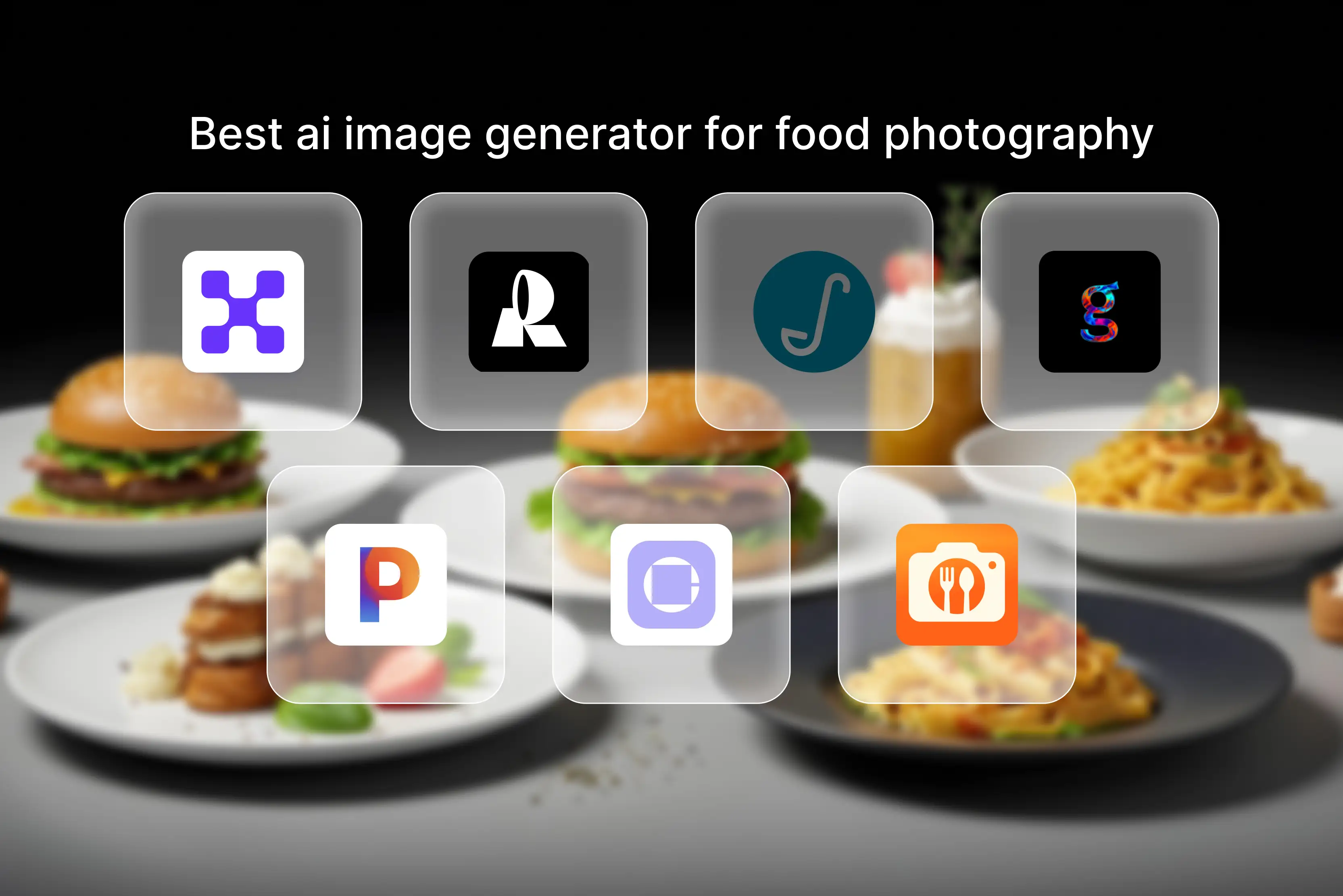
In this blog, I will explain to you what an AI image generator for food photography is, the 7 best AI image generators for food photography, how they work, why to use a restaurant generator, and how to write a proper AI text prompt for good food photography.
What is an AI image generator for food photography?
An AI image generator for food photography is a tool that uses artificial intelligence to transform realistic food images in a few seconds without requiring an actual photo shoot. Instead of cooking, arranging, setting up lights,s and taking photos, users can easily write text prompts or modify existing photos.
With these AI tools, you can access many images that show how food looks when it's crispy or creamy, under different lighting, camera angles, and styles, whether in a fancy restaurant or a simple home meal. Moreover, it can completely reduce the need for physical food styling, lighting, and photography equipment, offering a fast, cost-effective way to generate restaurant menus, blog content, and marketing materials.
Top tools for AI food photography
Best AI image generator for food photography
1. Pixelbin
An AI image editor for restaurants turns your photos into professional, ready-to-use visuals for menus, delivery apps, and marketing without manual editing. The tool helps you to edit and make changes in the image, brighten the lighting, remove clutter, improve color balance, clean the backdrop, refine plating, and more. The process is very simple: enter the image that you want to change and write a text prompt. The text prompt should have 2500 characters.
You can easily make dishes look fresh, vibrant, and consistent across menus and listings for any presentation according to your requirements. You can use this tool for free, up to 3 images per month, and upgrade at any time for more credits or API access. You can maintain the same style, colors, and overall look across all your food photos, which is important for building a strong brand identity on websites and social media.
The big advantage of using Pixelbin is that the process is fast and efficient, allowing you to create, edit, and optimize your image in just a few clicks. This makes it a practical option for businesses that need high-quality images quickly without significant time and cost investment.
Image generator for food photography using Pixelbin
The image is generated using Pixelbin's food photography. It is simple: first, upload the image or paste the URL of your photo in any of these formats, like JPG, JPEG, PNG, or WEBP. Thereafter, add your prompt and describe the changes you want to make with simple words. Preview and export the filtered output and download it in HD. Use cases include food and dish photography, digital and printed menus, restaurant interiors and exteriors, social media, and promotions.
I tested one of the images using the text prompt "Remove the background and add a South Indian dosa served on a banana leaf, a traditional wooden table background, warm lighting, and authentic restaurant style." After that, I clicked on the "Generate” button. And after waiting a few seconds, I received the result.
I'm genuinely impressed with the result. The tool makes it easy to create high-quality food images without a professional photoshoot. Automatically improve image quality, saving a lot of time and effort. No need for advanced skills and no watermark to get professional-looking results. After receiving the result, I edited the image again by adding the text “Taste…Dosa.” Within a few seconds, I received improved results.
Pros
- Ease of use
- Watermark and text removal
- Fast processing
- Support multiple formats
- No watermark
- One tool has endless possibilities
- No signup needed
- Accessibility on any device
- Image upscale up to 8x
- No technical knowledge needed
- Prompt-based AI editing
2. Recraft.ai
Bring your best recipes to life with stunning AI-generated food photography. Create realistic, high-quality photos in seconds and edit smoothly with advanced AI tools. You can generate up to 30 free images per day. Generate images of bread, apples, pies, salads, cakes, or whatever food you want. You can select any background for your AI-generated image, from a kitchen countertop to a restaurant table.
Whether you’re food blogging or putting finishing touches on your cookbook, Recraft helps you generate the images you need in seconds. You can easily create an image for food photography; select a style or create your own. Select a style that matches the setting for your images. Enter a prompt that matches the food photo, then click the generate button. Select your images and download them as JPG and PNG in one click.
I tried processing the image by clicking the "Create a food photo" button and uploading it. I need to change the image by removing the background and adding a South Indian dosa served on a banana leaf, with a traditional wooden table background, warm lighting, and an authentic restaurant style, while also removing the teacup. Thereafter, I will select the aspect ratio and click the generate button. After waiting a few seconds, I received the result, which lacked a watermark but had a slightly blurry image.
The result didn't look very realistic, especially in textures like dos, which appeared unnatural. Keeping a professional look is hard, even with explicit instructions. The time-saving advantages of utilizing the program are diminished because I frequently have to spend more time honing the pictures.
Pros
- Ease of use
- No watermark
- Accessibility on any device
- No technical knowledge needed
- Prompt-based AI editing
- Aspect ratio
- Multiple style support
3. Pixa
An AI-powered food photography editor turns simple snapshots of your dishes into professional, appetizing photos, perfect for menus, delivery apps, and marketing. From a vibrant salad to a rich risotto, the tool elevates the natural appeal of your dishes, making them look as delicious as they taste.
Your food images can be quickly styled and improved using Pixa’s AI. You simply describe the appearance, like better lighting or a different backdrop, and AI is going to make the changes while maintaining the true flavor of your meal. You can produce an entire gallery of high-quality menu images for a fraction of the cost of a traditional photography session, saving you significant time and money.
The process of using Pixa is simple: upload your food photo for your photography. Describe your ideal shot, and in the text box, explain the enhancements you want. Now, click on the generate button. AI will apply your requested edits, transforming your photo into a professional, appetizing image in seconds. Download and share.
Use cases in digital and print menus, delivery app listings, social media marketing, website galleries, and promotional materials. I tested one of the images where I uploaded the image, and the text prompt is "Remove the background and add a South Indian dosa served on a banana leaf, a traditional wooden table background, warm lighting, and authentic restaurant style with an aspect ratio of 1:1, and the number of images is 1." The result did not fully match the prompt. Although the background changed to a wooden table, the main food details were unclear or not generated as expected.
Pros
- Ease of use
- No signup needed
- No technical knowledge needed
- Versatile
- Aspect ratio
- Number of images
- No watermark
4. SideChef
Create high-quality food images instantly, no professional photoshoot required. AI-generated visuals bring your recipes to life with realism and consistency, while flexible style and plating options let your food photography do its very best. Save your time with ready-to-use backgrounds, lighting, plating, dishware, and props.
Smooth content creation and ensure a cohesive brand look across social media, websites, and packaging. The tool is best for food brands, recipe creators, marketers, and more. It allows food businesses to create food photography images, making it a helpful option for food-focused creators.
The process is effortless to use; you can generate and edit images or product placements. Depending on the feature available, food styling, background, and more, according to your requirements. I tried the generate option by clicking the generate button, writing text like “A delicious hamburger with noodles on a wooden board” on the left side, selecting options like a high-end kitchen background and food styling with glass, and selecting options based on your requirements.
Please click on the generate button and wait a few seconds. I received a result with a high-end kitchen background and no watermark, but the food styling, like glass, was not there and didn’t match my text prompts very well. Overall, it might work for basic use, but it doesn't follow prompts closely enough for more precise or professional needs.
Pros
- Ease of use
- Precise prompt-based editing
- Aspect ratio
- No watermark
- Support multiple styles.
- Number of images
5. getimg.ai
Create food-style images without using a traditional camera. The getimg.ai AI image generator creates fantastic, lifelike food photographs in a matter of seconds, whether you’re craving a juicy cheeseburger or the ideal rice platter. It is basic to use and very helpful for blogs, meals, or even just impressing your friends.
The process is simple: Open and select the image that you want, and write a detailed prompt that includes the type of cuisine, specific ingredients, plating style, and more. Select the number of AI food pictures you want to generate, press the arrow, and wait a moment for the process to finish.
I tested it by writing the text prompt "Indian dosa served on a banana leaf, a traditional wooden table background, warm lighting, and authentic restaurant style” and selecting the aspect ratio 1:1 and the number of images 2, and clicking on the arrow button. After a short wait, I received the result.
The tool provides the image, but it does not look real; it's difficult to get good results. Even with a prompt, the pictures can vary greatly from time to time. Editing control is limited too; if something is slightly off, you usually have to regenerate the image instead of fixing small details, which wastes your time. For users who need more control over editing images, tools like Pixelbin are a better fit.
Pros
- Ease of use
- No watermark
- Support multiple styles
- Number of images
- Aspect ratio
- No technical knowledge needed
6. Claid.ai
Claid.ai is an AI photo editor built specially for restaurants and e-commerce. It focuses on photorealistic quality, with accurate lighting, shadows, and textures, so the image looks like the actual item you requested. You can use the unique features of the tool and create multiple marketing images to help your customer visualize.
It supports image formats such as JPG, PNG, WEBP, and HEIC, with a maximum size of 10 MB please select the image format that best suits your requirements. The process is very simple: you can either drop or select the image from your device that you want to edit.
On the left, you can see various options; select the ones that meet your requirements and click the Apply button. I tried one of the images where I removed the text by using the erase brush and clicking on the apply button. Now, if you want to remove the background, you have to select "Remove Background" again and click the "Apply" button.
There are various background template styles available; select one according to your requirement, then select the apply operation button. This is too much manual work and a time-consuming process. If you are satisfied with the result, you can download it. The process took longer than I expected, so it may be less suitable for users looking for faster, more automated editing.
Pros
- Ease of use
- No watermark
- Multiple background templates
- Support multiple formats
- Number of images
- API workflows
- No technical knowledge needed
7. FoodShot AI
Transform your dish photo into a menu-ready visual for social media, delivery apps, menus, and marketing, with no photography required. 30+ style presets optimized for delivery apps and social media, reference images, style cloning, and integrated poster/marketing. The tool is available as a web app and on iOS. You need to select the background surface, choose the plate style, and upload your food to combine all three into a cohesive image.
The process is straightforward; the interface allows users to click or drag an image into the upload area to replace the existing one. Select the variations and aspect ratio according to your requirements. Various styles, such as pure shot, white hero, light wood angled, and side view hero, are available according to your requirements.
Click the generate button, wait a few seconds, and then download the result. Moreover, the tool also allows an optional option for adding a text prompt; if you go with that, you add a text prompt too. I had tried one of the image and written text prompts, like "Remove the background and add a South Indian dosa served on a banana leaf, a traditional wooden table background, warm lighting, and authentic restaurant style and aspect ratio 1:1, variations 1, and style white hero," and clicked on the generate button and waited for a few seconds.
The message on the left side will display that generating a maximum quality may take 2-3 minutes. This is a drawback of the tool. Received the result; it honestly disappointed me, as the functionality was impressive, but the result came out blurry and didn’t look polished. On the left side of that, there was a noticeable watermark on the output, which cannot be used further. The whole process was also more time-consuming than expected.
Pros
- Ease of use
- Support multiple styles
- Number of images
- Aspect ratio
- Background removal
- No technical knowledge needed
Why use a restaurant generator?
Restaurant generators refer to AI-powered tools that help create menus, concepts, names, and other elements related to running a food business. It is used to save time, reduce operational costs, and boost creativity.
They make menu planning easier by helping you create new, trendy, or themed dishes. AI tools can help improve your menu to increase profits. They can suggest creative dish names and create marketing images, making it easier to promote your food.
Key reasons to use a restaurant generator are
- Expand your cooking ideas: Try new flavors, ingredients, and cooking styles to improve your skills. Quickly create new menu ideas, dishes, and descriptions that you can tailor to specific themes or dietary preferences.
- Personalized recipes: Create a meal based on your taste, diet, and available ingredients.
- Save time: Quickly get meal ideas without spending too much time searching. Automates parts of the menu design and description writing process, reducing manual effort.
- Marketing and branding: Create menu designs, logos, and a catchy name to create a great first impression.
- Fun to use: Enjoy the fun and excitement of discovering AI-generated food-related masterpieces.
Steps to use an AI image generator for food photography
Pixelbin AI image editor for restaurants is a specialized web-based tool to automate restaurant photography, offering instant background removal, lighting adjustment, and upscaling to 4K without manual editing. No learning curve, no technical knowledge needed: three steps from your photos to professional food photographs.
Step 1: Visit Pixelbin -> AI tools -> search for an AI image editor for restaurants.
Step 2: Upload your image: Paste the URL or upload your photo in any of these formats, like JPG, JPEG, PNG, or WEBP.
Step 3: Add your prompt to describe the changes you want to make in simple words.
Step 4: Preview the filtered output and download it in HD free from any watermark or text overlays.
How to write a proper AI text prompt for good food photography
Ready to take your product shots from excellent to outstanding? Let’s build on those basic prompts. Comprehensive prompts give you more control over your final image. You can see your food photography, the eye-catching details, and how the photo really shines.
Creating a text prompt for good food photography takes a combination of cooking expertise and imagination to come up with a tasty meal prompt for a generator.
- Describe the type of dish: Select whether the food is an appetizer, main course, dessert, or beverage.
- Add essential ingredients: Include essential ingredients that define the dish and add to its flavor.
- Think about your food preferences: Take into account any dietary requirements or preferences like dairy-free, vegetarian, and more.
- Balance flavors: To produce a dish that is both visually pleasing and delicious, strive for a harmonious combination of flavors, textures, and colors.
- Focus on creativity: Motivate the individuals to create unique and creative recipes that stand out and inspire cooking experiments.
Which AI image editor tools are best for restaurants?
Selecting the best tool for you will depend on your objectives, needs, budget, and process as AI image generators for food photography get more complex. There are many tools that may offer flexibility and stylistic variety, making them suitable for broader creative projects, but not ideal for high-quality hyperrealistic recipe images.
For professional photography of food content, the Pixelbin tool stands out for its food-specific optimization and its simple integration into cooking workflows. Its design meets the specific needs of food photography, making it a particularly good option for those who wish to speed up content creation without sacrificing visual quality and consistency.
FAQs
With AI food photomakers, you can create a wide range of food images. You can make pictures of ready-made foods like pizza, pasta, and burgers; various cuisines, like Chinese food; or simple meals, like pancakes and grilled chicken with various salads. You can easily generate almost any kind of food image using AI.
Yes, you can use AI-generated images for commercial purposes in most cases, but it depends on the platform, licensing terms, and the extent of human modification.
You can sell AI-generated images, but it depends on the AI tool's terms of service and the platform you use.
No, anyone can create AI content and food images with Pixelbin. The tools are built for accessibility, so you don't need design or photography experience to create the images of your dreams.
Using the Pixelbin tool, no, it will not. Pixelbin AI image editor for restaurants maintains image quality, retaining textures, sharpness, and visual clarity.
Yes, you can create it for free using the Pixebin AI image editor for restaurants. The free plan offers 3 credits per month. Beyond that, you need to sign up and purchase extra credits on a pay-as-you-go basis.