

Choosing the best Cloudinary alternative is crucial for engineering teams who want lower infrastructure costs, predictable billing, and easier developer workflows. Cloudinary's digital asset management (DAM) is solid, but its convoluted credit-based pricing and high bandwidth fees often drive companies to look for better media processing APIs.
Developers are now able to optimize Core Web Vitals, including Largest Contentful Paint (LCP), for faster load times through the modern media management API that connects directly with existing AWS S3 or Google Cloud storage. The best alternatives to the platform come with transparent pricing based on usage, smart cropping, and SDKs ready for React, Node.js, and Python.
In this guide, we'll look at Cloudinary's top competitors like Pixelbin, ImageKit, imgix and more, compare features, and talk about migration strategies to help you find the perfect media processing solution that fits your application's budget and technical needs.
Quick answer
Pixelbin stands out as one of the best Cloudinary alternatives, delivering integrated artificial intelligence microservices, automated catalog tools, and transparent pricing without complex credit metrics. Pixelbin streamlines visual media operations using native Figma and Photoshop integrations. Other top industry alternatives address distinct operational needs: ImageKit and Gumlet provide affordable bandwidth optimization with external cloud storage fetching; imgix and Cloudflare Images offer high-speed stateless edge transformations without lock-in; while Uploadcare and Filestack excel at user-generated file ingestion through turnkey uploader widgets.
Summary
- Pick Pixelbin if your team wants managed storage, CDN delivery, transformations, image optimization, AI edits, and batch workflows without turning every task into engineering work.
- Pick ImageKit if you want a developer-friendly replacement that covers real-time image and video optimization plus a media library.
- Pick imgix if your team already has storage and wants precise image rendering from URLs.
- Pick Uploadcare or Filestack if upload reliability, file picker UX, and app file handling are bigger problems than DAM.
- Pick Cloudflare Images, Fastly, or Akamai when your infrastructure team wants media optimization close to an existing CDN stack.
- Stay on Cloudinary if your company already uses its advanced video, DAM, workflows, add-ons, and integrations deeply.
Why choose Cloudinary?
People usually move away from Cloudinary because of complicated pricing, credit-based bandwidth billing, or workflow limitations. Cloudinary uses a plan-based credit system, charging for transformations, storage,e and bandwidth at different rates. Scaling web apps and high-traffic e-commerce shopfronts can run into unexpected expenses as monthly credits are unpredictably exhausted. The key functional drivers for change are:
- Predictable billing: Companies like ImageKit and TwicPics are clear with usage-based billing for bandwidth, not opaque credit calculations.
- Easier integration: Imgix enables developers to directly integrate with existing Amazon S3 or Google Cloud Storage buckets without having to move the original files.
- Performance optimization: Modern media APIs, at lower base price points, include next-generation image formats (AVIF and WebP), automatic quality selection (q_auto), and responsive pixel ratio detection.
- Built-in upload pipelines: Ingest secure content created by users (UGC) with Uploadcare's pre-designed UI widgets and serverless processing.
- Development teams can assess these media delivery networks to improve Core Web Vitals like Largest Contentful Paint (LCP) with minimal overhead to cloud infrastructure.
Cloudinary alternatives compared
What does Cloudinary do well?
Cloudinary is more than an image CDN. Its current positioning covers image and video upload, dynamic transformations, optimization, CDN delivery, video workflows, AI automation, moderation, media asset management, and low-code workflow tools. Its documentation also makes the core developer model clear: you can generate image variations through transformation URLs or SDKs, and derived assets are cached and delivered through a CDN.
That breadth is why Cloudinary remains hard to replace in larger teams. If a company uses Cloudinary for signed uploads, transformations, moderation, DAM metadata, video processing, webhooks, SDKs, and custom workflows, a cheaper image CDN may solve only one piece of the system.
Top Cloudinary alternatives
1. Pixelbin
.webp)
If you are looking for a complete image editing solution along with core media delivery in a microservices format with integrated AI, Pixelbin is a great alternative to Cloudinary. Pixelbin is a purpose-built, real-time media processing platform for AI transformations, catalog automation, and optimized asset delivery. Pixelbin, as your media API platform, makes asset management easy for today's eCommerce stores, marketplaces, and content created by user apps.
Why Pixelbin outperforms
- Native AI editing microservices: Pixelbin offers pre-built AI tools like high-resolution upscaling, watermark removal, object deletion, background generation, and photo restoration, without the need for any third-party API integrations.
- Text-to-Media Generative Suites. Along with static image optimizations, Pixelbin offers integrated AI Image Generators, Text-to-Video, and AI Headshot workflows within its platform ecosystem.
- E-commerce catalog & bulk automation: Pixelbin provides dedicated batch editors that can process up to 50 images at a time and specialized workflows for retail, fashion apparel, and auto listings.
- Native ar & 3D visual experience: s The platform comes with advanced visual modules out of the box, such as virtual AR try-on, AI facial skin analysis, or interactive 360-degree product views.
- Direct creative ecosystem integrations: Pixelbin natively integrates with the leading design environments, with native plugins for Adobe Photoshop and Figma, bridging developer asset pipelines and creative workflows.
2. ImageKit
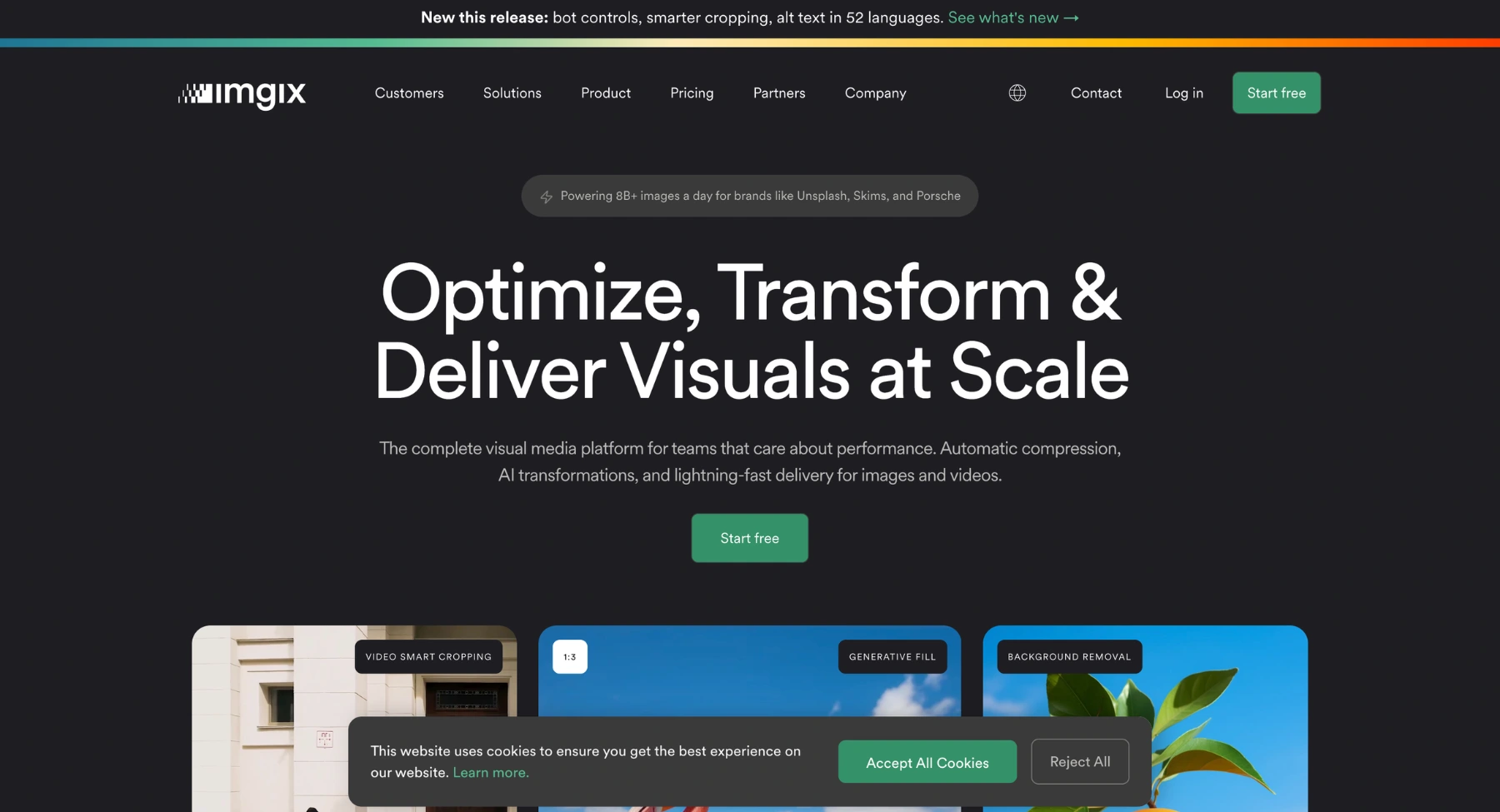
ImageKit is one of the closest Cloudinary alternatives for developer teams. Its official positioning covers real-time image and video optimization, transformations, DAM, and creative automation. It also works with existing storage, which matters when the reader already keeps originals in S3, Google Cloud Storage, or another origin.
Where ImageKit outperforms
- Zero charges for transformations: Unlike Cloudinary, which deducts credits for every transformation, ImageKit offers unlimited image transformations without extra per-transformation fees, charging only for actual bandwidth and storage used.
- Transparent usage-based billing: ImageKit replaces Cloudinary's complex and opaque credit system with straightforward, predictable monthly pricing tiers, making infrastructure operational costs much easier to forecast for growing applications.
- Seamless external storage fetching: ImageKit allows teams to plug in existing Amazon S3, Google Cloud Storage, or HTTP origins without forcing original asset relocation, saving storage charges by not charging for external bucket integration.
- Simplified no-URL-change migration: Migrating to ImageKit is seamless because it can act as a reverse proxy over your existing media URLs, enabling instant CDN delivery without breaking existing media links or rewriting code.
- Cost-effective entry tiers: ImageKit provides significantly more accessible pricing for startups and small teams, offering lower paid plans alongside a generous free tier compared to Cloudinary's high base subscription tiers.
3. imgix
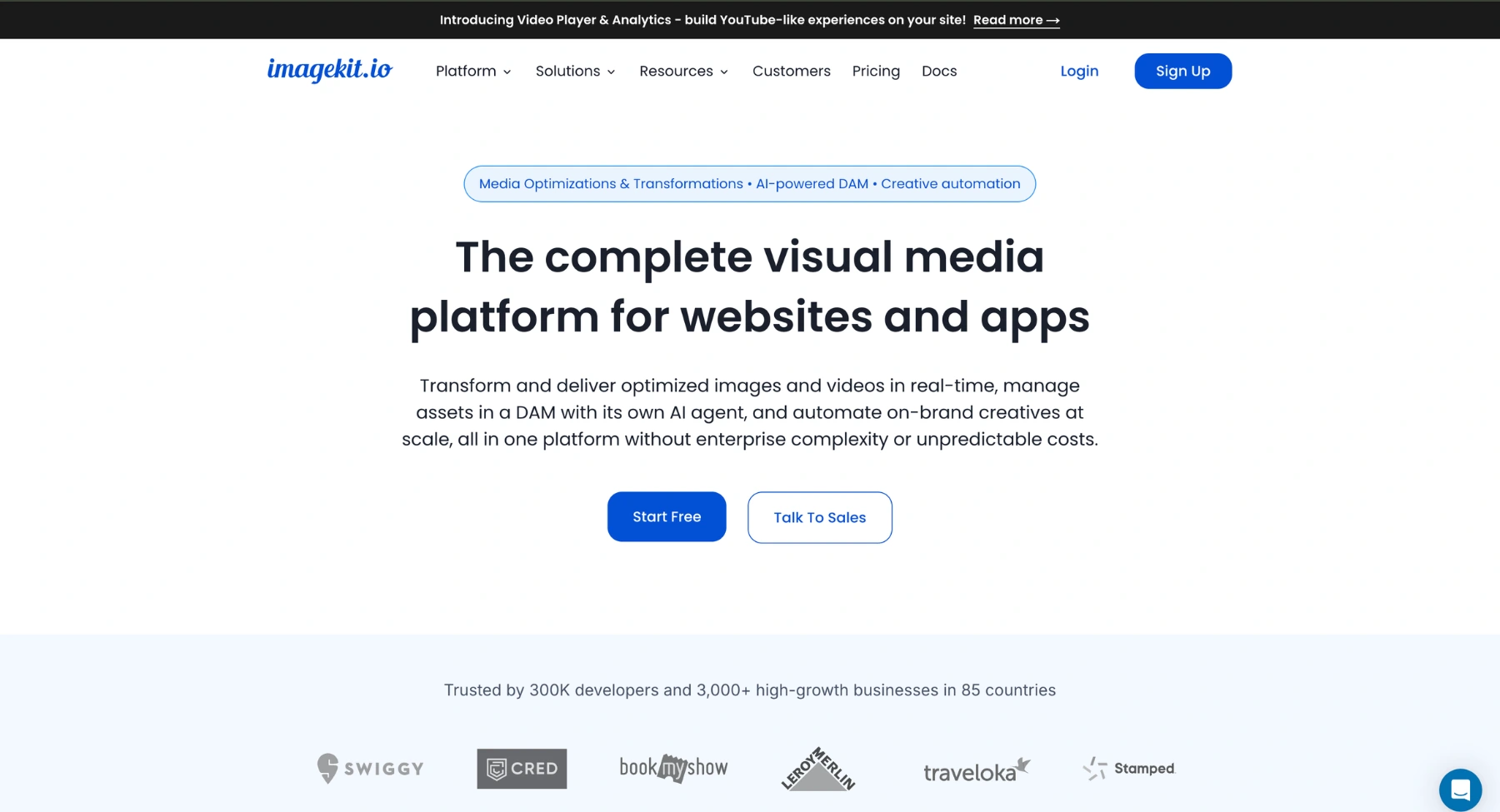
imgix is a dedicated media processing API and edge delivery network engineered specifically for real-time image transformation, URL-based optimization, and fast global cache performance. Choosing imgix as your image pipeline simplifies delivery for high-scale applications while eliminating complex vendor lock-in and vendor-managed storage costs.
Where imgix outperforms
- Stateless multi-origin architecture: imgix connects directly as a real-time proxy over existing AWS S3, Google Cloud, Azure, or HTTP origins without forcing original asset migration or duplicate storage fees.
- Superior edge cache performance: Built explicitly on a speed-optimized global edge network, imgix delivers ultra-low latency image transformations and faster cache hit ratios for image-heavy applications.
- Granular render & color controls: Offers advanced, designer-grade URL controls for color profiles, tone adjustments, LUT filters, and precise entropy-based cropping that go beyond Cloudinary's standard transformations.
- No vendor storage lock-in: Because imgix acts strictly as an optimization and delivery layer, your raw assets remain safely inside your own cloud infrastructure under your total ownership and access control.
- Predictable delivery pricing: imgix provides a clear pricing structure focused on unique images processed and bandwidth consumed, avoiding Cloudinary's opaque credit-based usage tiers.
4. Uploadcare
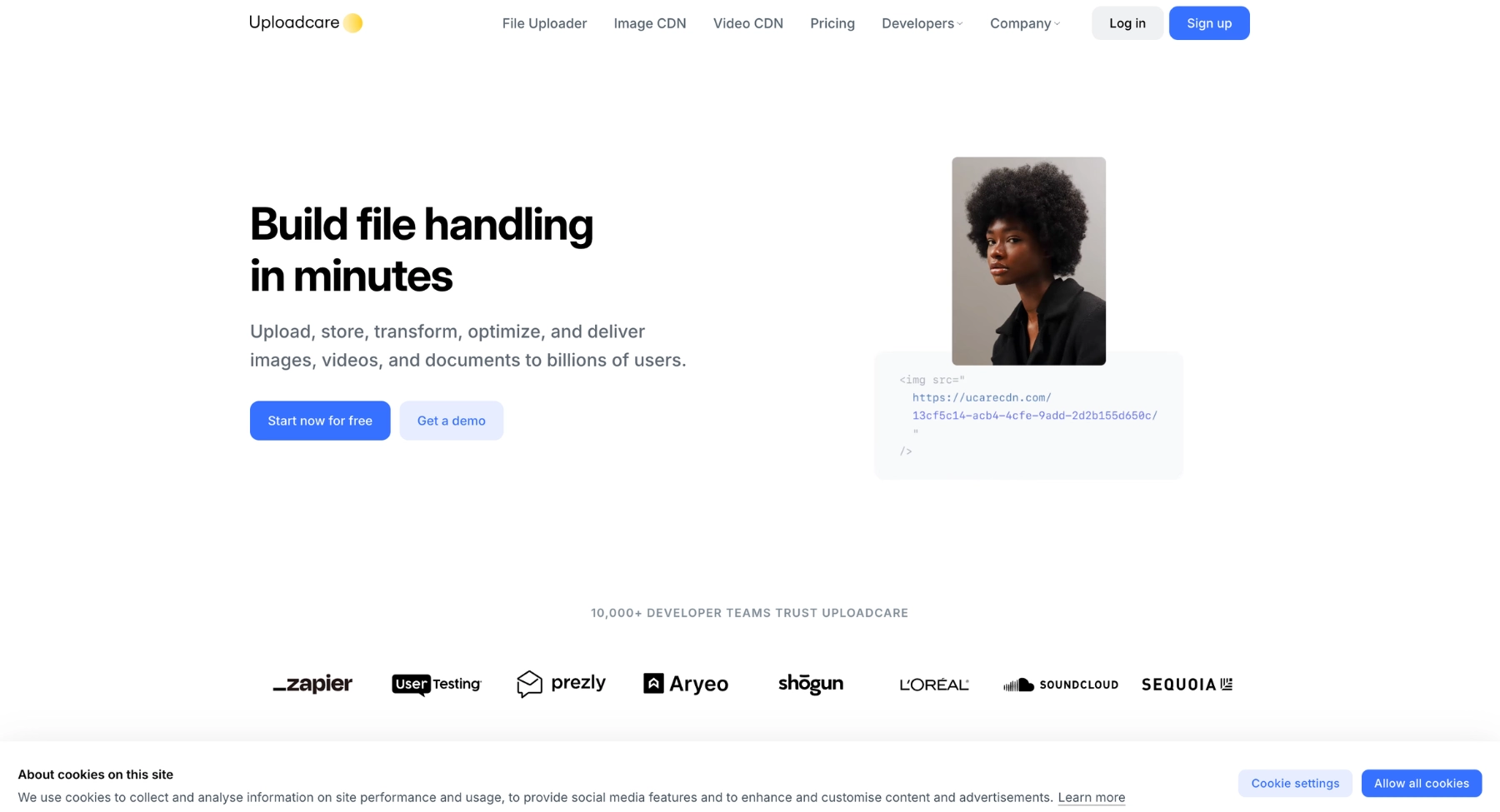
Uploadcare is a strong Cloudinary alternative when the upload flow is the hardest part of the product. It provides a file uploader, signed uploads, upload API, image transformations, CDN delivery, and file handling for images, videos, documents, and static assets. Its documentation shows URL-based transformations that resize, crop, rotate, overlay, remove backgrounds, and optimize formats.
Choosing Uploadcare simplifies user-generated content workflows for modern web applications while eliminating long implementation timelines and complex, multi-layered API configurations.
Where Uploadcare outperforms
- Turnkey multi-source uploader: Uploadcare provides a ready-to-use, customizable upload widget supporting 14+ direct file sources (including Google Drive, Dropbox, Instagram, and camera capture) with zero frontend setup hassle.
- Faster developer implementation: Integrates into web and mobile apps in minutes using drop-in UI components, avoiding Cloudinary's steep, hours-long initial setup and complex administrative learning curve.
- Built-in security & malware scanning: Includes automatic file validation and malware protection natively across all plans, whereas Cloudinary locks advanced security add-ons behind high enterprise tiers.
- Superior ingestion architecture: Optimized specifically for high-volume user-generated content (UGC), handling direct uploads, chunked multi-part files, and background processing with lower failure rates during upload spikes.
5. Cloudflare Images

Cloudflare Images is an edge-native media service designed specifically for high-scale image storage, dynamic URL-based resizing, and rapid global delivery across Cloudflare's network. Choosing Cloudflare Images streamlines your visual media pipeline for web applications while eliminating expensive bandwidth egress fees and unpredictable monthly usage costs.
Where Cloudflare Images outperforms
- Zero egress fees & predictable pricing: Cloudflare Images offers ultra-low, flat-rate pricing based on stored images and served variants, eliminating Cloudinary's expensive bandwidth overages and complex credit calculations.
- Native global edge performance: Built directly into Cloudflare's global edge network across 300+ locations, delivering faster cache hit rates and lower latency without needing external CDN integrations.
- No vendor storage lock-in: Integrates seamlessly with Cloudflare R2 and external storage origins, letting you retain complete ownership of your raw media files without paying migration or egress penalties.
- Automated format negotiation: Automatically converts assets on the fly to modern, compressed web formats like WebP and AVIF based on browser headers without requiring complex URL flags.
6. Gumlet
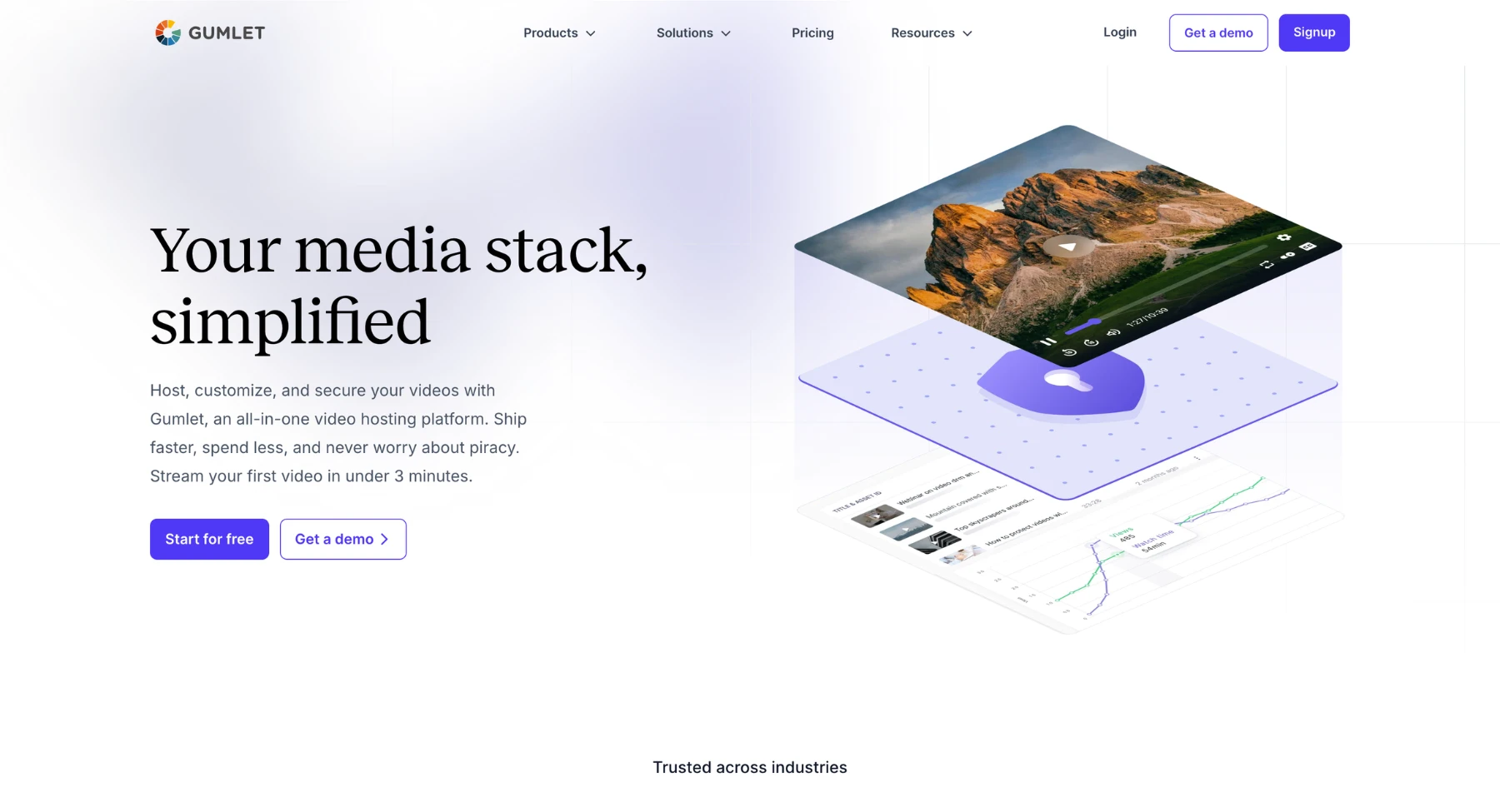
Gumlet is worth including because it covers both optimized image delivery and video workflows. Its current homepage positions Gumlet Image for automated image optimization at scale and Gumlet Video for developers who need compression, modern codecs, and streaming protocols.
Where Gumlet outperforms
- Integrated video hosting & DRM: Combines image optimization with end-to-end video hosting, HLS/DASH adaptive streaming, and affordable enterprise DRM (Widevine & FairPlay) out of the box at a fraction of Cloudinary's cost.
- Transparent usage-based pricing: Replaces Cloudinary's opaque, credit-based billing model with straightforward metrics based on actual bandwidth and media processing, saving up to 30-40% on monthly delivery bills.
- Path-style Cloudinary parameter compatibility: Offers direct path-style compatibility with Cloudinary parameters, allowing teams to migrate URLs seamlessly without rebuilding frontend code.
- AI-driven compression optimization: Uses perceptual AI compression algorithms to reduce image file sizes by up to 30% more than Cloudinary without losing perceptible visual quality or impacting Core Web Vitals.
- Multi-region & multi-storage support: Connects effortlessly to multiple object storage origins (AWS S3, Google Cloud, Azure, DigitalOcean, Wasabi) and processes media across global edge regions without vendor lock-in.
7. Bunny Optimizer
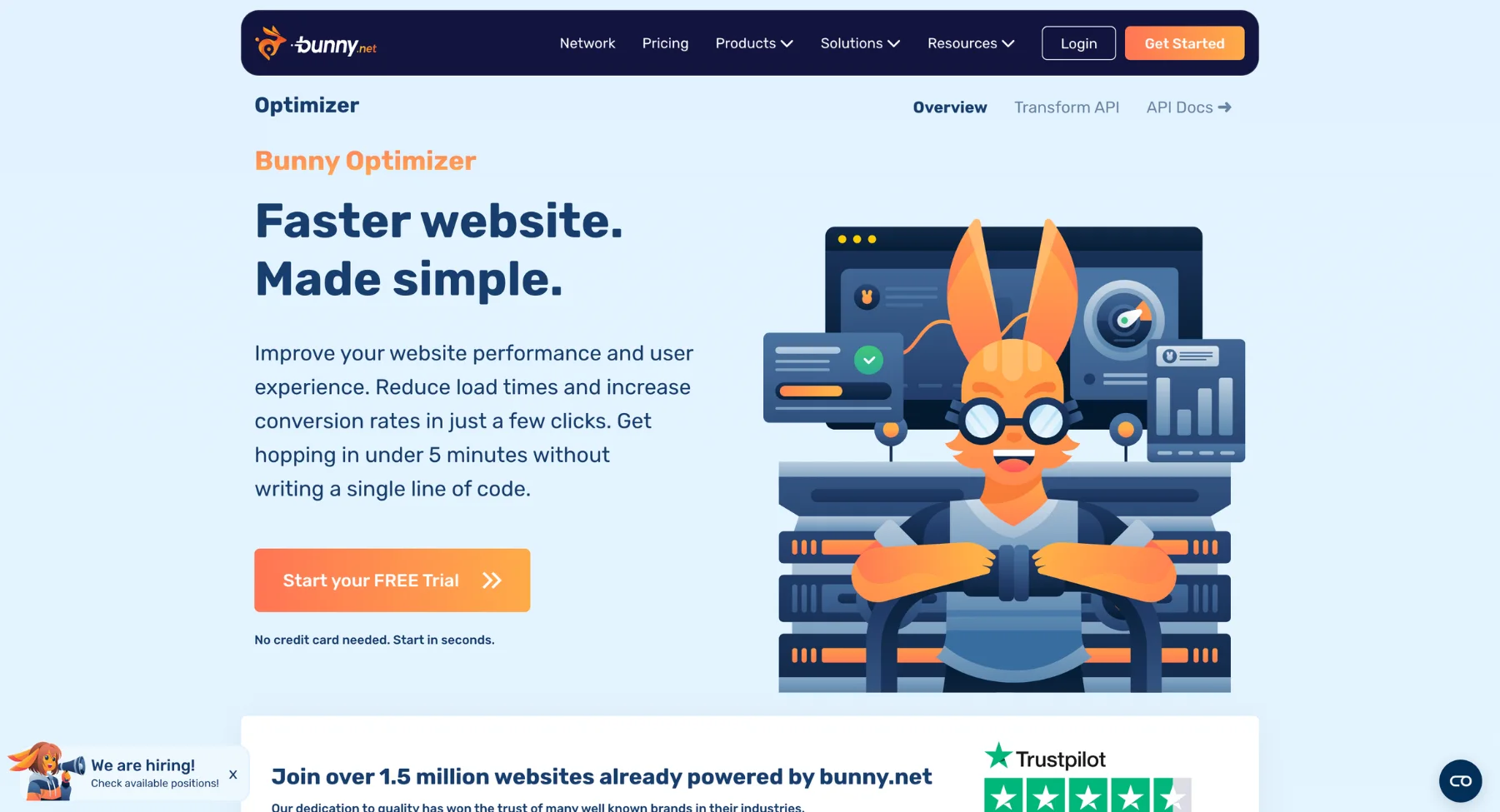
Bunny Optimizer as a Cloudinary alternative comes down to whether your app requires an ultra-low-cost, CDN-integrated image processing layer or an expensive enterprise media suite. Bunny Optimizer is an edge-based media engine built on bunny.net's global CDN, providing real-time image resizing, dynamic WebP/AVIF compression, and automatic asset optimization. Choosing Bunny Optimizer streamlines image delivery for web applications and blogs while drastically slashing monthly bandwidth and image transformation costs compared to Cloudinary.
Where Bunny Optimizer outperforms
- Unbeatable cost efficiency: Bunny Optimizer uses flat-rate add-on pricing alongside ultra-cheap CDN bandwidth ($0.005-$0.01/GB), cutting overall media delivery bills by up to 80% compared to Cloudinary.
- No complex credit penalties: Eliminates Cloudinary's credit-based billing system, allowing teams to run unlimited dynamic image transformations and URL manipulations without worrying about sudden usage overages.
- Native global edge network: Operates directly across bunny.net's high-performance edge PoPs, delivering faster cache hits and lower latency without needing complex third-party CDN configurations.
- Automatic css/js minification & routing: In addition to dynamic image processing, Bunny Optimizer automatically minifies CSS/JavaScript files and uses smart origin routing to accelerate uncached requests.
8. Filestack
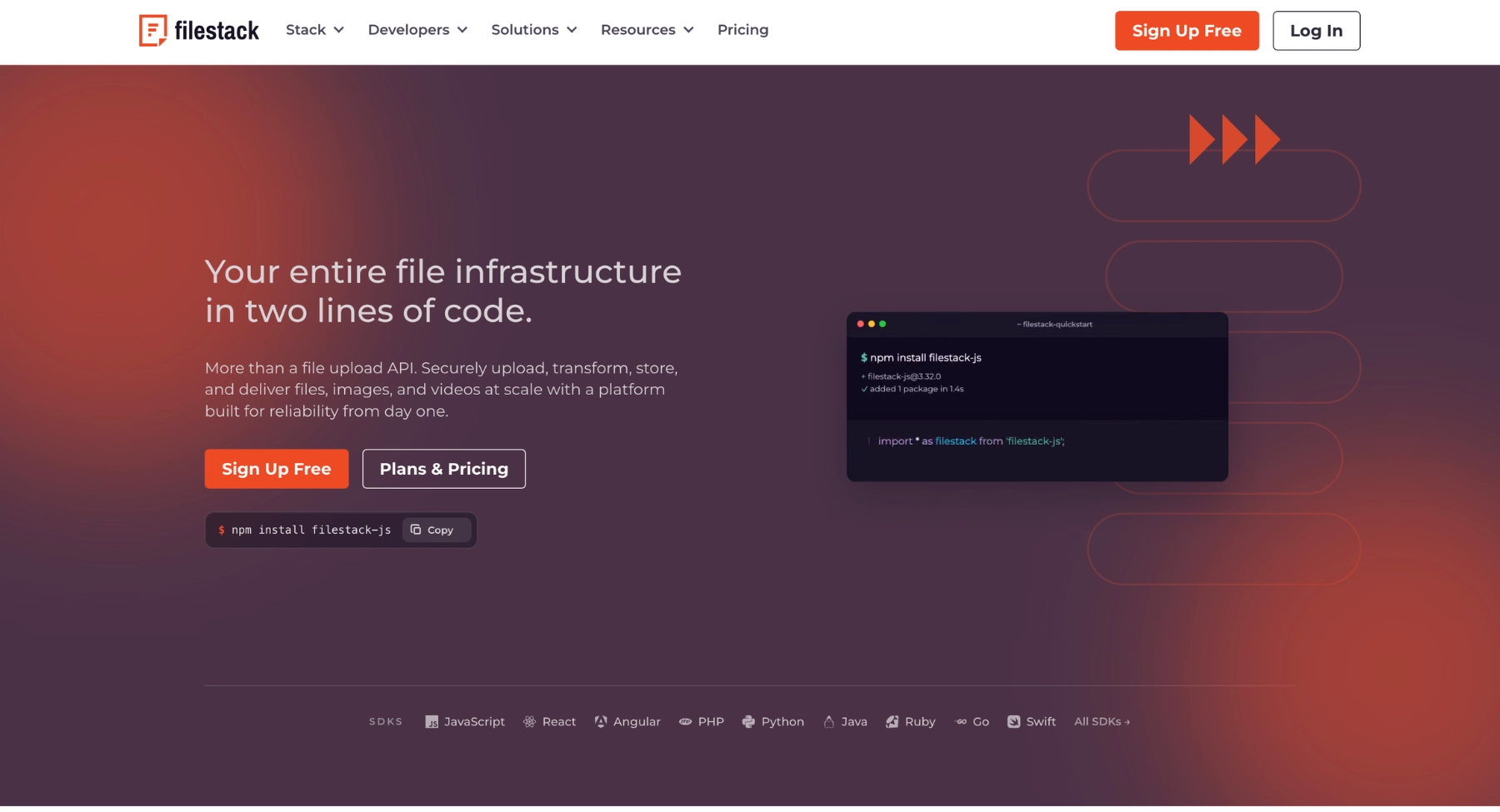
Filestack as a Cloudinary alternative comes down to whether your application prioritizes multi-source file ingestion and document handling over complex media automation. Filestack is a developer-centric file upload and content processing API engineered specifically for fast ingestion, file conversions, and reliable global delivery pipelines. Choosing Filestack simplifies user-generated file management for modern web and mobile applications while avoiding Cloudinary's complex, credit-based media pricing.
Where Filestack outperforms
- Superior file ingestion & picker UI: Filestack provides a robust, ready-to-use File Picker widget supporting direct uploads from 20+ external sources (including Google Drive, Dropbox, Instagram, and webcams) with zero complex setup.
- Intelligent ingestion network: Uses proprietary network routing, multipart chunking, and automatic retry logic to deliver reliable uploads up to 2-3x faster than Cloudinary during network instability.
- Native document transformation support: Extends beyond traditional image editing to support document processing APIs, converting PDFs, Word files, and presentations into web-friendly formats or preview images seamlessly.
- Built-in security & virus detection: Includes native automated virus scanning, malware protection, and file type validation during ingestion, ensuring safe user-generated content workflows out of the box.
9. Sirv
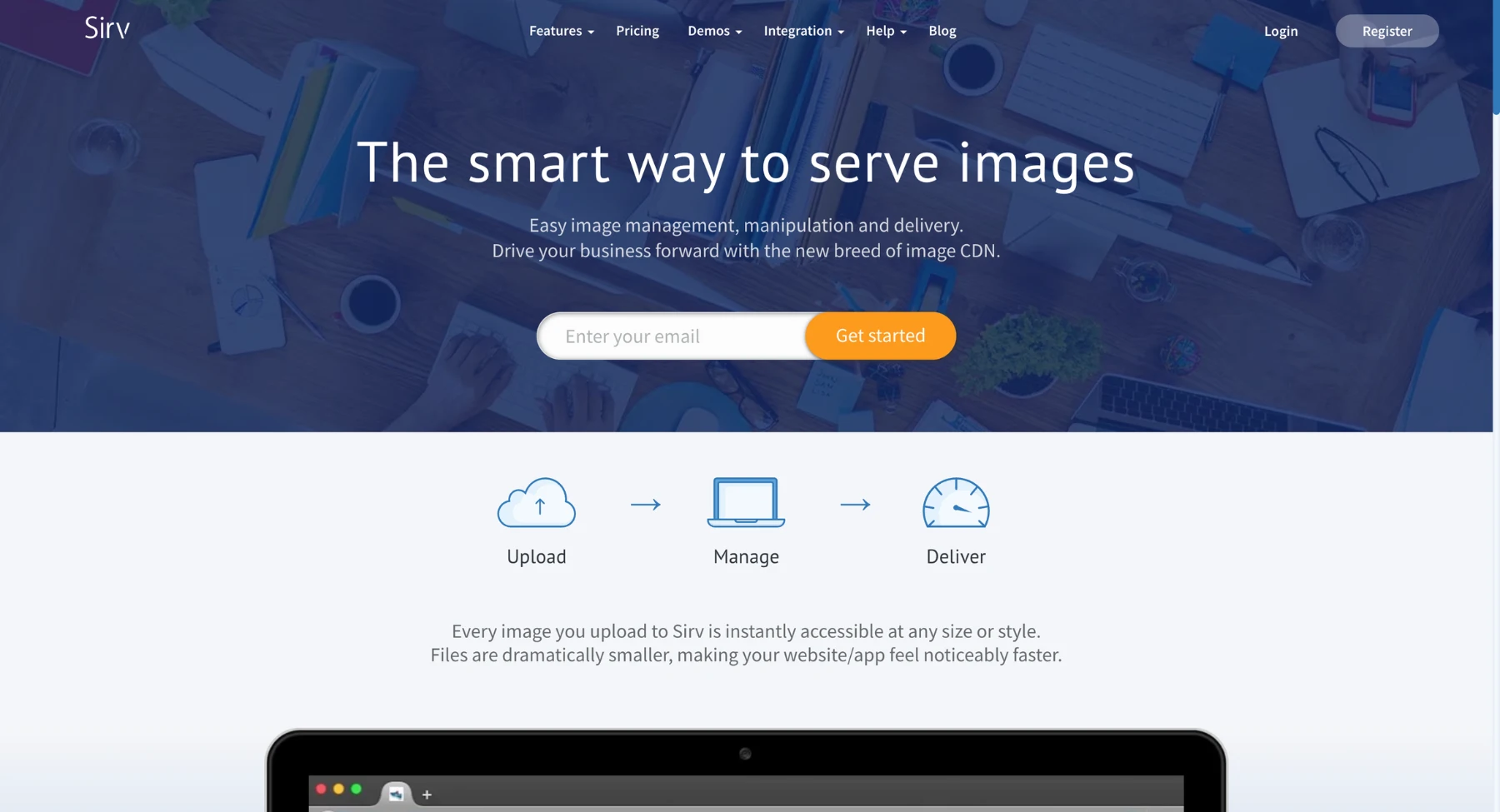
Sirv as a Cloudinary alternative comes down to whether your app requires automated 360-degree product spins with predictable pricing or a heavy enterprise DAM platform. Sirv is an end-to-end smart media processing and delivery platform engineered specifically for real-time image optimization, dynamic product galleries, and interactive 360 viewer experiences. Choosing Sirv streamlines visual asset pipelines for modern e-commerce stores, brand sites, and digital platforms while eliminating Cloudinary's expensive credit overage penalties.
Where Sirv outperforms
- Native 360° spin & interactive galleries: Sirv includes built-in, mobile-optimized 360-degree product spin viewers and deep-zoom galleries natively, avoiding complex third-party custom coding or external plugins.
- Unlimited free image transformations: Unlike Cloudinary's credit-based model-where every image variant consumes units, Sirv offers unlimited dynamic URL transformations, charging strictly for storage and bandwidth.
- Affordable custom domain access: Custom domains and anti-leeching security features are included starting on entry-level paid plans ($19/mo), whereas Cloudinary locks custom domains behind expensive $250/mo+ tiers.
- Generous multi-user collaboration: Allows up to 20 team members with granular role-based access controls on standard business tiers, compared to Cloudinary's strict 3-to-5 user limits on equivalent plans.
10. Fastly image optimizer
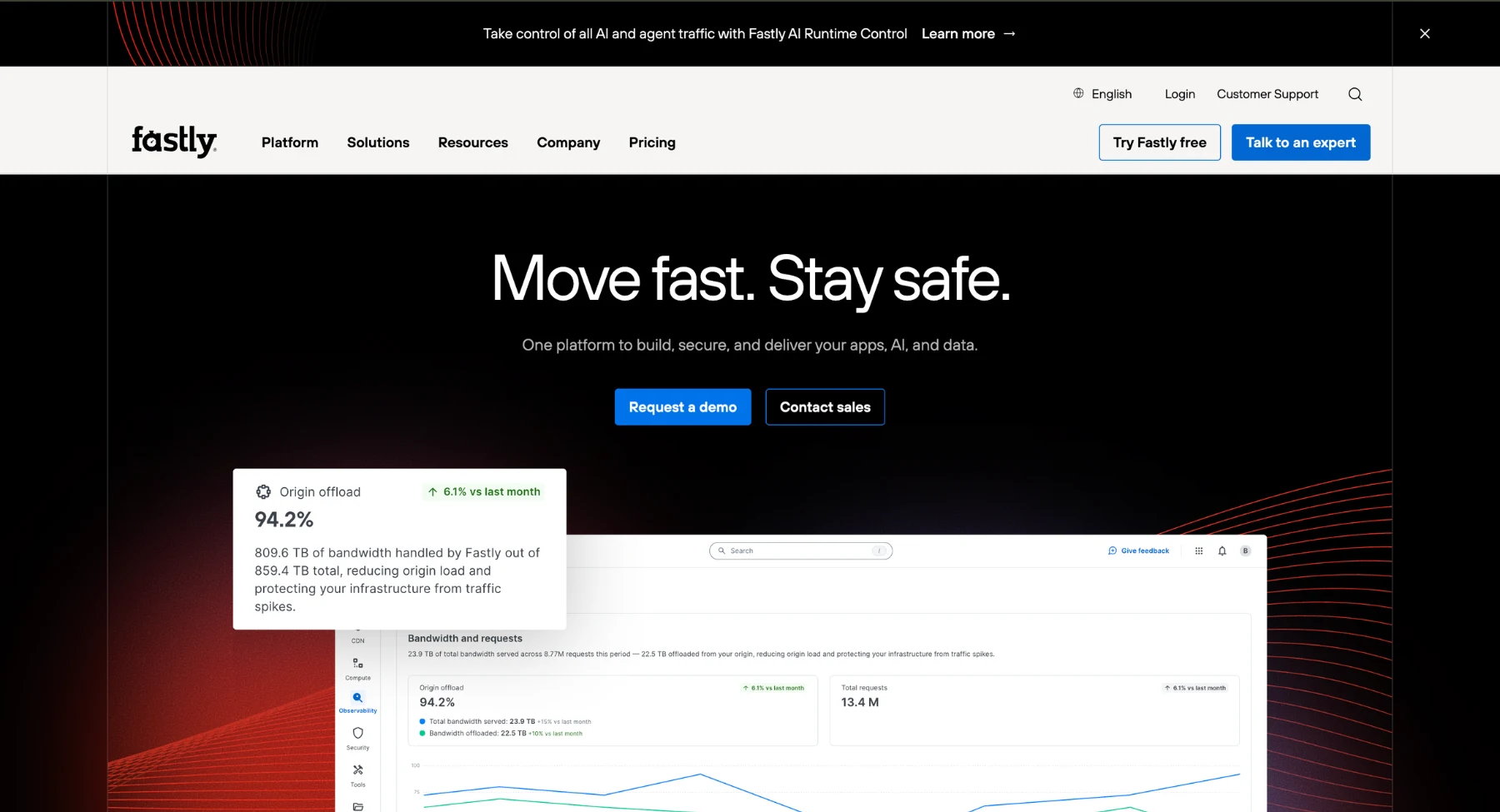
Fastly Image Optimizer is the right recommendation for infrastructure-led teams that already use Fastly. Official documentation describes it as real-time image optimization that manipulates and transforms images through the Fastly network and caches optimized versions. Fastly's product page also frames it as an image CDN because it combines global delivery with real-time transformation.
This is a powerful option when engineering owns the CDN and wants fine-grained control. It is not the easiest option for teams that want a ready media library, user upload widget, and marketer-friendly asset workflows.
Where Fastly image optimizer outperforms Cloudinary
- Edge-native network performance: Fastly IO transforms and serves media directly on Fastly's high-speed edge cloud, delivering faster cache hits and lower time-to-first-byte (TTFB) without extra network hops.
- Programmable edge logic with compute: Integrates natively with Fastly Compute (using Rust, JavaScript, or Go), allowing developers to combine image transformation with custom authentication, A/B testing, and geolocation rules.
- No vendor storage lock-in: Operates as a stateless edge processing proxy over your existing AWS S3, Google Cloud, or HTTP origins without forcing original asset migrations or charging extra bucket fees.
- Sub-second instant cache purging: Features Fastly's industry-leading Instant Purge capabilities (purging cached image variants globally in under 150 milliseconds) compared to slower, delayed cache invalidation cycles in Cloudinary.
- Edge-native network performance: Fastly IO transforms and serves media directly on Fastly's high-speed edge cloud, delivering faster cache hits and lower time-to-first-byte (TTFB) without extra network hops.
- Programmable edge logic with compute: Integrates natively with Fastly Compute (using Rust, JavaScript, or Go), allowing developers to combine image transformation with custom authentication, A/B testing, and geolocation rules.
- No vendor storage lock-in: Operates as a stateless edge processing proxy over your existing AWS S3, Google Cloud, or HTTP origins without forcing original asset migrations or charging extra bucket fees.
- Sub-second instant cache purging: Features Fastly's industry-leading Instant Purge capabilities (purging cached image variants globally in under 150 milliseconds) compared to slower, delayed cache invalidation cycles in Cloudinary.
Best alternatives by use case
How to choose the right alternative
- Evaluate Billing Models and Pricing Transparency
Audit monthly traffic to determine if Cloudinary's credit system causes unexpected cost spikes. Choose platforms with transparent, usage-based bandwidth pricing or flat-rate models to prevent overages and maintain budget control.
- Assess Storage Connections and Vendor Lock-In
Determine whether you need a storage host or a stateless processing layer. If master files live in AWS S3 or Google Cloud, select stateless proxy tools that connect without data migration.
- Determine User Ingestion and File Upload Needs
Identify how media enters your app if user-generated content requires multi-source cloud imports or mobile camera uploads, select platforms offering turnkey uploader widgets alongside built-in security and malware scanning.
- Verify Dynamic Transformation and AI Requirements
Map required image operations against native capabilities. If you only need dynamic resizing and WebP or AVIF conversion, lightweight CDNs work. Select specialized AI platforms for background removal and upscaling.
- Review Video Delivery and Adaptive Streaming Needs
Separate static image needs from complex video pipelines. If your app relies heavily on video hosting, adaptive bitrate HLS or DASH streaming, and DRM encryption, choose providers explicitly built for video.
- Examine Developer SDKs and Design Tool Plugins
Check SDK support for your tech stack and evaluate URL parameter readability. Ensure non-technical teams gain access through native CMS plugins or direct design tool integrations like Figma and Adobe Photoshop.
Migration checklist
A migration from Cloudinary should be tested before any URL switch. Use this checklist to turn the comparison into a practical migration plan.
- Export or map Cloudinary public IDs, folders, tags, metadata, and transformations.
- Identify which transformations are generated dynamically and which can be precomputed.
- Create a URL rewrite map from Cloudinary syntax to the new provider syntax.
- Test automatic format conversion for AVIF, WebP, JPEG, and PNG fallbacks.
- Compare visual quality on real product images, face crops, transparent PNGs, GIFs, and large hero images.
- Check cache behavior, purge timing, signed URLs, private assets, custom domains, and image SEO.
- Run a small batch before moving the whole catalog.
If the migration includes repeated catalog changes, a batch image editor can be useful after the first test set because teams can apply resize, background, compression, cleanup, and enhancement workflows to groups of images.
When Cloudinary is still the better choice
Cloudinary may still be the better choice when a company uses its full platform deeply: advanced image and video transformations, AI automation, DAM, role-based controls, add-ons, workflow automation, SDKs, integrations, and existing team processes. A lower-cost image optimizer will not replace that entire setup by itself.
Cloudinary can also be the safer default when the company already has production traffic, working custom transformations, custom domains, security approvals, and internal documentation built around it. In that case, the right move may be cost optimization before migration.
FAQs
Pixelbin is a strong overall alternative when the team needs storage, CDN delivery, transformations, optimization, AI editing, and batch workflows. ImageKit is the closest developer-first Cloudinary alternative. imgix, Uploadcare, Cloudflare Images, and Bunny Optimizer can be better depending on the exact use case.
Bunny Optimizer and Cloudflare Images are often the strongest low-cost options for image delivery and transformations. The cheapest real option depends on bandwidth, storage, transformation count, regions, and whether video is part of the workload.
ImageKit can be better for teams that want a simpler developer workflow, transparent public plans, real-time optimization, and DAM features. Cloudinary may still be stronger for teams using deeper video, DAM, workflow, and enterprise features.
Yes. imgix is a Cloudinary alternative for image optimization, image rendering, and URL-based transformations. It is less direct as a replacement if the team needs built-in uploads, broad DAM, or marketer-friendly workflows.
Not usually. Cloudflare Images can replace image storage, optimization, transformations, and delivery for many teams, especially inside a Cloudflare stack. It is not a full replacement for Cloudinary's DAM, AI workflows, and broader media operations.
ImageKit, Cloudflare Images, Uploadcare, Filestack, Sirv, and Pixelbin have free or trial entry points, but free limits vary. Verify current usage caps before choosing a free plan because free tiers can stop delivery, limit storage, or restrict advanced features.
Developers should check transformation syntax, SDK support, upload signatures, signed delivery URLs, cache purge behavior, origin storage, custom domains, webhooks, image quality, SEO impact, and total usage-based cost.
Pixelbin, ImageKit, Sirv, and Cloudflare Images are strong ecommerce choices. Pixelbin fits catalog workflows and AI-assisted image cleanup; Sirv fits zoom and 360 product media; ImageKit fits developer media optimization, and Cloudflare fits edge delivery.