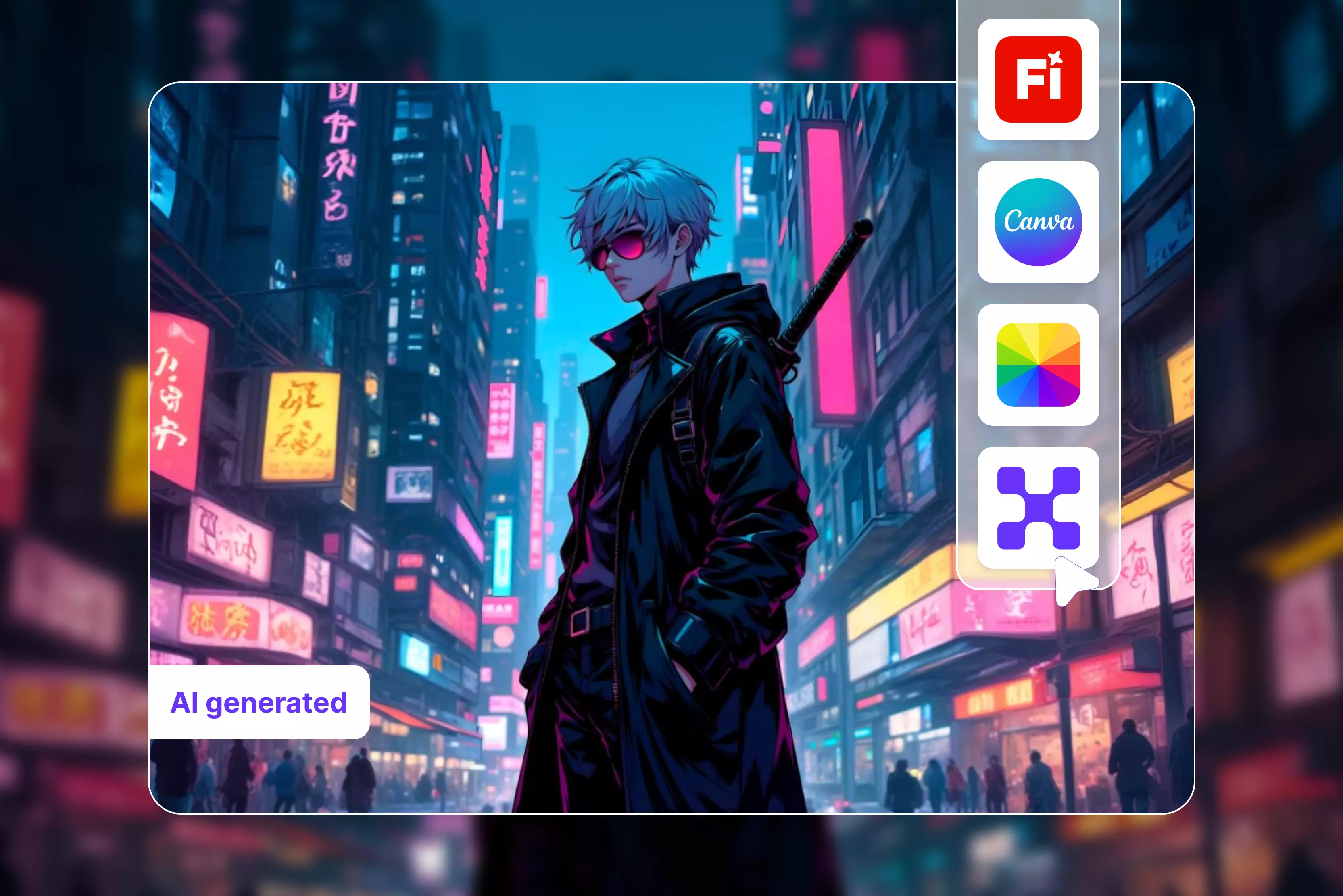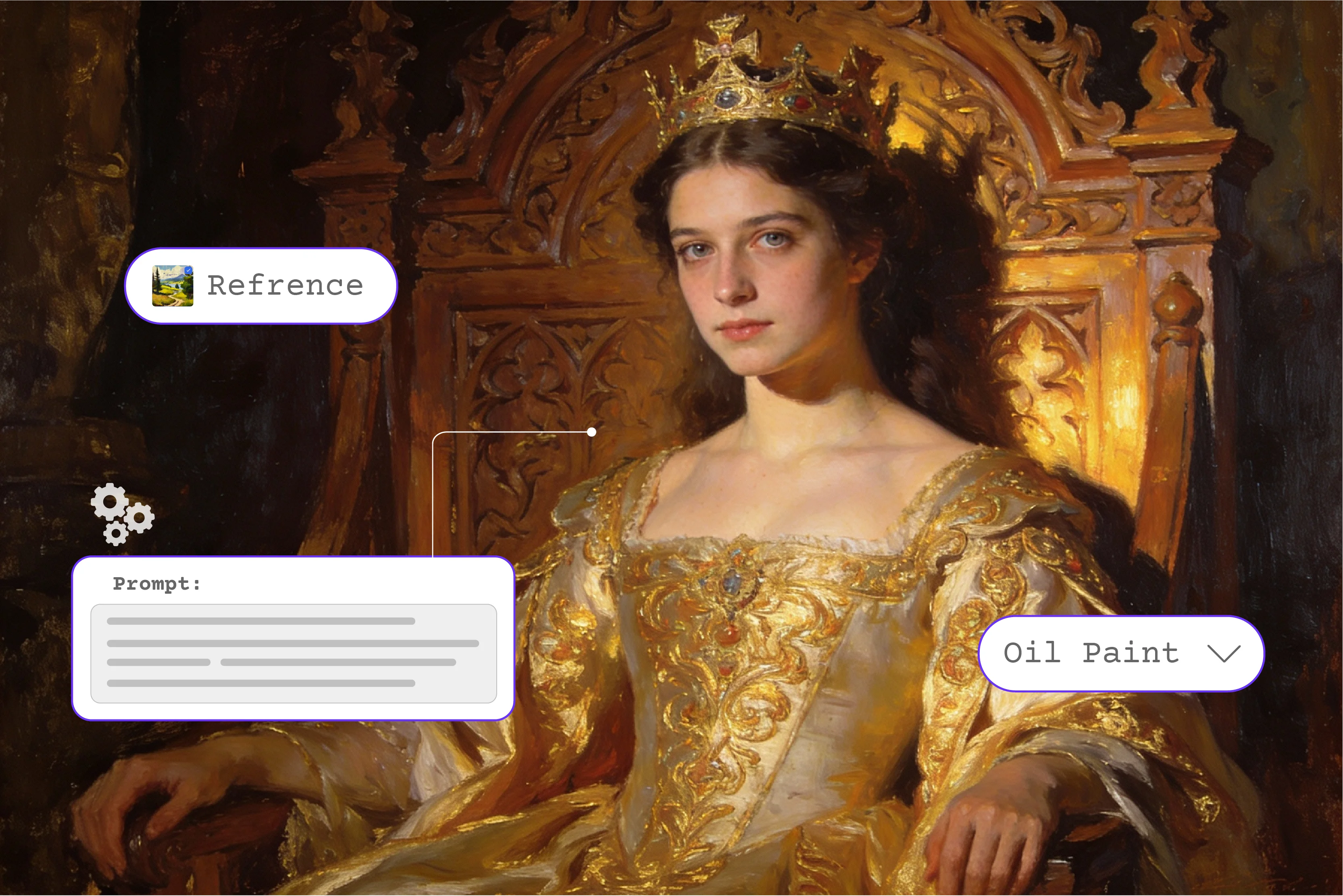

Look into the world of art made with the help of artificial intelligence. In recent years, artificial intelligence has become increasingly prominent in various industries, including art fields. There are various technologies available for creating art and images; AI is particularly popular.
Understanding all the concepts, such as meaning, history, and the technologies used, and selecting a tool to learn might be difficult because each offers unique features and advantages. For many creatives, the positive impact on workflow and productivity is hard to ignore.
AI art image generators can quickly produce visual ideas, sparking creativity and accelerating concept development. Selecting the best AI art generator is tricky. Poor resolution, unclear licensing, and limited style options can significantly impact the quality or usability of your project.
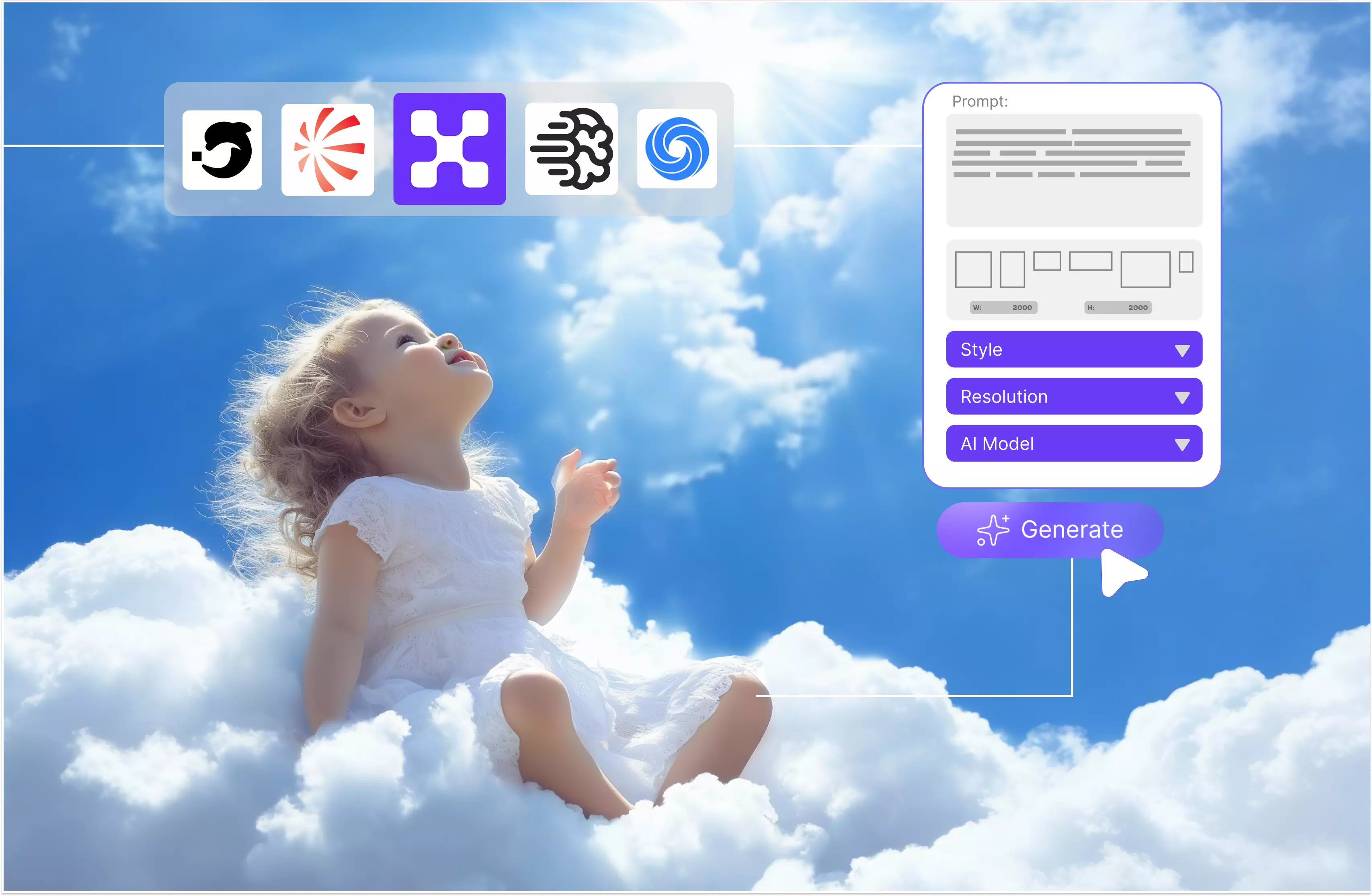
I've done too much research on various AI tools, but my all-time favorite tool is Pixelbin. Only write a text prompt and click on the generate button; the image will be created. In this blog, I'll define what AI art is, how it works, the history of AI art, the technologies used for AI art generators, the tools used for generating, business use cases, and much more. So, let’s begin.
What is an AI art generator?
An AI art generator is a tool that uses artificial intelligence to generate entirely new images from a written text prompt or existing visuals. Some people consider AI art to be images and videos, but it can also include music, writing, and more.
All AI art uses generative AI, a collection of tools that use algorithms and mathematical formulas trained on large datasets. For example, if you are typing something like “A city skyline at sunset in watercolor style,” the generator processes an original image that reflects your prompt. Sometimes, the images reference patterns learned from vast datasets to effectively turn words into visuals and produce novel creations in various styles.
All it takes is an AI art generator like Pixelbin and an idea. The artist types a detailed prompt, which the tool then uses to generate image options based on the description.
How an AI art generator works
AI art generators are powerful tools that use machine learning and computer technology to transform text prompts into visual art. AI art generators are trained on large datasets of image-text pairs, enabling them to understand and generate art in response to your requests.
The 2 main types of models used are Diffusion models, like Stable Diffusion and DALL-E 3, and generative adversarial networks (GANs), which have since been surpassed in popularity and quality by diffusion-based approaches.
These either refine a noise field into an image or use a generator and discriminator to create new artworks. The process is complex but user-friendly, allowing anyone to create art with just a text prompt.
How does AI generate art
AI generates art by using deep learning algorithms, particularly neural networks trained on massive datasets of existing images and text, to recognize patterns, styles, and concepts and then create new original visuals from user text prompts.
In response to a text prompt, the AI model predicts and generates images by refining random noise, often using diffusion models or in earlier approaches, GANs to improve image realism.
The technology that enables this is called a neural network. A neural network is a mathematical system, an algorithm that finds patterns in big sets of data. Generative artificial intelligence also takes in large amounts of information in the form of words or images, to generate new artwork from a prompt.
By describing everyday objects like trees, city spaces, or mirrors, you can guide the AI to generate artwork based on what it has learned from similar in its training data.
When you prompt an AI generator about flowers it's using the information it has learned about what flowers look like to create a new image. By specifying additional details like red flower in a vase you help the AI refine the output to match your vision more closely.
History of AI art
AI art is a subset of generative AI that focuses on creating visual artworks using artificial intelligence. Generative AI also includes tools for writing, music composition, website building, and more.
Artificial intelligence visual art, or AI art, is visual artwork generated or enhanced by Artificial Intelligence (AI) programs, most commonly using text-to-image models. Although artificial intelligence research began in the 1950s, artists started experimenting with AI for creative purposes in the late 1960s and 1970s.
One of the first famous AI art systems is AARON, developed by Harold Cohen beginning in the late 1960s at the University of California at San Diego. AARON uses a symbolic rule-based approach to create technical images in the era of GOFAI programming, and it was developed by Cohen with the goal of coding the act of drawing.
Generative adversarial networks (GANs) were developed. While not developed solely for creating artwork GANs play a significant role in its creation today. In 2014, Ian Goodfellow and colleagues at the Université de Montréal developed the generative adversarial network a type of deep neural network capable of learning to mimic the statistical distribution of input data, like images.
The GAN uses a generator to create new images and a discriminator to decide which created images are considered successful. Around 2020, text-to-image models began emerging leading to widespread adoption in the following years.
What is GAN?
GAN (Generative Adversarial Network) is a powerful type of deep learning model where two neural networks, a Generator and a Discriminator, compete to create new, realistic data like images, music, and art, that mimics real data with the Generator getting better at faking it and the Discriminator getting better at spotting fakes until the generated content is nearly indistinguishable from reality.
GANs have been widely used for image generation, data augmentation, super-resolution, and image enhancement and then played a foundational role in the early development of generative AI. However, both parts learn from their mistakes and get better over time.
The goal of the GAN is to trick the discriminator by creating fictitious data out of random noise. This network functions as a detective having been trained on real data to distinguish the Generator’s fake samples from the real ones.
One network that generates new data by transforming random noise into synthetic samples that resemble real data. The other network tries to predict whether the generated data is fake or real. The system creates newer, improved versions of fake data values until the predicting network can no longer distinguish fake from original.
Technology is used to create AI-generated art
Just as traditional artists use brushes and inks, digital creators use machine learning algorithms, models, and datasets to generate AI-based artwork. We have already covered diffusion models and large-scale language models. AI art also employs other technologies.
Generative AI techniques
- Creative coding: Artists who write the software that generates their artwork are described as creative coders. The intent of creative coding is to prioritize expression over producing a functional result.
- Image synthesis: Image synthesis is the process of generating new images using AI models trained on large datasets of visual information, including photographs, artwork, or other imagery.
Generative AI models
GANs, generative adversarial networks, are among the most powerful AI technologies under development today. Generative models, introduced in 2014 represent a breakthrough in machine learning enabling systems to generate highly realistic synthetic content.
GANs consist of two neural networks trained in opposition: a generator that creates data and a discriminator that tries to distinguish real data from fake. One generates a photorealistic image, and the other tries to determine whether that image is real or generated.
For example, the first may generate an image of an elephant, and the second would try to determine if the image of an elephant was a photograph or digitally created. This helps systems produce more realistic images. The second important generative model in use today is the variational autoencoder (VAE).
VAEs are deep generative models that like GANs, depend on two neural networks to generate data. A variational autoencoder consists of two neural networks working in tandem, each with a different role.
The dual network, consisting of encoders and decoders, works in tandem to produce an output similar to the input. Encoders encompass the input data to optimize for the most efficient representation of the original data while retaining only the most important information.
The decoder then reconstructs the input from the compressed representation. In this way, the decoder generates content and achieves a high level of detail to create specific features.
How to create AI artwork
After learning more about AI art and various AI generators available, you may wish to dive deeper into the field of digitally produced art. To get started, follow these steps.
1. Select an AI art generator
Identify the functionality you require and the type of artwork you’d like to create when choosing an AI art generator. Among the AI art generators listed (blog link), there are many good options. Consider playing with a couple of generators to determine which one to start with first.
2. Develop visual ideas
Once you have selected AI art generators to use, imagine what your dream image or video will look like. Determine whether you are creating a new image from scratch or building off of an existing image. The process may look different depending on whether you create for personal or professional use.
3. Write a text prompt
Write a simple text prompt that you’ll input into your AI generator. Some generators will allow you to go back and edit your prompt, while others don’t. Explore sample text prompts that the generator may provide for you. Move forward and generate your prompt.
4. Refine your output and continue experimenting with tools
You may have opportunities to explore ways to improve or enhance your prompt after you've generated your first draft. Sometimes, the beauty of AI art is that mistakes you might make in your prompt can be fixed with little time wasted, whereas using real paint, pencil, or cameras can require time and effort.
5. Save and publish your AI art
Once you're satisfied with the generated image, you can either download or save it. You can publish your AI-generated art as a JPEG or PDF. You can also upload it to the tools you used to create it.
What are some business use cases for AI art generators?
AI art generators can offer various advantages to businesses when used for professional and occupational purposes. AI art generations can help businesses save time and money by simplifying some aspects of their creative workflows. With minimal effort, organizations can quickly generate initial design concepts that can be refined to meet their needs.
Entertainment
Creative sectors such as the entertainment industry can use AI art generators to create concept art, allowing them to convey their ideas through visuals. AI art tools empower users to visualize ideas more quickly and explore creative directions.
In this way, creatives can use these tools to create visual graphics representing their desired outcomes. AI art generators' outputs can help you express ideas and facilitate smooth collaboration when developing films, video games, comic books and more.
Non-creative industries
With the help of these tools many non-creative businesses can improve their workflows and create amazing pictures more rapidly.
E-commerce firms can generate or enhance eye-catching product visuals to present to prospective customers. These tools can generate product mockups or visuals tailored to specific campaigns or customer segments.
Advertising and marketing
AI art generators give businesses in both the creative and non-creative sectors a competitive edge particularly in advertising. Businesses may give eye-catching visual advertising content by using AI-generated graphics and artwork.
Marketing efforts for digital ads social media posts and other commercial resources can integrate AI-generated graphics and companies can even use these tools to get ideas for company logos. Faster content production and a greater chance of attracting customers in a crowded market are two benefits of using these technologies for marketing picture creation.
Tools used to create an AI art generator
Various AI art generators are available. As I discussed above only that according my research Pixelbin is good to go with. So, let's check how to use an Pixelbin AI art generator.
Various steps to create AI art generators:
Step 1: Visit Pixelbin -> AI tools -> AI text-to-image generator.
Step 2: Describe the image you want: landscape, portrait, fantasy, abstract, etc. Enter the text that you want to convert to an image.
Step 3: Download the image.
Can AI Replace Human Creativity in Art?
Before supporting AI art one should consider its ethical and creative limitations. Generative AI uses data that may belong to businesses, brands and artists, leading to copyright issues, especially when publishing or selling AI art.
Is it ethically right to profit from computer-generated art that draws inspiration from other sources? The creative business is currently debating this issue, and some legal proceedings have already commenced.
Generative AI artists need to consider the boundaries of originality and creativity. Did you and the original artists create the piece that the AI uses? Or is it the AI that deserves credit? Can the generated "Art" be regarded as genuine art?
Some artists may feel that AI tools reduce the value of traditional skill or limit access due to cost or platform restrictions. There is a bright future ahead for AI and its role in art.
Final thoughts on AI Art
AI art has amazing possibilities. With the cutting-edge new technologies that help creatives create amazing work and push the limits of human imagination, it is set to revolutionize the creative sector.
You can use amazing tools like Pixelbin, where you simply write a text prompt and click the generate button, and you will receive an amazing result. Next, for AI art generators, note that image generation is a fast-evolving space, and more powerful models are available each time I update.
There are various tools available, and it's impressive how effective text-to-image models like Ideogram, MidJourney, Pixelbin, and many others are at consistently generating high-quality concepts. While some of the best tools, like Pixelbin, are still getting better at this pace, they could really shape things up.
FAQs
AI art is simply artwork made with the assistance of generative AI, a technology that finds patterns in big datasets and uses that information to create new art. AI art is different from digital art, which is created by people with creative skills. AI art enables individuals with minimal or no creative skills to generate an unlimited variety of art forms from a text prompt.
Generative AI can help graphic designers work more efficiently and complete tasks faster. Creating new artwork from simple text prompts can help designers visualize rough ideas. Using generative AI, designers can add new project objects or backgrounds to an image and quickly approve different color plates.
The 7 types of AI are categorized by capability, Narrow Genera,l superintelligence, and functionality (Reactive machine, limited memory, theory of mind, self-awareness). This progression represents a shift from basic, task-specific systems to the hypothetical levels of human or superhuman intelligence, with today's common AI primarily falling into the first two categories.
Narrow AI is the most common type of AI in use today, and it's likely that you’ll already be using narrow AI tools without even knowing it. Narrow AI, like Siri, customer service chatbots, or even Netflix's recommendation algorithm, is narrow in that it is really good at one task.
No, AI is unlikely to completely replace humans but will significantly transform jobs by automating routine tasks, augmenting human capabilities, and shifting the focus to uniquely human skills like creativity, emotional intelligence, critical thinking, and complex decision-making, leading to a symbiotic human-AI relationship rather than outright replacement.
AI art generation tools use machine learning procedures to generate realistic pieces of art. This process involves entering data into the provided form.