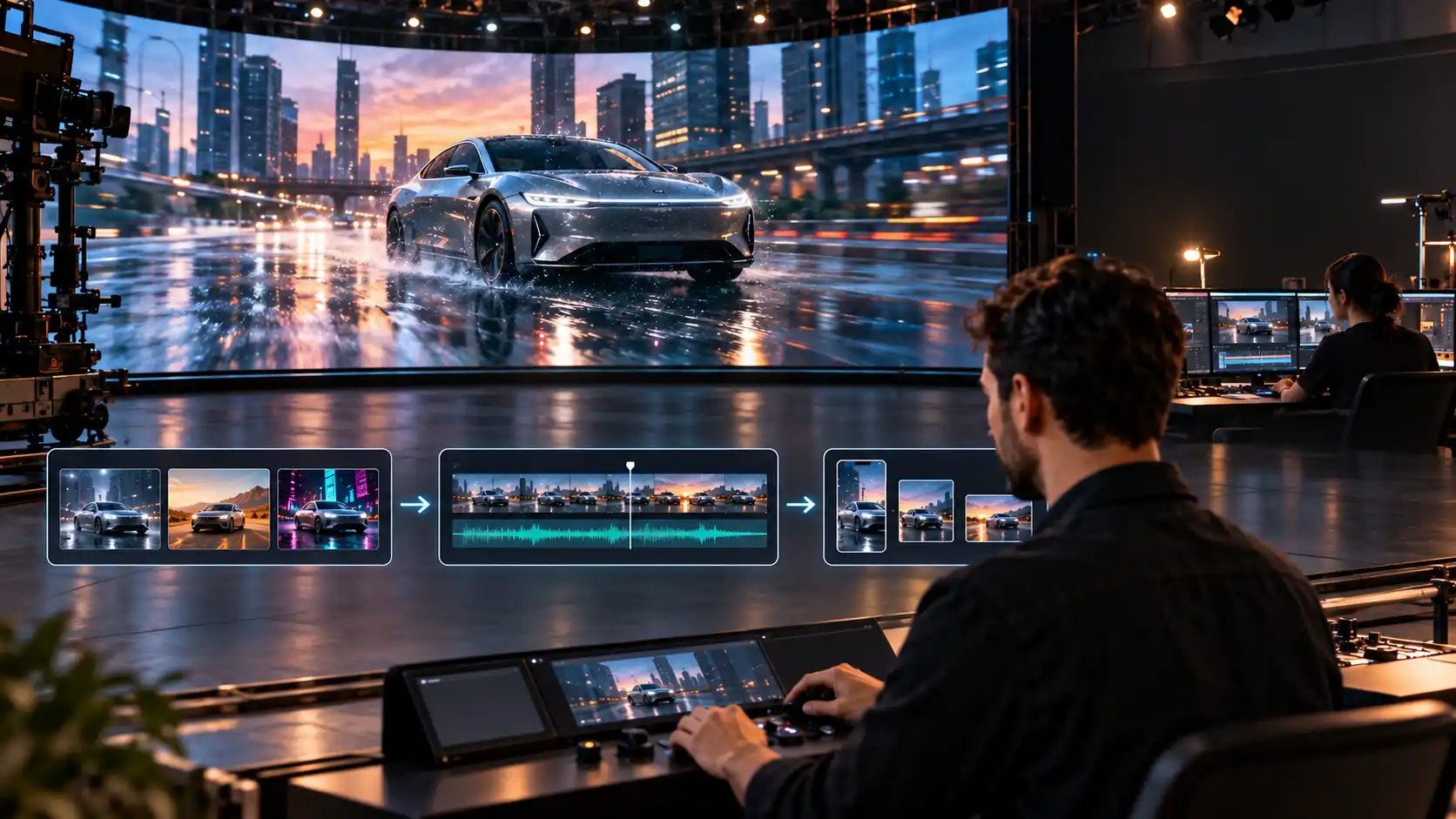

Summary
Pixelbin is the more practical choice in 2026 because it remains an active multi-model platform for generating, editing, managing, and delivering visual content. Sora was a focused OpenAI video product known for text-to-video and image-to-video creation, but its web and app experiences ended on April 26, 2026, and its API is scheduled to close on September 24, 2026. Pixelbin currently lists Sora 2 as one of several available video models, yet that access is time-sensitive. For a new long-term workflow, choose Pixelbin or another actively supported multi-model platform; use remaining Sora access only for short-term projects and export everything promptly.
Introduction
The AI video landscape has evolved beyond just novelty videos. In 2026, generative video is a core part of commercial workflows, social media production pipelines, film pre-visualisation, and product marketing.
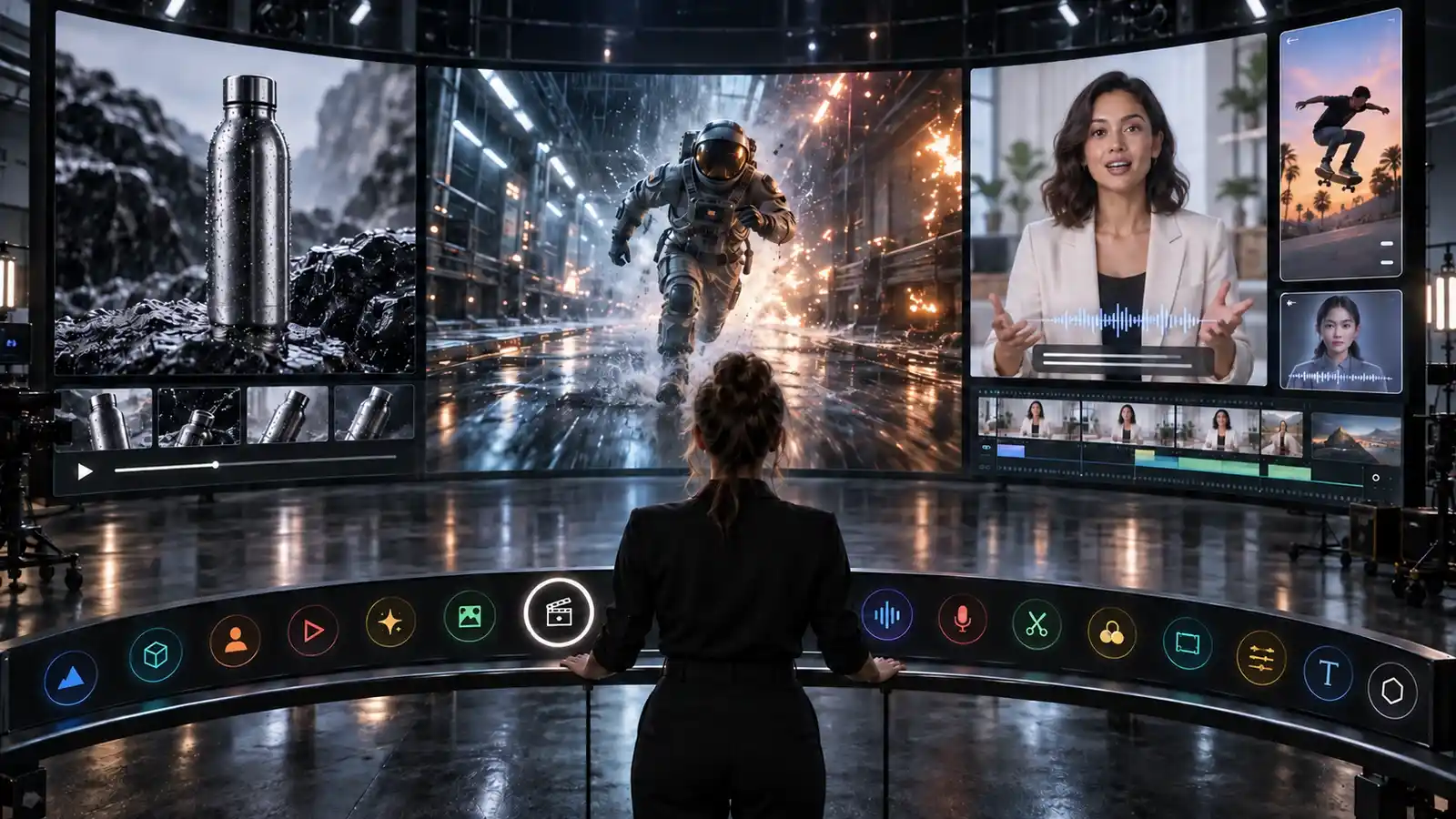
Your choice of platform depends on your goals. OpenAI Sora is intended to be a flagship generative engine to create highly realistic videos from text and other inputs. Pixelbin, in contrast, is a flexible, multi-model production suite for high-volume commercial content, streamlined asset management and more control over creative workflows.
This deep-dive comparison evaluates Pixelbin and Sora across several key dimensions, including their underlying architecture, creative controls, video-generation quality, workflow flexibility, and total cost of ownership. It also outlines the best use cases for each platform, enabling creators, marketers, and businesses to decide which AI video solution best suits their production needs.
Pixelbin vs Sora at a glance
Current availability and the Sora shutdown
Pixelbin remains fully operational as an active multi-engine platform, whereas OpenAI Sora has been discontinued. Creators must adjust their workflows based on the availability of each tool.
Platform availability
- Pixelbin: Fully available. It operates as an active workspace hosting multiple AI engines (including Google Veo, Kling, and Hailuo) for commercial image and video production.
- OpenAI Sora (app/web): Discontinued. The standalone Sora web interface and mobile applications were permanently shut down on April 26, 2026.
- OpenAI Sora (API): Sunsetting. The Sora API remains in a phase-out period, with developer access scheduled to terminate completely on September 24, 2026.
Video models and creative flexibility
AI video models have transformed production, shifting creative control from single-engine limitations to flexible, multi-model platforms. The way creators direct video depends entirely on whether a model prioritizes natural language physics simulation or explicit framing controls.
Pillars of creative flexibility
- Single vs. Multi-Model Architecture: Using a single model ties workflows to a single style. For example, Pixelbin combines a number of engines (Veo, Kling, Hailuo, LTX-2) so that creators can select specific AI models for specific project needs in one hub.
- Keyframing accuracy: The ability to pin Start/End frames in image-to-video allows product continuity and brand recognition to be maintained, which is critical for commercial ad creation where text prompts alone do not provide exact geometric control.
- Natural physics & camera dynamics: Single-engine physics simulators (like Sora before the 2026 discontinuation) are excellent for simulating complex worlds, fluid motion and photorealistic lighting, making for a great deal of cinematic depth.
- Aspect ratio & output control: Native generation in 9:16, 16:9, and 1:1 aspect ratios enables fast multi-channel distribution without significant manual cropping.
A resilient creative strategy blends text-driven dynamic motion with frame-pinned controls, using multi-model access to maintain workflow stability regardless of individual model changes.
Text to video and image to video
Text-to-Video and Image-to-Video function differently across Pixelbin and OpenAI Sora, reflecting each platform's distinct approach to control and generation.
Text-to-video: textual simulation vs. multi-model flexibility
- OpenAI Sora: Excels at pure, prompt-driven world simulation. It interprets complex descriptive language to synthesise fluid camera angles, accurate physical momentum, and realistic lighting directly from raw text prompts.
- Pixelbin: Operates as a multi-model T2V hub. Instead of relying on a single engine, it routes text prompts through models like Google Veo 3 (for commercial ads), MiniMax Hailuo (for natural motion), or LTX-2 (for cinematic sequences).
Image-to-video: frame-pinning control vs. image injection
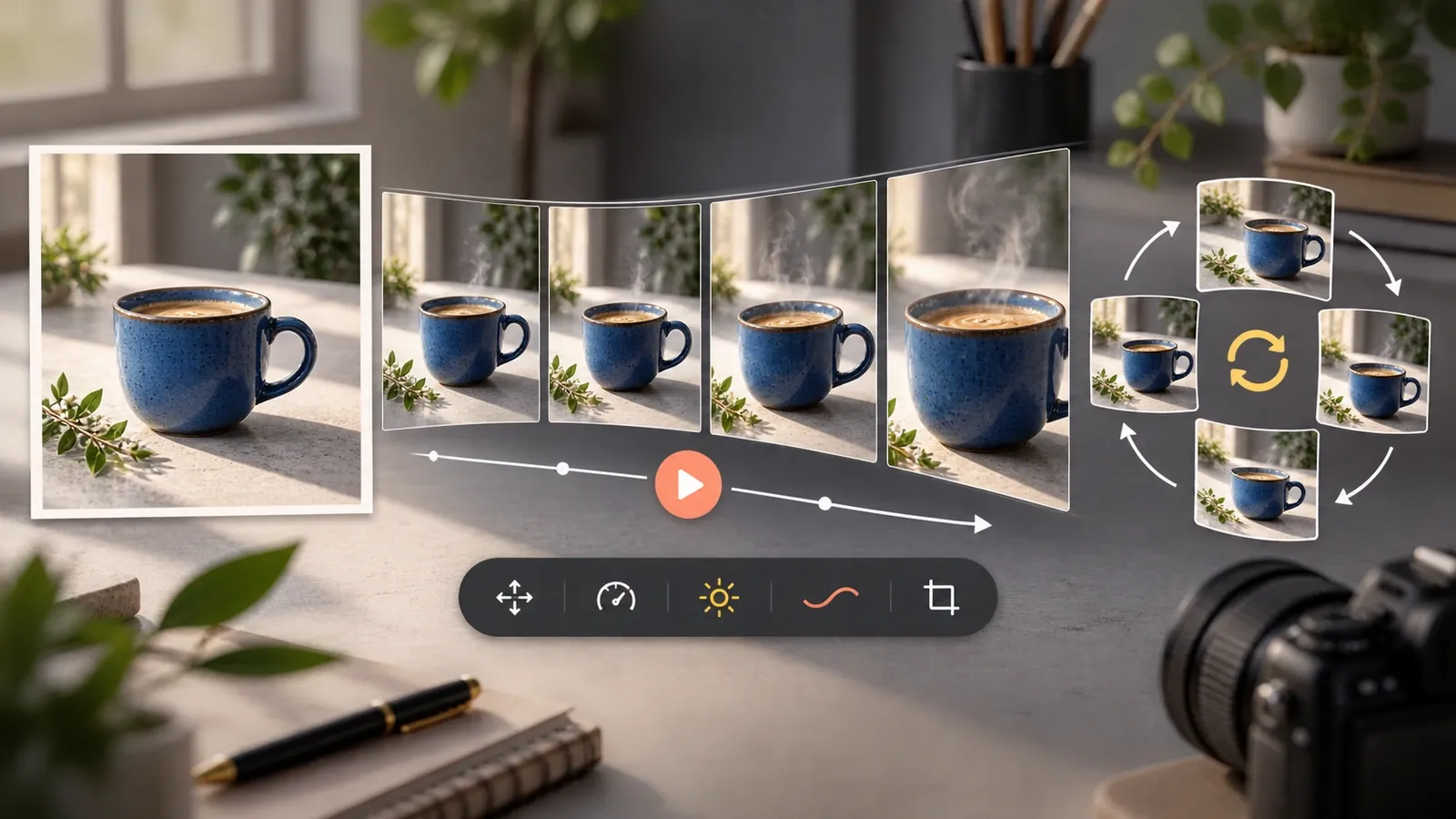
- Pixelbin: Built for commercial precision. It allows creators to upload Start and End keyframes to anchor product geometry, character consistency, and exact visual transitions without hallucinated changes.
- OpenAI Sora: Treats input images as contextual reference points, animating the surrounding environment while maintaining physical realism and camera continuity.
Operational strategy
- Use Text-to-Video when conceptualising abstract scenes, filming B-roll, or building narrative sequences from scratch.
- Use Image-to-Video when animating e-commerce products, maintaining strict brand identity, or keyframing specific scene transitions.
Resolution, duration, and audio
Pixelbin and OpenAI Sora handle technical specs differently based on platform design. Sora functions as a unified engine, while Pixelbin routes requests through multiple underlying video models.
- Resolution capabilities:
- OpenAI Sora: Standardized outputs at native Full HD (1080p) resolution.
- Pixelbin: Supports dynamic scaling based on the chosen engine, ranging from draft resolutions (480p-720p with Seedance/Wan) up to ultra-high-definition 4K (2160p with LTX-2).
- Duration output:
- OpenAI Sora: Supports single clip generations ranging from 15 to 20 seconds, with API stitching capabilities reaching up to 60-120 seconds total.
- Pixelbin: Varies by engine; supports short 2-to-5 second social loops (Veo, Wan) up to extended 20-second single clips (LTX-2 Fast).
- Audio integration:
- OpenAI Sora: Generates synchronized ambient sound effects, character voice/dialogue, and background audio directly from prompt text.
- Pixelbin: Features integrated audio toggles across models like Google Veo 3 and Kling 3, alongside custom audio file uploads.
Editing and production workflow
Pixelbin and OpenAI Sora offer distinct editing and post-production workflows tailored to their underlying design philosophies.
Production & editing suite capabilities
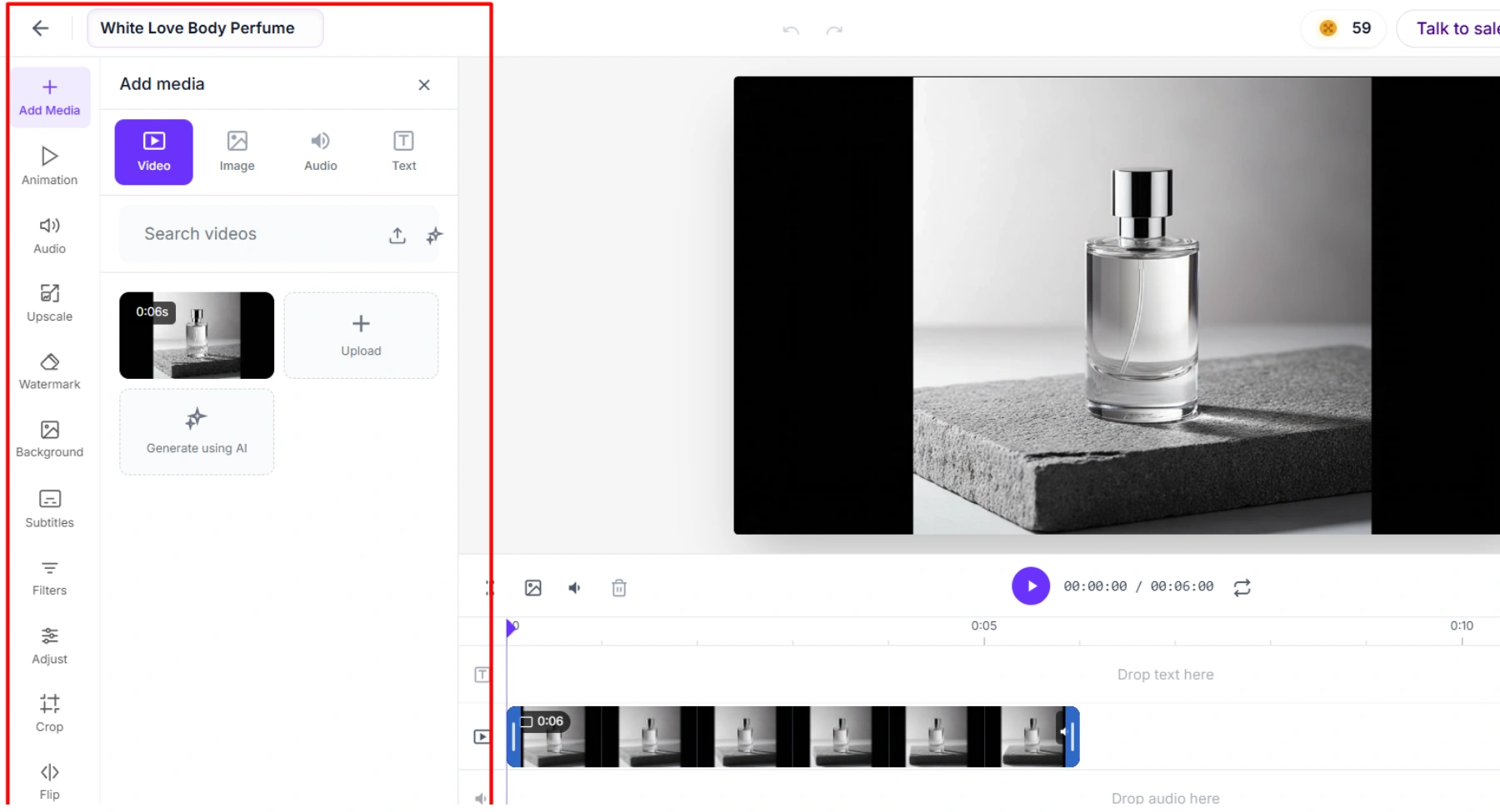
- Pixelbin (end-to-end suite): Includes an integrated web video editor. Creators can trim clips, overlay text, auto-generate AI subtitles, remove or replace backgrounds, apply filters, and upscale low-res footage directly on a multitrack timeline.
- OpenAI Sora (generation engine): Functions primarily as an advanced render engine. It focuses on in-generation prompt controls (like looping, frame extension, and timeline stitching), requiring external NLE software (like Premiere Pro or Final Cut) for final cuts, audio scoring, and graphic overlays.
Export & post-production flexibility
- Pixelbin: Built for social and performance ads. Allows creators to take a single AI-generated clip and instantly re-crop, resize, and re-format it for 9:16, 16:9, and 1:1 channels without rebuilding the edit.
- OpenAI Sora: Exports native, cinematic master files ideal for storyboarding, pre-visualization, and film pipelines that undergo downstream color grading and composite editing.
API automation and migration risk
API automation and platform migration risks differ significantly between Pixelbin and OpenAI Sora due to their contrasting ecosystem models.
API automation features
- Pixelbin (multi-model wrapper): Provides a unified API interface that wraps multiple underlying models (Veo, Kling, Hailuo, LTX-2). Developers can trigger text-to-video, image keyframing, and batch asset transforms through programmatic SDKs.
- OpenAI Sora (direct endpoints): Used to offer dedicated Videos API endpoints for raw prompt injection and video rendering.
Migration risk & sunset realities
- OpenAI Sora (terminal pipeline risk): The Sora API is entering its final shutdown phase on September 24, 2026. Any automated pipeline dependent on sora-2 or sora-2-pro endpoints will break, returning 410 Gone errors with no direct OpenAI replacement. All prompt history and video data stored on OpenAI servers will be permanently deleted.
- Pixelbin (insulated enterprise architecture): Mitigates deprecation risk through multi-engine routing. If an underlying model changes or is updated, Pixelbin updates the backend engine while keeping the developer's integration endpoints intact.
Pricing and value
Why Pixelbin is the better choice than Sora
Pixelbin is the better choice for most creators and businesses because it combines Sora 2 access with a complete AI image and video workflow at a much lower starting price.
- Lower entry price: Pixelbin Creator costs $15/month, compared with $20/month for ChatGPT Plus.
- More creative tools in one platform: Pixelbin includes AI generation, image editing, upscaling, watermark removal, background removal, resizing, and retouching.
- Multiple AI models: Users can switch between Sora 2, Seedance, Veo, Kling, WAN, LTX, Imagen, and other models instead of relying on Sora alone.
- Useful for ecommerce and marketing: Pixelbin supports product-image enhancement, background changes, lifestyle visuals, promotional videos, and other commercial content workflows.
- Better high-volume value: Pixelbin Pro costs $60/month, while ChatGPT Pro costs $200/month.
- Flexible credit usage: Credits can be allocated across image generation, video generation, and editing rather than being limited to one model.
How to migrate from Sora to Pixelbin or another model
- Export every Sora video, source image, prompt, seed or setting, and project note that is still available.
- Group clips by use case such as product motion, people, cinematic scenes, animation, dialogue, or social content.
- Select two or three Pixelbin models whose documented inputs, audio, duration, and resolution fit each group.
- Run the same source image and core prompt through each candidate without silently rewriting the brief.
- Score subject preservation, motion, physics, camera behavior, prompt accuracy, audio, artifacts, generation time, and cost.
- Choose a primary and backup model, then document the exact model name and settings for future production.
Final verdict
Pixelbin wins this comparison for a new 2026 workflow, not because every Pixelbin model is automatically better than Sora 2, but because Pixelbin is an active platform with several model choices and a wider production stack. It can continue serving the workflow when one model is unsuitable or removed.
Sora remains important as an influential video model and may still be accessible through its legacy API or a documented integration during the remaining window. That window is closing. Choose Sora only to finish or benchmark an existing project; choose Pixelbin when you need an ongoing route from prompt or image to generated clip, supporting edits, asset management, and delivery. Because access can change, verify current availability before making a production decision.
FAQs
Pixelbin functions as a multi-model aggregation hub, while Sora operates exclusively as a single unified diffusion transformer engine.
No, OpenAI permanently shut down public access to the consumer Sora web application and mobile app on April 26.
The Sora developer API endpoint will permanently terminate for all external software applications and developers on September 24.
Pixelbin delivers superior commercial control by utilising dual start and end image keyframe pinning to maintain exact product details.
Yes, Pixelbin integrates multiple third-party video generation models, including Google Veo 3, Kling, Sora and LTX, inside one platform.
Sora utilises a spatiotemporal diffusion transformer model engineered specifically to simulate real-world physics, complex lighting, and spatial momentum.
Pixelbin abstracts backend model integrations, protecting automated developer pipelines from breaking if an individual underlying AI engine shuts down.
Pixelbin provides a full browser video editor featuring timeline multi-track editing, automatic canvas resizing, auto-subtitles, and multi-aspect ratio exporting.